A wonderful patio door transforms how your home feels and functions—bringing in light, connecting rooms to the outdoors, and boosting resale value.
This guide walks you through every decision from style and material to energy efficiency, security, installation, and realistic costs, so you can choose with confidence.

Patio Doors at a Glance: Which Type Is Right for You?
If you want fast answers, start here. Choose your door by space, budget, view, and lifestyle.
Comparison table:
| Patio Door Type | Space Required | Average Cost Range | View Obstruction | Best For |
|---|---|---|---|---|
| Sliding (2-panel) | Minimal; no swing arc | $1,200–$4,000 installed (vinyl); $2,500–$6,500 (fiberglass/wood/alum) | Minimal (one fixed panel) | Small patios, modern look, budget-friendly |
| French (hinged pair) | Inward or outward swing | $2,500–$6,000 installed (fiberglass/steel); $3,500–$8,500 (wood/clad) | Moderate (mullions/rails) | Traditional homes, grand entrances |
| Bifold (accordion) | Stacks to one or both sides | $10,000–$35,000+ installed (width-dependent) | Minimal when open; visible panels when closed | Large openings, entertaining, wow factor |
| Multi‑Slide/Pocket | Stacks or pockets in wall | $15,000–$50,000+ installed | Minimal; can disappear fully | Luxury views, custom builds, seamless indoor‑outdoor |
Notes:
- Ranges reflect typical 72–144 in openings; larger spans and premium finishes increase cost.
- Learn the differences in detail between French doors vs. sliding doors vs. patio doors and patio door styles.
A Deep Dive into Patio Door Styles
Match door style to space and lifestyle—sliding for compact areas, French for classic swing, and bifold and multi‑slide for large openings and drama.
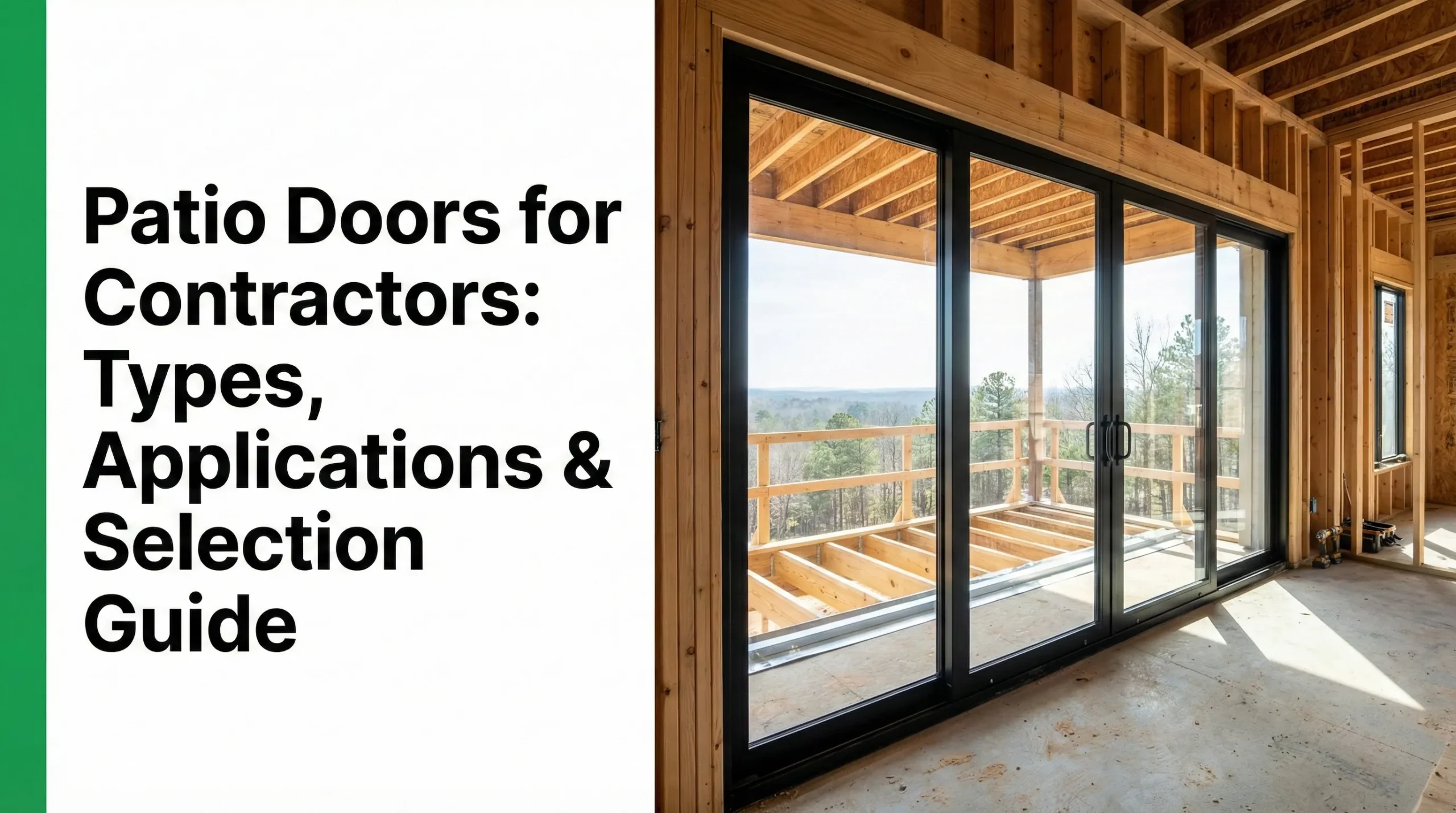
Sliding Patio Doors: The Space‑Saving Classic
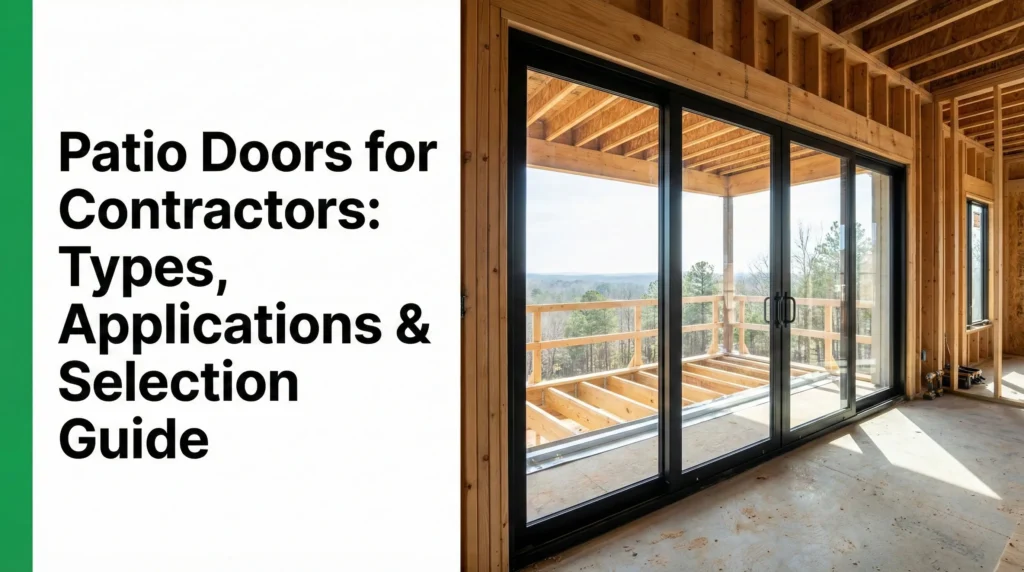
- What they are: Two or more panels on tracks; at least one panel slides over a fixed panel.
- Best for: Tight patios, modern aesthetics, and budget‑conscious updates.
- Pros:
- Space‑efficient (no swing arc)
- Large glass area for daylight and views
- Widely available; strong value
- Cons:
- Tracks can collect debris
- One active opening per track set
- Some see basic 2‑panel sliders as dated
- Typical cost:
- Door only: $600–$2,500 (vinyl) • $1,500–$4,000 (fiberglass/upvc/aluminum)
- Installed: $1,200–$6,500, depending on material, size, and labor

Helpful: Thinking DIY? See How to Remove a Sliding Patio Door.
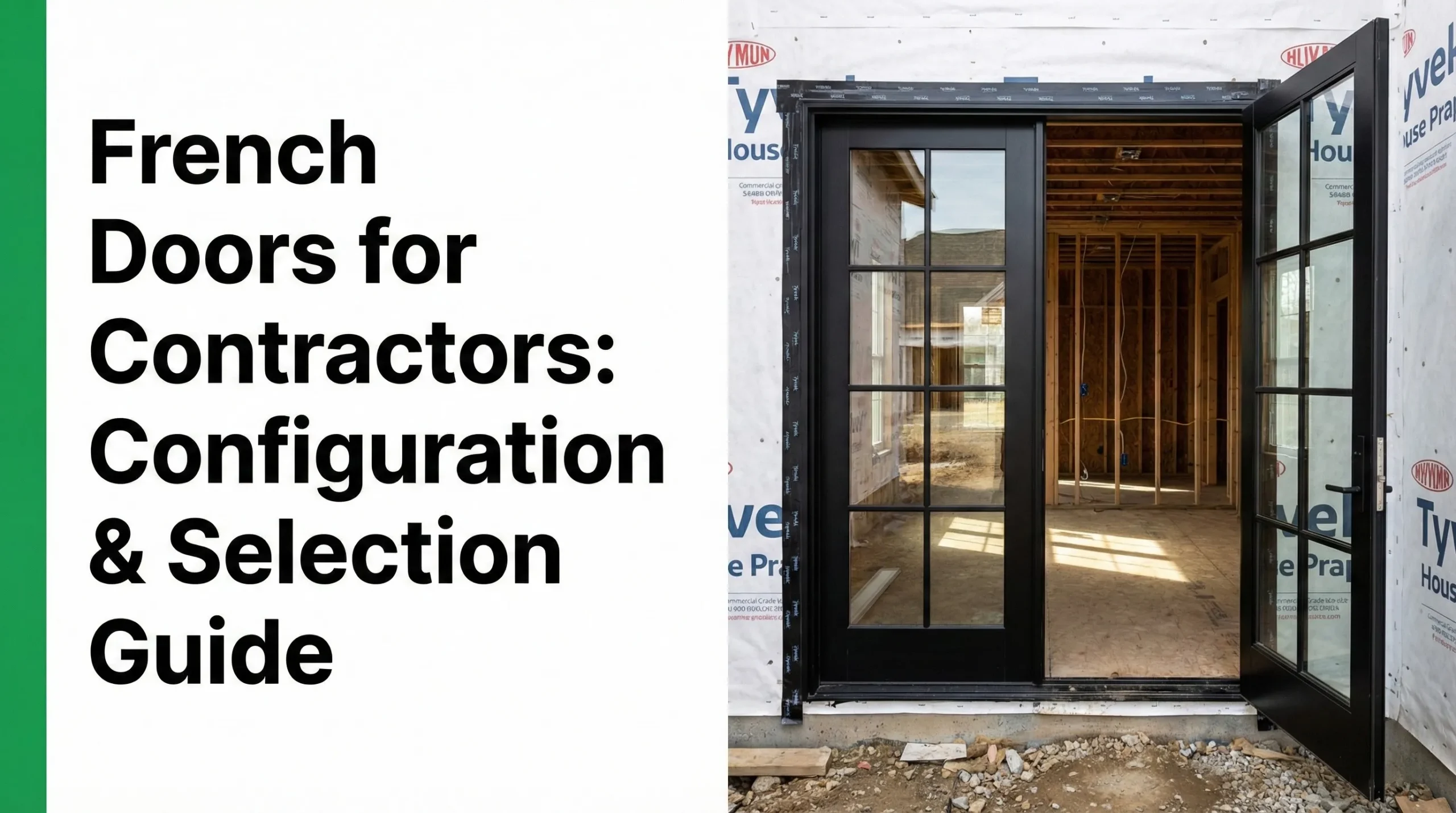
French Patio Doors: Timeless Elegance
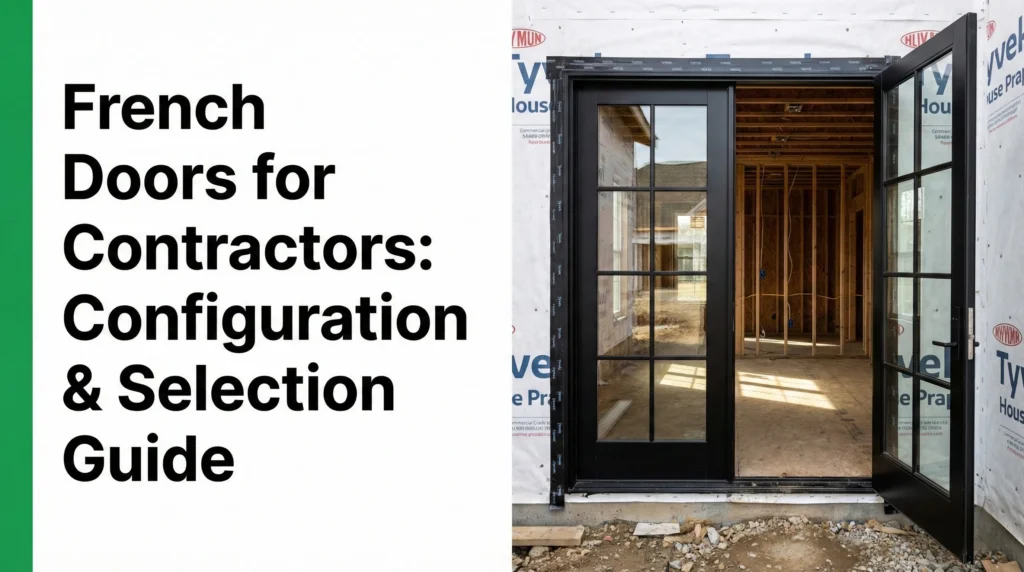
- What they are: A pair of hinged doors that swing in or out, often with grilles for classic charm.
- Best for: Traditional designs, formal entries to decks or gardens, and wide access when both doors open.
- Pros:
- Classic, upscale look
- Wide clear opening with both leaves active
- Strong lock options; can pair with sidelights and transoms
- Cons:
- Needs swing clearance inside or out
- Higher cost than basic sliders
- Typical cost:
- Door only: $1,200–$4,500 (fiberglass/steel) • $2,500–$6,500 (wood/clad)
- Installed: $2,500–$8,500+

Also read: French Patio Doors: Inswing or Outswing? and our French Door Buyer’s Guide.
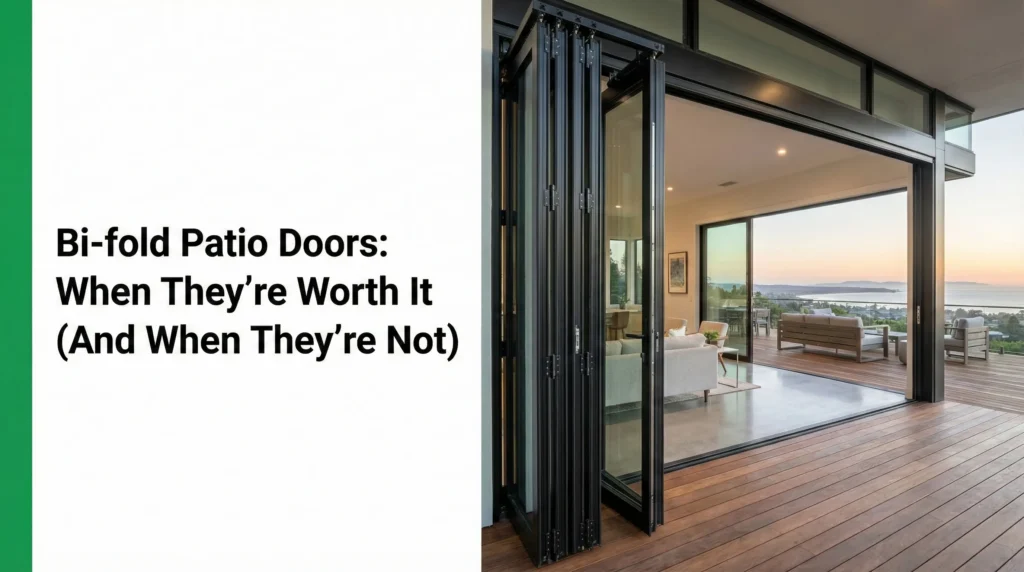
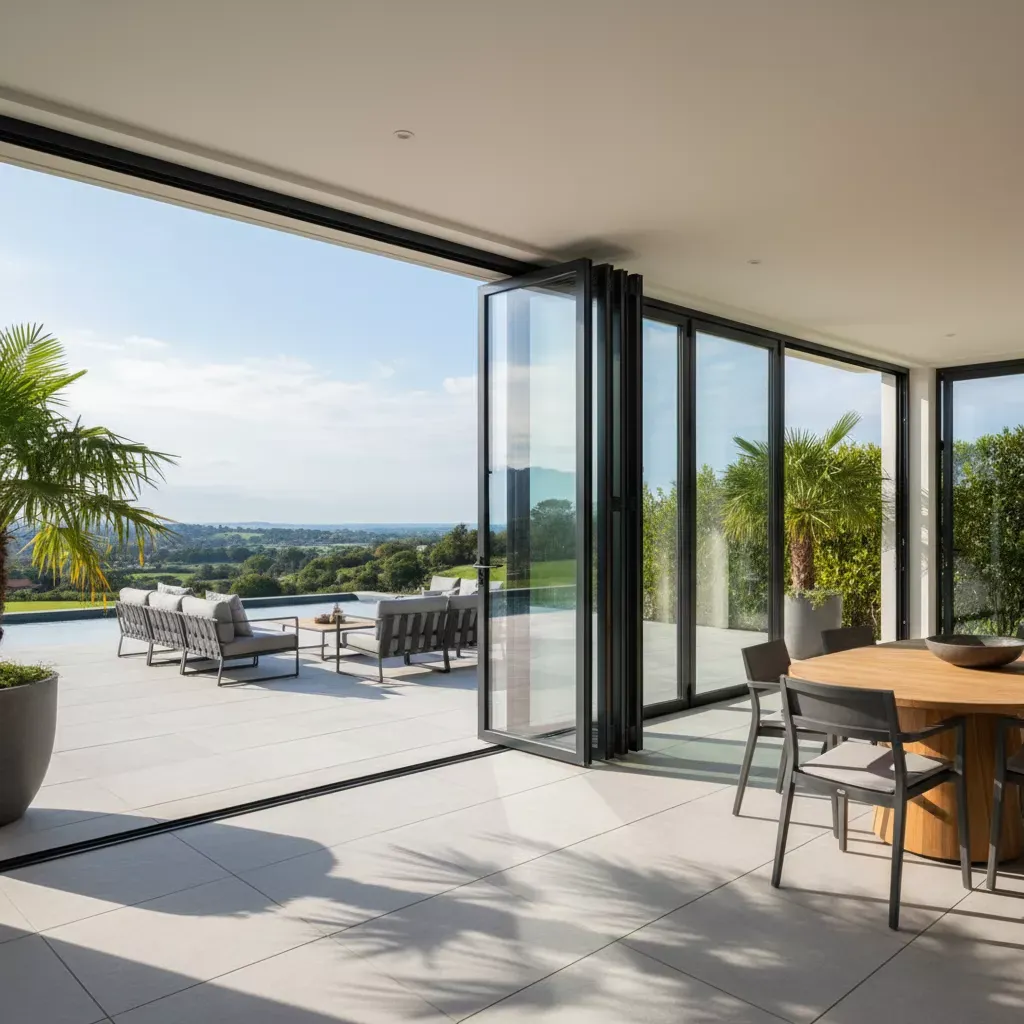
Bifold Patio Doors: The Ultimate Indoor‑Outdoor Flow
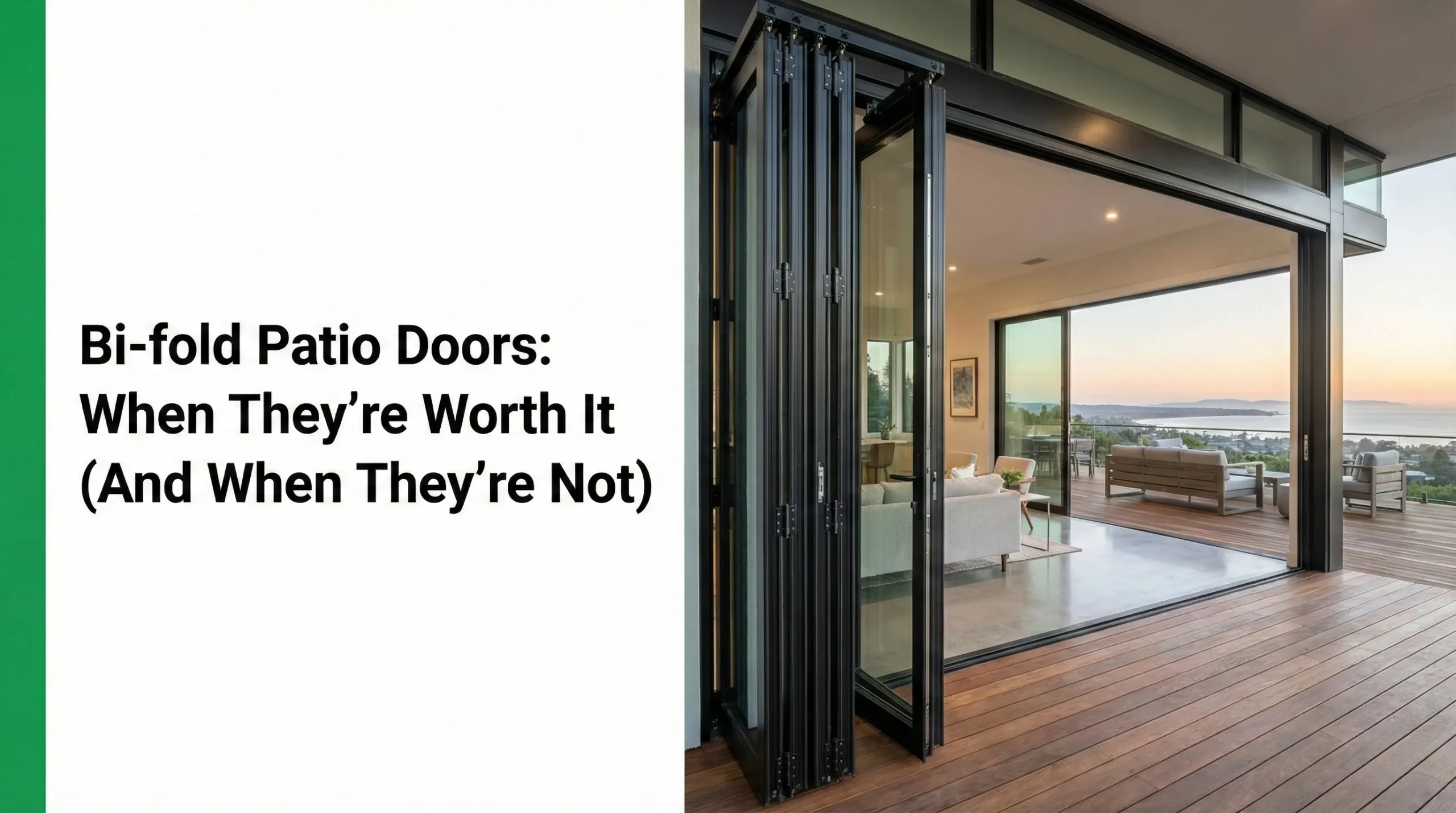
- What they are: Multiple hinged panels folding and sliding along a top/bottom track to stack to one side or both.
- Best for: Opening large wall sections, entertaining, and modern architecture.
- Pros:
- Nearly wall‑to‑wall opening
- Stunning visual and experiential impact
- Highly configurable panel counts and traffic doors
- Cons:
- Premium price; complex installation and setup
- Requires robust structural header and careful water management
- Typical cost:
- Door only: $6,000–$18,000 (typical 10–12 ft spans)
- Installed: $10,000–$35,000+ (span, panels, materials)
Planning one? See our Bifold Door Buying and Size Guide.
Multi‑Slide & Pocket Doors: The Disappearing Wall
- What they are: Three or more panels on parallel tracks; panels stack at one end or slide into a wall pocket for full disappearance.
- Best for: Luxury builds, panoramic views, and seamless transitions.
- Pros:
- Maximum opening and view
- Minimal framing; ‘disappearing wall’ effect
- Scales to very wide spans
- Cons:
- Highest costs and lead times
- Requires advanced waterproofing, drainage, and structure
- Typical cost:
- Door only: $8,000–$25,000+ (varies with span and finish)
- Installed: $15,000–$50,000+

Choosing the Right Material: A Head‑to‑Head Comparison
Material affects durability, maintenance, efficiency, and cost. Vinyl is budget-friendly; fiberglass balances performance and looks; wood is premium; and aluminum is sleek and strong.
| Material | Durability (1–5) | Maintenance | Energy Efficiency | Cost | Aesthetics |
|---|---|---|---|---|---|
| Vinyl (uPVC) | 3–4 | Low | Better–Best | $900 – $3,300 (standard single/exterior door) | Realistic grains or smooth |
| Wood / Clad Wood | 4 (with care) | Medium | Better | $1,800 – $5,000+ (solid wood, premium, or clad wood) | Ultra‑slim, modern profiles |
Notes:
- For commercial or modern builds, see our Commercial Aluminum Door Buying Guide.
- Considering budget and lead times? Compare the best patio door suppliers.
- Ready to customize? Explore custom-made patio doors from Hotian.
Demystifying Energy Efficiency: What U‑Factor and SHGC Really Mean
Lower U‑factor means better insulation; lower SHGC means less unwanted solar heat gain. Choose glass packages to match your climate and orientation.
- U‑Factor (insulation): Lower is better for keeping heat in during winter. Typical patio door U‑factors range from ~0.27 to 0.35 depending on glass and frame.
- SHGC (solar heat gain): Lower reduces summer heat from the sun; higher can help in cold climates with passive solar. Typical range is ~0.20–0.40.
- Glass packages:
- Double vs. triple pane: Triple improves U‑factor and comfort; may reduce VT (visible light).
- Argon/Krypton gas: Fills reduce convection, improving thermal performance.
- Low‑E coatings: Reflect IR heat; modern spectrally selective coatings can allow light while blocking heat.
Tip: Check NFRC labels and regional ENERGY STAR criteria for 2025 updates.
Security Deep Dive: How to Protect Your Home
Combine multi‑point locking, reinforced frames, and laminated glass for strong defense; add smart sensors for monitoring.

- Multi‑Point Locking Systems:
- Engage hooks/bolts at the head, mid, and sill to resist prying.
- Reinforced Frames & Sills:
- Use steel‑reinforced vinyl or heavy‑gauge aluminum; ensure anchored strike keepers and continuous meeting stiles.
- Laminated or Impact‑Rated Glass:
- PVB interlayer resists breakthrough; in hurricane zones, look for impact ratings (ASTM E1886/E1996).
- Modern Security:
- Integrated smart locks, contact sensors, and glass‑break detectors tie into home security and alerts.
Patio Door Cost Breakdown: No Surprises
Your total cost = door system + installation scope + options. Bigger spans, premium materials, and structural work increase price.
- Door system costs (typical):
- Sliding (2‑panel): $600–$4,000 door only
- French (pair): $1,200–$6,500 door only
- Bifold: $6,000–$18,000 for the door only
- Multi‑slide/pocket: $8,000–$25,000+ door only
- Installation tiers:
- Replacement “insert” (no frame changes): $400–$1,500 labor
- Full frame replacement (new frame/sill flashing): $800–$2,500 labor
- New opening with structural work: $2,500–$8,000+ labor and materials
- Large-span header upgrades (bifold/multi‑slide): add $5,000–$15,000+, project-specific
- Price influencers:
- Size/span, frame material, glass package (triple/low‑E/laminated), hardware/finish, screens, location access, and permits.
Quick estimator tip: Get line‑item quotes separating door cost, installation scope, waterproofing, and structural work.
Installation: DIY or Hire a Pro?
DIY is realistic for like‑for‑like sliding replacements in square, level openings. Hire a pro for new openings, large spans, and any system requiring flashing and structural changes.
- When you can DIY:
- Prehung replacement sliders/French doors
- The opening is plumb/square; sill is sound
- Tools: level, shims, screwdrivers/drill, oscillating tool, sealants/flashings
- When to call a professional:
- New openings or widening; structural header changes
- Bifold, multi‑slide, pocket systems
- Warranty preservation, advanced waterproofing, pan flashing, and sill drainage
Related: For entry upgrades, see our Front Door Buying Guide.
Maintenance and Longevity: Protecting Your Investment
Clean tracks, maintain seals, and lubricate moving hardware annually. Wood needs finishing; fiberglass and vinyl need simple cleaning.
- Vinyl doors:
- Vacuum tracks; clear weep holes; clean with mild soap; inspect weatherstripping.
- Fiberglass doors:
- Wash surfaces; occasional paint or topcoat touch‑ups for UV protection.
- Wood/clad doors:
- Inspect for finish breakdown; re‑stain/paint as needed; monitor exposed end grain and sill joints.
- Hardware:
- Lubricate rollers, hinges, and multipoint gear with silicone‑safe products; check fasteners and adjust strikes.
Frequently Asked Questions (FAQs)
What is the most popular type of patio door?
Are vinyl patio doors a good choice?
How long do patio doors last?
Can you replace a window with a patio door?
What are egress requirements for patio doors?
Conclusion & Next Steps
Decide in this order: Style (sliding/French/bifold/multi‑slide) → Material (vinyl/fiberglass/wood/aluminum) → Budget (door + install + options). Prioritize energy, security, and maintenance to match your climate and lifestyle.
- Ready to find your perfect door? Browse our patio door styles guide or get a custom patio door from us.
- Not sure where to buy? Compare the best patio door makers.