Windows frequently serve as the weakest point in your building’s sound insulation, allowing the infiltration of traffic hum, construction noise, and neighborhood chatter. While walls block sound effectively, glass vibrates, and gaps around frames act as open doors for noise.
If you are looking for how to soundproof a window, the most effective solutions range from sealing air gaps to upgrading to asymmetric triple glazing. Here are the top 10 methods:
Quick Summary: 10 Ways to Soundproof a Window
- Seal Gaps: Use acoustic caulk or compression seals to block air leaks.
- Upgrade Glazing: Switch to asymmetric triple-glazed or laminated glass.
- Window Inserts: Install magnetic or acrylic secondary glazing kits.
- Soundproof Curtains: Hang heavy, mass-loaded vinyl (MLV) curtains.
- Honeycomb Shades: Use double-cell shades to trap air and dampen noise.
- Window Plugs: Insert custom-fit foam and wood plugs for total isolation.
- Acoustic Films: Apply noise-reducing adhesive films to existing glass.
- Solid Shutters: Install heavy internal or tightly mounted external shutters.
- Permanent Blocking: Build a drywall stud wall over the window (for studios).
- Full Replacement: Install certified high-STC soundproof window units.
Why Windows Let Noise In (And How to Stop It)
Before diving into the specifics of each method, it helps to understand how sound travels. Noise enters your room in two ways: through air leaks (gaps in the frame) and through vibration (the glass pane itself vibrating).
To effectively soundproof a window, you must improve its STC (Sound Transmission Class) rating. A standard single-pane window might have an STC of 26 (you can hear normal speech through it), while a professional soundproof window can reach STC 45-50+ (shouting becomes inaudible).
Whether you need a quick DIY fix using the new 2025 magnetic retrofitting kits or a professional architectural solution like thermally broken frames, the guide below details every method from lowest cost to highest performance.
Quick Links:
Cost-Free DIY Fix
Medium Investment Fix
Ask a Pro
Phase 1: Quick & Cost-Effective Fixes (DIY)
These are the foundational, low-cost steps you can take to achieve noticeable noise reduction, often in a single weekend.
1. How Do You Seal Gaps and Cracks Around a Window?
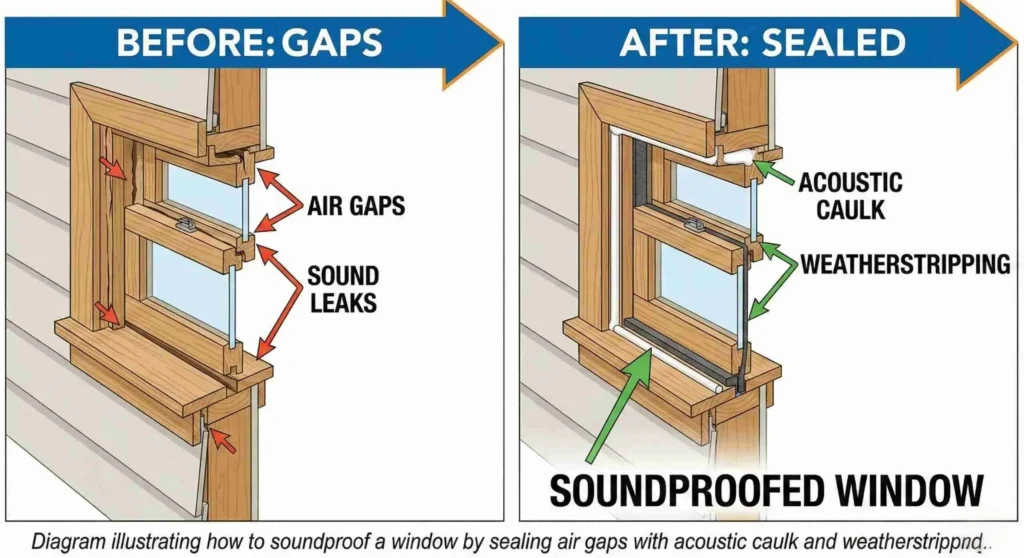
Seal all gaps because sound travels like air; if air can get through, noise will follow. Use acoustic caulk for stationary gaps and weatherstripping tape for operable sashes to create an airtight seal. This is the single most important DIY step.
- Action 1: Use Acoustic Caulk. Apply it around the window frame where it meets the wall. Unlike regular caulk, it remains flexible, absorbing vibrations.
- Action 2: Apply Weatherstripping. Use a high-quality foam or rubber compression tape inside the window jambs where the sashes close. This stops drafts and high-frequency noise.
2025 Update: For a more permanent and robust seal, look into spring-loaded acoustic seals and custom compression gaskets. These professional-grade solutions offer better long-term airtightness than standard foam tapes.
Learn more about the components that need sealing in our guide to the parts of a window.
2. What Are Window Inserts and Do They Work?
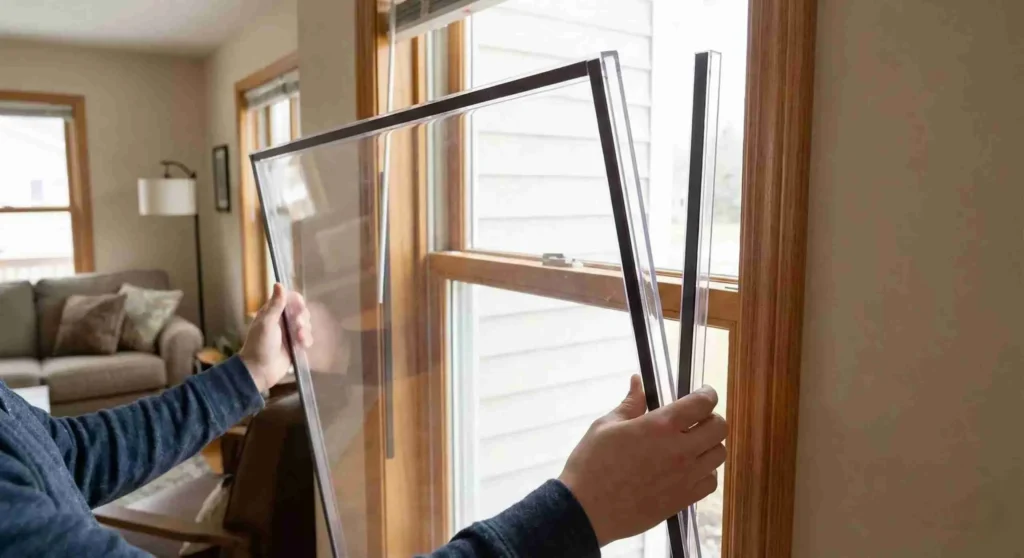
A window insert is a secondary pane of acrylic or glass that you install on the inside of your existing window frame. It creates a dead air space that significantly dampens sound waves, making it one of the most effective non-permanent soundproofing solutions.
- How it works: The insert creates an air gap between the original window and the new pane. This gap acts as an acoustic isolator, disrupting the sound path. A larger air gap generally means better soundproofing.
- Action: Install an acrylic or glass panel inside the existing frame, ensuring an airtight seal around the edges.
2025 Innovation: Look for magnetic and adhesive retrofitting kits. These snap-fit solutions are perfect for renters or historic homes where you can’t replace the window. They create an airtight seal without drilling and can be easily removed.
For a deeper dive on insulation, see Understanding R-Values and Window Insulation.
3. How Effective Are Soundproof Curtains or Blankets?
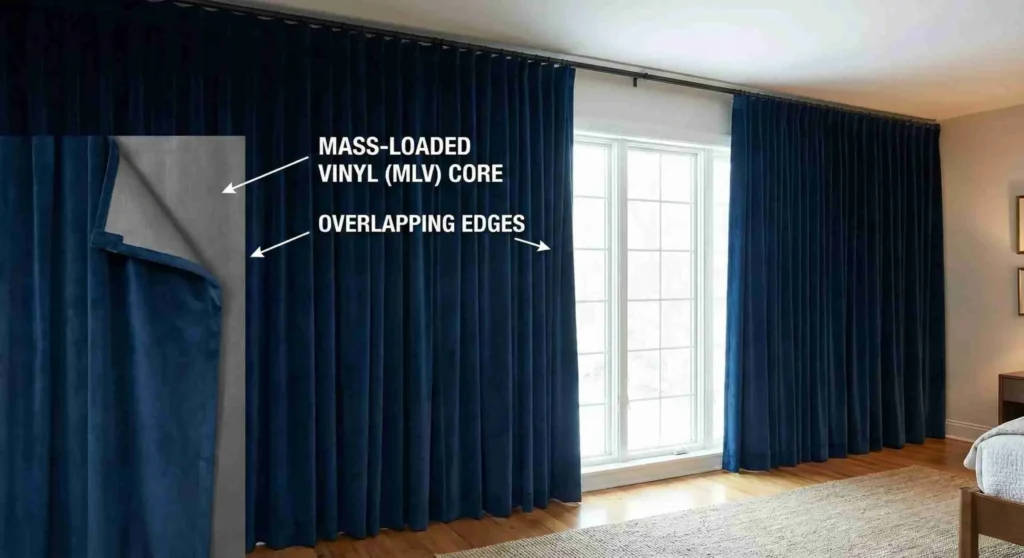
Answer first: Soundproof curtains and blankets add mass and absorption to block and dampen sound. To be effective, they must be made with a dense core material like Mass Loaded Vinyl (MLV) and extend well beyond the window frame.
- Action: Install a heavy, multi-layer curtain on a sturdy rod. Ensure it is wide enough to cover at least 6 inches past the frame on all sides and long enough to touch the floor or a deep windowsill.
- Tip: The key is density and complete coverage. A regular heavy blanket is better than nothing, but a purpose-built acoustic curtain with an MLV core will perform significantly better.
4. Do Cellular or Honeycomb Shades Reduce Noise?
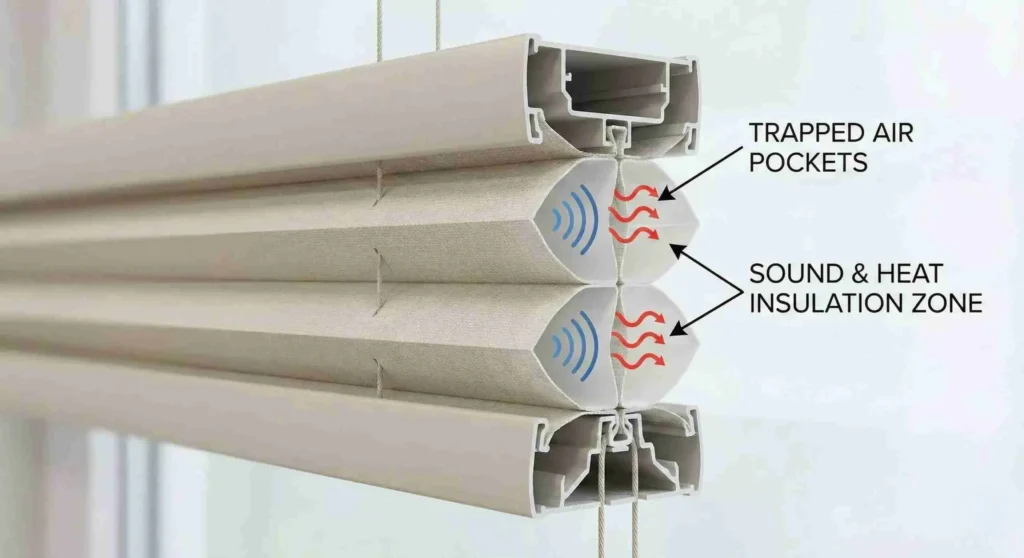
Yes, cellular (or honeycomb) shades provide a modest level of noise reduction by trapping air in their cells. They are more effective at thermal insulation but can help dampen high-frequency sounds.
- Action: Install double-cell or triple-cell shades for the best acoustic performance. The more cells, the more air is trapped.
- Note: This method is good for reducing office chatter or light street noise but will not be very effective against heavy traffic or construction.
5. How Well Do Soundproofing Films Work on Windows?
Soundproofing films, applied directly to the glass, offer minimal sound reduction. They primarily work by dampening high-frequency vibrations in the glass itself but are not effective against low-frequency sounds like traffic rumble or bass music.
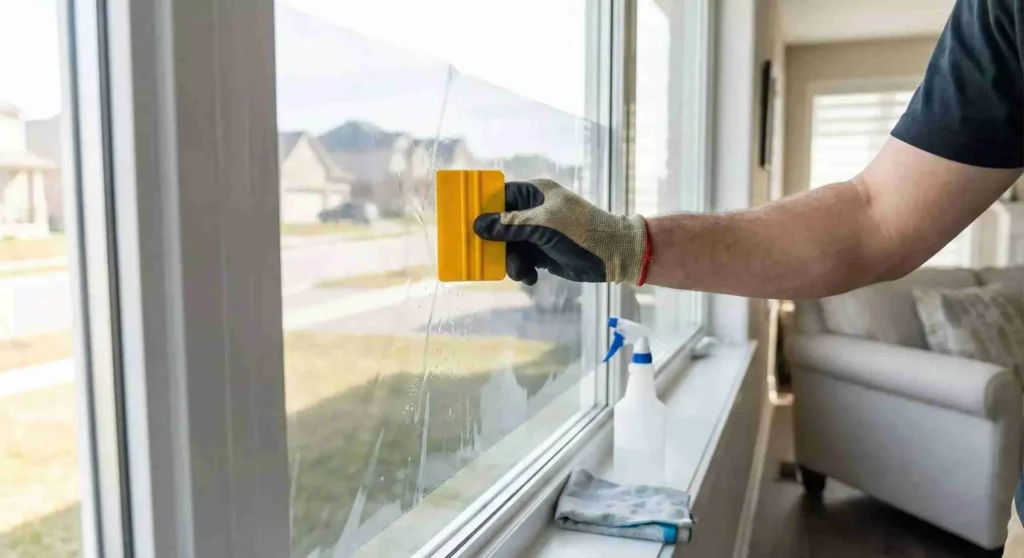
- Action: Apply a self-adhesive acoustic film to the interior surface of the window glass, ensuring no air bubbles are trapped.
- Reality Check: Set realistic expectations. A window film is a minor improvement, not a complete solution. It works best when combined with other methods, like sealing gaps.
Phase 2: Add-ons & Retrofitting (Medium Investment)
These methods require more effort or cost but deliver a significant boost in performance over basic DIY fixes.
6. What Are Soundproof Window Plugs and How Do You Make Them?
A window plug is a removable, multi-layered panel designed to fit snugly inside your window opening, offering a high level of sound blocking. It is one of the most effective non-permanent solutions available.
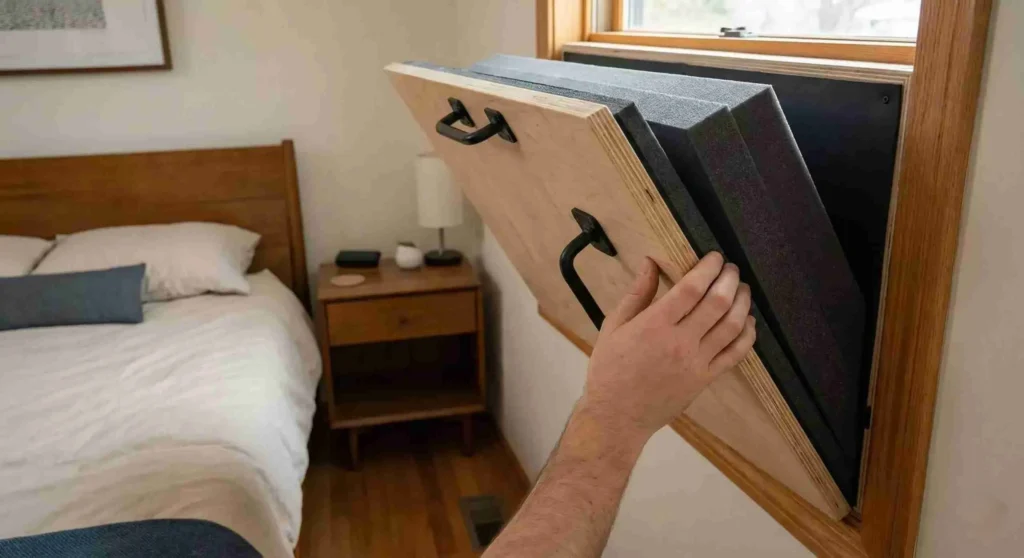
- How it works: The plug combines mass (to block sound) and absorption (to dampen sound) in a single unit.
- Action (Build or Buy):
- DIY: Construct a plug using layers of plywood or MDF, acoustic foam, and Mass Loaded Vinyl (MLV). Add handles for easy removal.
- Buy: Purchase a custom-made plug from a specialty acoustics company.
- Best for: Night shift workers, home theater rooms, or anyone needing near-total silence and darkness.
7. Can Shutters Soundproof a Window?
Yes, heavy, solid shutters can act as an effective physical barrier to sound. Exterior shutters are generally more effective than interior ones because they block sound before it hits the glass.
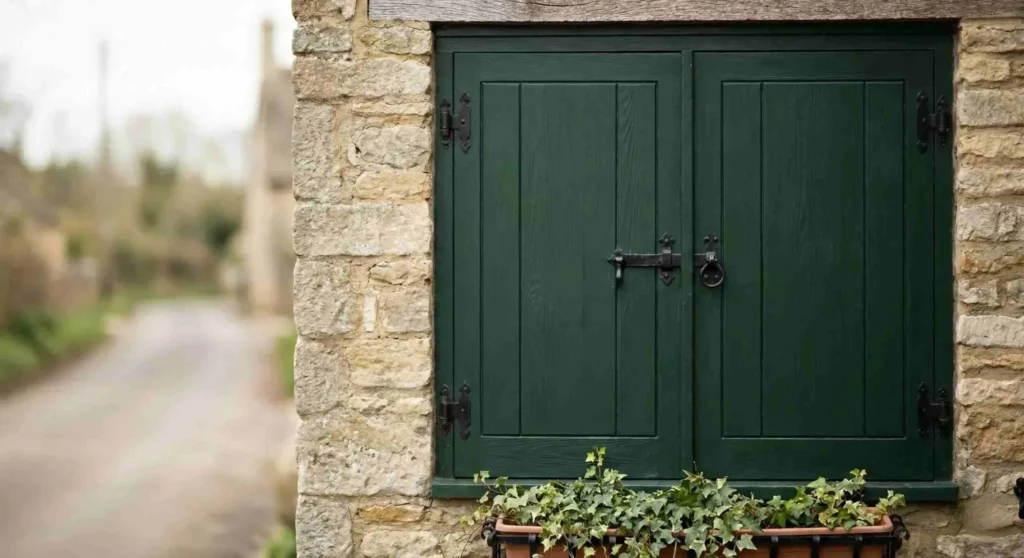
- Action (Exterior): Install solid wood or composite exterior shutters that can be closed tightly against the window. Ensure they are well-mounted to prevent rattling.
- Action (Interior): Solid panel interior shutters (like plantation shutters with solid panels instead of louvers) add a layer of mass and a small air gap, providing decent sound reduction.
For ideas on matching shutters to your home’s exterior, see our guide on Window Trim Styles.
Phase 3: Structural & Professional Solutions (High Performance)
For serious noise problems, addressing the window’s structure is necessary. These are high-investment, high-performance solutions.
8. How Do You Upgrade Glass to Soundproof a Window?
Replace your existing single-pane glass with a high-performance Insulated Glass Unit (IGU). For optimal soundproofing, choose laminated glass or asymmetric triple glazing.

- Action: Hire a professional glazier to replace the glass pack in your existing frames (if the frames can accommodate the thickness).
- Pro Tech – Asymmetric Glazing: This technique uses panes of different thicknesses (e.g., 6mm, 4mm, and 3mm in a triple-pane unit). Each thickness vibrates at a different frequency, disrupting a wider range of sound waves.
- Pro Tech – Laminated Glass: This consists of two panes of glass bonded with a layer of Polyvinyl Butyral (PVB). The flexible PVB interlayer is excellent at dampening sound vibrations, especially low-frequency traffic noise.
For an overview of window types that can accommodate this glass, see our Custom Soundproof Windows.
9. Can You Permanently Block a Window for Soundproofing?
Yes, for the most extreme situations like recording studios or home theaters, you can permanently seal and cover a window by building an interior wall section over it.
- Action:
- Remove the window trim.
- Fill the cavity with insulation (like mineral wool).
- Cover the opening with a layer of Mass Loaded Vinyl (MLV).
- Install one or two layers of drywall, sealing the edges with acoustic caulk.
- Note: This eliminates the window entirely, sacrificing natural light. It is a permanent, high-performance solution for dedicated acoustic spaces.

10. What Is the Ultimate Solution for Soundproof Windows?
The most effective and comprehensive solution is a full replacement with a certified soundproof window designed for acoustic performance. These windows have high STC (Sound Transmission Class) ratings and combine advanced glass with specialized frames.
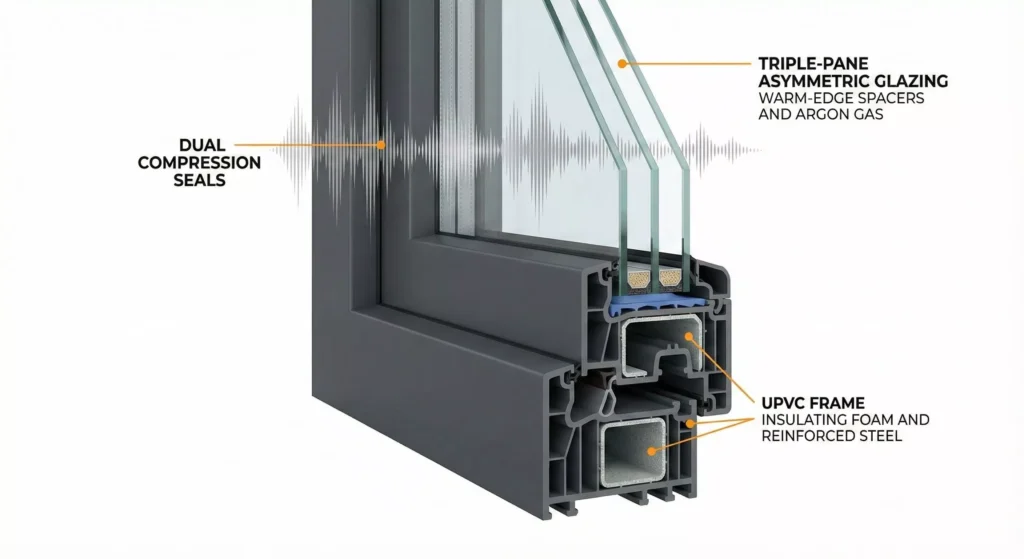
- Action: Replace the entire window unit (frame and glass) with a model specifically engineered for sound reduction.
- 2025 Tech – Frames: Look for:
- Multi-chamber insulated frames (Vinyl/Fiberglass): Internal chambers break up sound transmission paths.
- Thermally broken aluminum profiles: A plastic insulator between the interior and exterior metal prevents vibration and thermal transfer.
- Experimental Tech: Smart/Active Acoustic Glass is an emerging trend. This technology can use sensors and actuators to actively cancel out sound waves, though it is currently very expensive and not widely available for residential use.
Explore options for different window types like Casement vs. Double-Hung Windows to see which styles offer the best seals.
Conclusion: Which Method Should You Choose?
Your best method depends on your budget, noise type, and DIY skill level. For light noise, sealing gaps and adding curtains may be enough. For heavy traffic or construction noise, upgrading the glass or the entire window is necessary.
Summary of Soundproofing Methods & Performance
| Method | Approx. Cost | Performance (STC Gain) | Best For |
|---|---|---|---|
| 1. Seal Gaps & Cracks | $10–$40 (Very Low) | 2-4 points | Everyone. The essential first step. |
| 2. Window Inserts | $150–$450 (Low-Mod) | 8-15 points | Renters, historic homes, high performance without replacement. |
| 3. Soundproof Curtains | $60–$180 (Low-Mod) | 5-10 points | Bedrooms, reducing echo and high-frequency noise. |
| 4. Cellular Shades | $40–$120 (Low) | 1-3 points | Minor noise reduction and thermal insulation. |
| 5. Acoustic Film | $25–$60 (Low) | 1-2 points | Reducing glass vibration and high-frequency noise only. |
| 6. Window Plugs | $70–$250 (Low-Mod) | 15-25+ points | Night shift workers, home theaters, maximum temporary blocking. |
| 7. Shutters | $250–$650 (Mod-High) | 6-12 points | Homes where aesthetics and a physical barrier are desired. |
| 8. Upgrade Glass | $300–$800 (High) | 10-18 points | Significant noise issues where frames are still in good condition. |
| 9. Block Window | $100–$300 (Moderate) | 30+ points | Recording studios, home theaters (permanent). |
| 10. Replace Window | $600–$1,500+ (Very High) | 15-25+ points | The ultimate solution for long-term, high-performance noise control. |
(Note: STC gain is an estimate and varies by product and installation quality.)
Ready for Real Quiet?
DIY methods are a great start for light noise, but for persistent traffic, construction, or neighbor noise, structural changes are the only way to achieve true peace and quiet. Upgrading your windows is an investment in your home’s comfort and value.
At Hotian Windows, we specialize in high-performance window solutions.
- Browse our range of custom soundproof windows, available with asymmetric triple glazing and multi-chamber frames.
- Learn more about the cost of professional solutions in our Soundproof Windows Cost guide.
- Explore how we improve noise reduction with custom windows.
Contact Hotian Windows today for a consultation on the best acoustic window solution for your home.