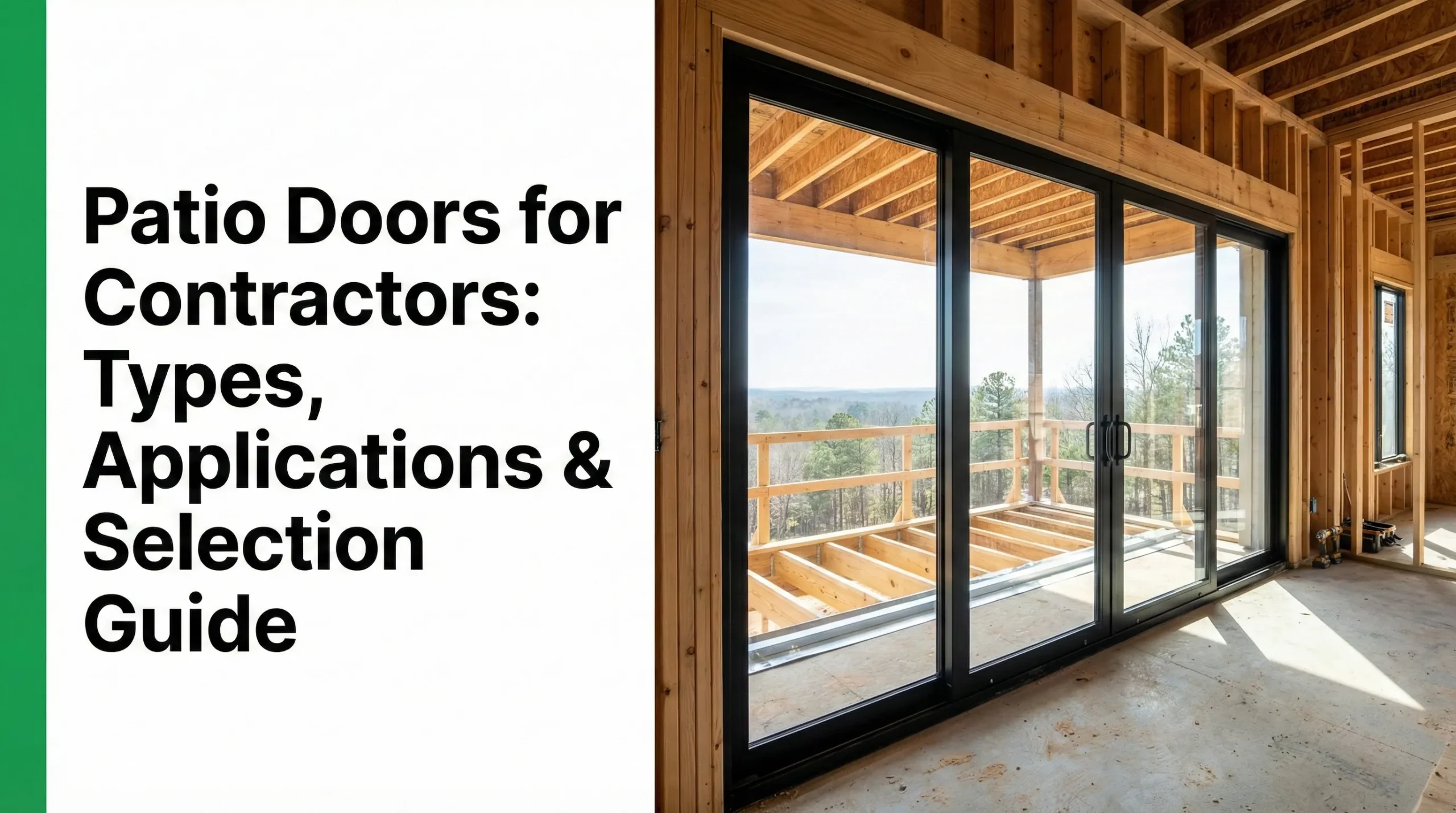
Your front door is the focal point of your exterior—shaping curb appeal, first impressions, daylight, security, and even resale value.
This step-by-step guide walks you through materials, styles, security, energy, installation, and real costs so you can make a confident, future-proof investment.

Front Door Materials at a Glance: The 3-Minute Decision Guide
Pick the material that matches your climate, maintenance appetite, budget, and style goals.
| Material | Cost | Durability & Security | Maintenance | Best For |
|---|---|---|---|---|
| Vinyl (uPVC) | $450 – $3,000 | Better | Low | Budget-friendly, energy-efficient, low-maintenance |
| Steel | $150 – $3,000 | Best | Low–Medium | Max security and value in moderate climates |
| Aluminum | $800 – $2,500 | Better–Best | Low | Modern design, coastal areas, commercial-grade strength |
| Wood | $300 – $5,000+ | Good (with care) | Medium–High | Natural beauty and premium customization |
- Need help sizing? See Standard Front Door Sizes.
- Ready to customize? Explore custom front doors from us.
- Research brands: Best Front Door Manufacturer and Brand.
- Material deep dive: What is the Best Material for a Front Door?
- Commercial options: Commercial Aluminum Door Buying Guide.
The Core Decision: A Deep Dive into Door Materials
Vinyl offers excellent value and energy efficiency, steel maximizes security, aluminum delivers modern aesthetics and corrosion resistance, and wood provides unmatched beauty with higher upkeep.
Vinyl (uPVC) Doors: The Low-Maintenance Value Leader
- What they are: Multi-chamber uPVC profiles with insulated cores, reinforced with steel or aluminum for structural rigidity.
- Best for: Budget-conscious homeowners seeking energy efficiency and minimal upkeep.
- Pros:
- Excellent insulation and energy performance
- Won’t rot, rust, warp, or need painting
- Very low maintenance—wipe clean with soap and water
- Affordable initial cost with good longevity
- Available in white, colors, and woodgrain finishes (vinyl wrap or foil)
- Cons:
- Limited color range compared to painted options
- Can expand/contract with temperature extremes
- Perceived as less premium than wood or aluminum
- Hardware anchoring requires proper reinforcement
- Average cost (pre-hung):
- Door only: $500–$2,500
- Installed: $1,100–$4,000+

Steel Doors: The Fortress of Security & Value
- What they are: Steel skins over an insulated core with wood or steel frame components.
- Best for: Security-focused, budget-conscious projects in moderate sun exposure.
- Pros:
- Outstanding security and impact resistance
- Typically the most affordable pre-hung systems
- Good energy performance with insulated cores
- Cons:
- Can dent; scratches must be painted to prevent rust
- Dark colors can run hot in direct sun; consider lighter finishes or overhangs
- Average cost (pre-hung):
- Door only: $300–$1,500
- Installed: $900–$3,000+
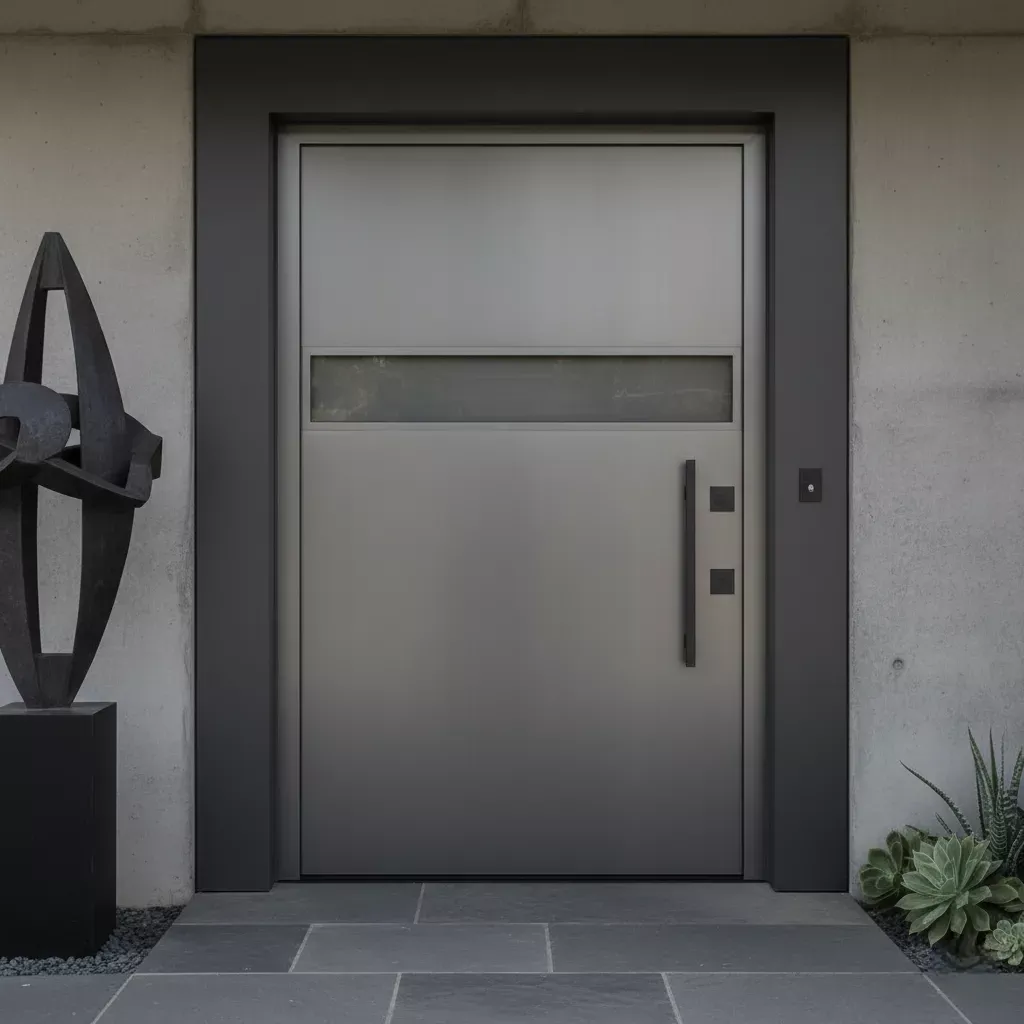
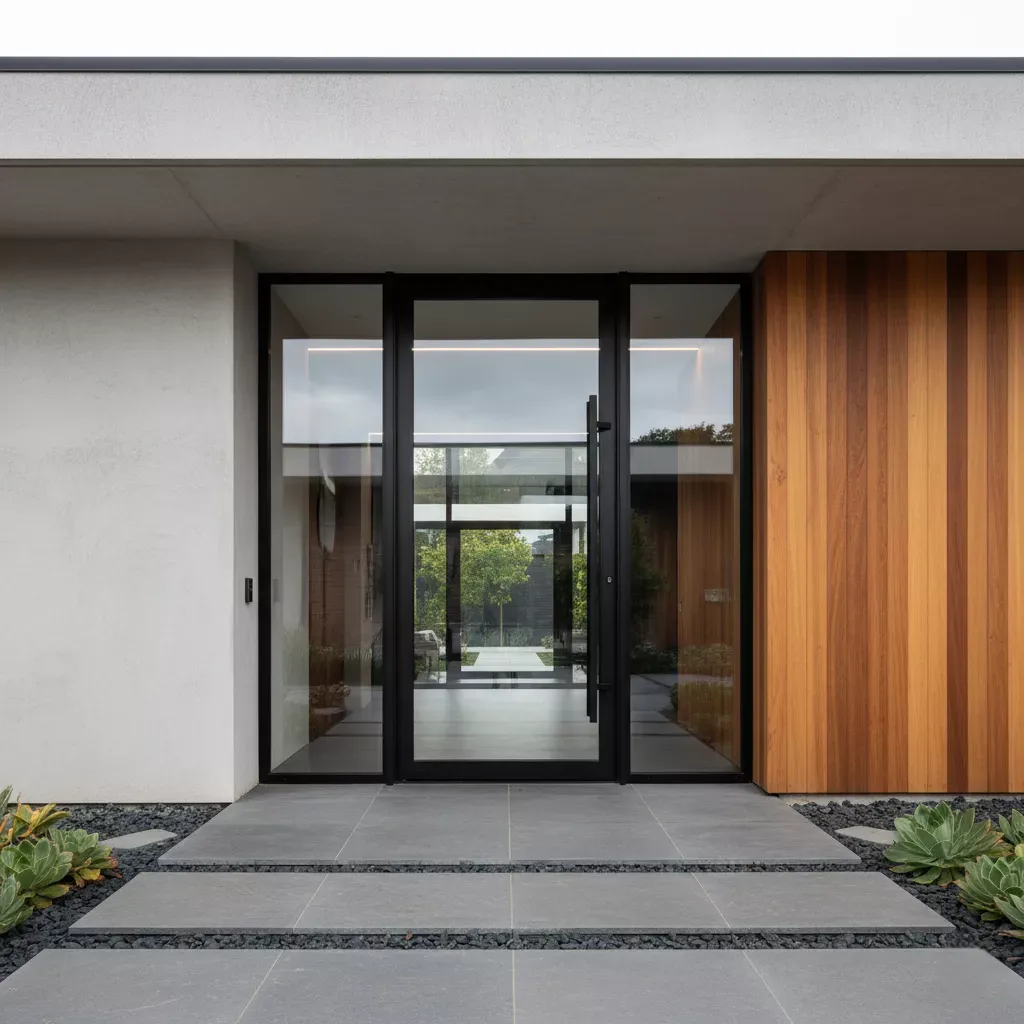
Aluminum Doors: The Modern, Corrosion-Resistant Choice
- What they are: Extruded aluminum frames with thermally broken profiles, often featuring large glass panels and slim sightlines.
- Best for: Contemporary homes, coastal environments, commercial-grade durability, and maximizing natural light.
- Pros:
- Excellent corrosion resistance—ideal for coastal and humid climates
- Ultra-slim profiles enable modern, minimalist aesthetics
- Lightweight yet strong; won’t warp, rot, or rust
- Low maintenance; powder-coated finishes resist fading
- Fully recyclable and sustainable material
- Can accommodate large glass panels and pivot hardware
- Cons:
- Requires thermal breaks for good energy performance in cold climates
- Higher initial cost than vinyl or steel
- Can conduct heat/cold without proper thermal isolation
- Limited insulation value compared to insulated vinyl or steel cores
- Average cost (pre-hung):
- Door only: $1,200–$5,000+ (thermally broken, powder-coated)
- Installed: $2,000–$7,500+ (higher for pivot or oversized systems)
Wood Doors: The Timeless Classic
- What they are: Solid wood or wood veneer over engineered cores; species include mahogany, oak, walnut, and fir.
- Best for: High-end or historic homes; owners willing to maintain finish.
- Pros:
- Natural warmth, depth, and authenticity
- Highly customizable profiles, panels, and millwork
- Substantial feel; premium presence
- Cons:
- Requires regular re-finishing; susceptible to warping/rot if neglected
- Higher cost; exposure-sensitive (needs overhangs)
- Average cost (pre-hung):
- Door only: $1,500–$6,000+ (custom: $6,000–$12,000+)
- Installed: $2,800–$10,000+
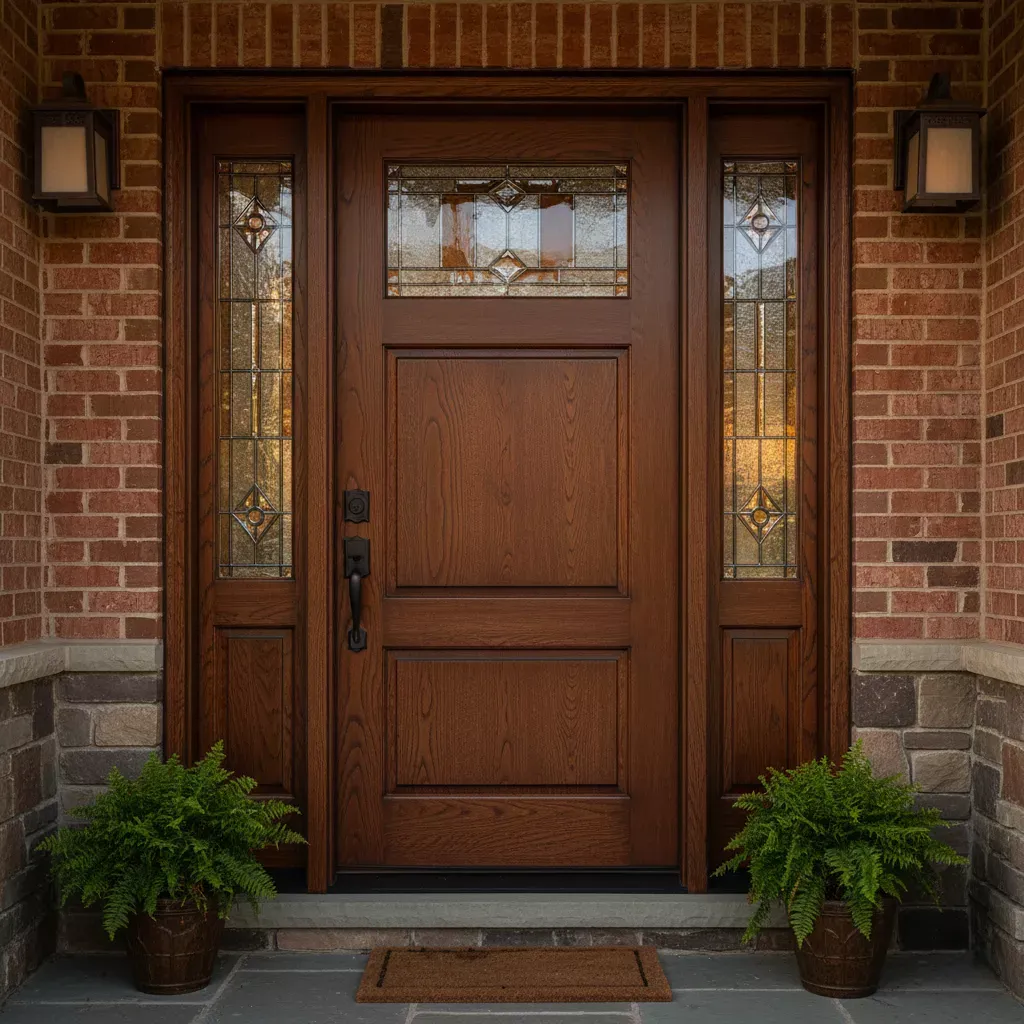
Wood species guidance: Which type of wood door is typically used for residential?
Finding Your Style: How Do You Match a Door to Your Home’s Architecture?
Align panel profiles, glass, and hardware with your home’s style for a coherent, high-value look.
- Craftsman: Clean lines, 3–4 lites in the top third, dentil shelf optional; stained or painted.
- Modern: Flush or shallow-panel slabs, bold color, minimal or linear glass, slim pulls; aluminum excels here.
- Traditional/Colonial: Raised panels, classic symmetry, sidelights, and transoms.
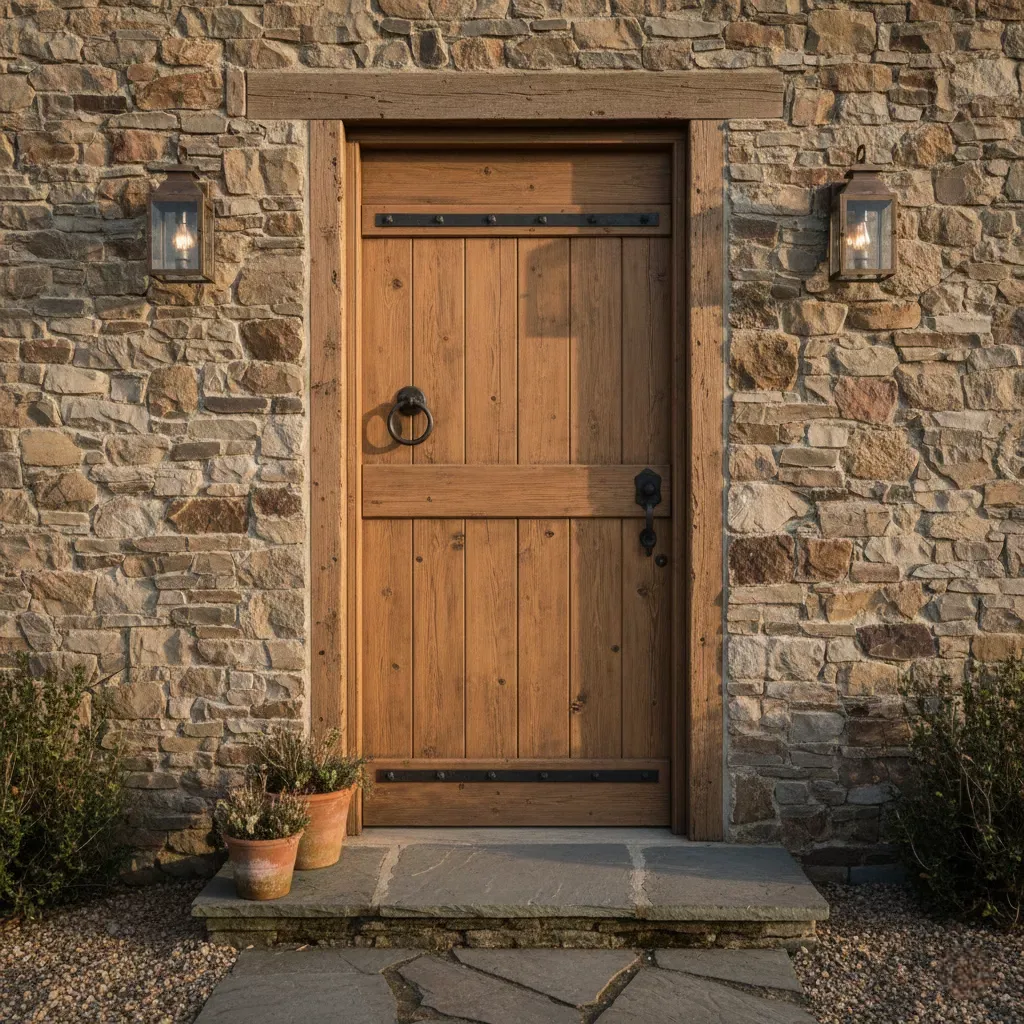
- Rustic/Farmhouse: Planked designs, arched tops, strap hinges (decorative), natural stains.


Related: Considering the patio side too? See our patio door buying guide.
It’s a System, Not Just a Door: Pre‑Hung vs. Slab
For 90% of replacements, choose a pre-hung system for proper sealing, alignment, and warranty.
- Slab only:
- Just the door leaf; reuses existing frame
- Best for frames that are square, plumb, undamaged
- Requires precise hinge mortise and latch alignment
- Pre-hung system (recommended):
- Door, new frame/jambs, hinges, threshold/sill, weatherstripping as one unit
- Faster installation, better sealing, improved energy and water performance
- Often required for manufacturer warranties
Learn the supporting structure: Door Frame Types and Essential Door Latch Types.
Planning an outswing? Read Outward-Opening Front Doors: Are They Right for You? and our swing door guide.
The Ultimate Guide to Front Door Security
Combine Grade 1 deadbolts, reinforced strikes, solid frames, and laminated glass for best-in-class security.
- Lock grades (ANSI/BHMA):
- Grade 1: Highest residential security and durability
- Grade 2: Strong everyday security
- Grade 3: Basic, entry-level
- Strike plates and reinforcement:
- Use heavy-duty box strikes with 3″ screws into studs
- Vinyl doors require proper steel reinforcement in lock areas
- Aluminum doors can integrate multipoint locks in extruded channels
- Consider jamb reinforcement kits and continuous hinges for high-risk entries
- Glass security:
- Tempered for safety, laminated glass resists forced entry
- Smaller divided lites or internal grille bars add resistance
- Hardware as the finishing touch:
- Handlesets, deadbolts, hinge security studs, door viewers, kick plates
- Multipoint locks (common on vinyl, aluminum, and steel) improve sealing and pry resistance
The Real Cost of a New Front Door
Total cost = door system + installation + finishing + potential repairs. Expect higher costs for aluminum, wood, custom glass, and structural fixes.
- Door system (pre-hung) price ranges:
- Vinyl (uPVC): $500–$2,500 door only; $1,100–$4,000+ installed
- Steel: $300–$1,500 door only; $900–$3,000+ installed
- Aluminum: $1,200–$5,000+ door only; $2,000–$7,500+ installed
- Wood: $1,500–$6,000+ door only (custom $6,000–$12,000+); $2,800–$10,000+ installed
- Professional installation (typical):
- Replacement (same size, minor adjustments): $400–$1,200
- Full frame replacement with sill flashing: $800–$2,000
- New opening/structural changes: $2,000–$5,000+
- Aluminum pivot or oversized systems: Add $1,500–$3,000+ for specialized installation
- Potential extras:
- Framing and sub-sill repairs, new exterior/interior trim or casing
- Paint/stain and clear coats (wood only), upgraded hardware, smart locks
- Disposal/haul-away permit (if widening/opening changes)
Budget planner tip: Request itemized quotes for the door unit, install scope, waterproofing (pan flashing, sealants), finishing, and hardware.
Climate Matters: What’s the Best Door for Your Region?
Match material and finish to sun, moisture, and salt exposure for durability and comfort.
- Hot, sunny climates:
- Aluminum with powder-coated finish performs excellently; won’t warp or fade
- Vinyl performs well but can expand in extreme heat; choose lighter colors
- Steel: avoid dark colors in direct sun
- Wood: requires overhang protection and quality UV finishes
- Cold, wet climates:
- Vinyl (uPVC) excels with excellent thermal performance and no rot risk
- Well-sealed steel performs well; look for low U-factor and quality weatherstripping
- Aluminum requires thermal breaks for cold climate performance
- Heated vestibules benefit from insulated cores and tight thresholds
- Humid/coastal climates:
- Aluminum is the top choice—completely corrosion-resistant with marine-grade hardware
- Vinyl resists moisture and won’t corrode; it’s good for coastal areas
- Steel needs rust prevention and regular inspection of finish
- Wood requires vigilant maintenance; marine-grade topcoat if chosen
Frequently Asked Questions (FAQs)
How do I measure for a new front door?
For pre‑hung: Measure the existing frame (inside jamb to jamb and head), then confirm the rough opening behind the trim. Check plumb/level/square and note swing/hanging. See Standard Front Door Sizes.
What is the most energy‑efficient front door?
How long should a front door last?
Wood: Decades with consistent finishing and adequate overhang. Hardware and weather seals may need periodic replacement.
Does a new front door increase home value?
Are aluminum doors good for residential use?
Conclusion: Making Your Final Choice
Balance budget, climate, and style—but prioritize a high-quality, pre-hung system with professional installation for best performance, security, and longevity.
- Ready to transform your entryway? Explore our collections of vinyl, steel, aluminum, and wood front doors.
- Want brand guidance? Start with the Best Front Door Manufacturer and Brand.
- For commercial-grade options: Commercial Aluminum Door Buying Guide.