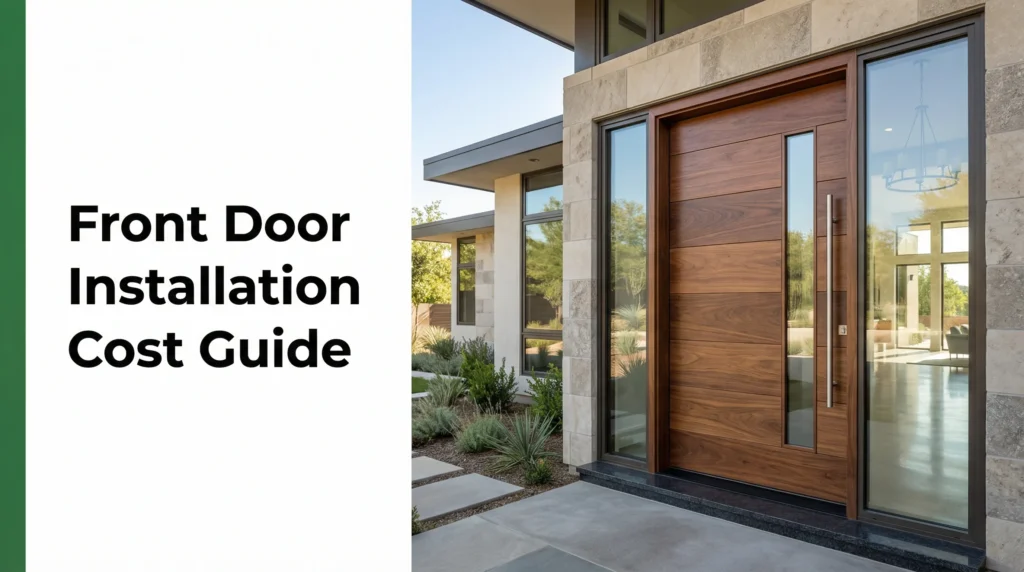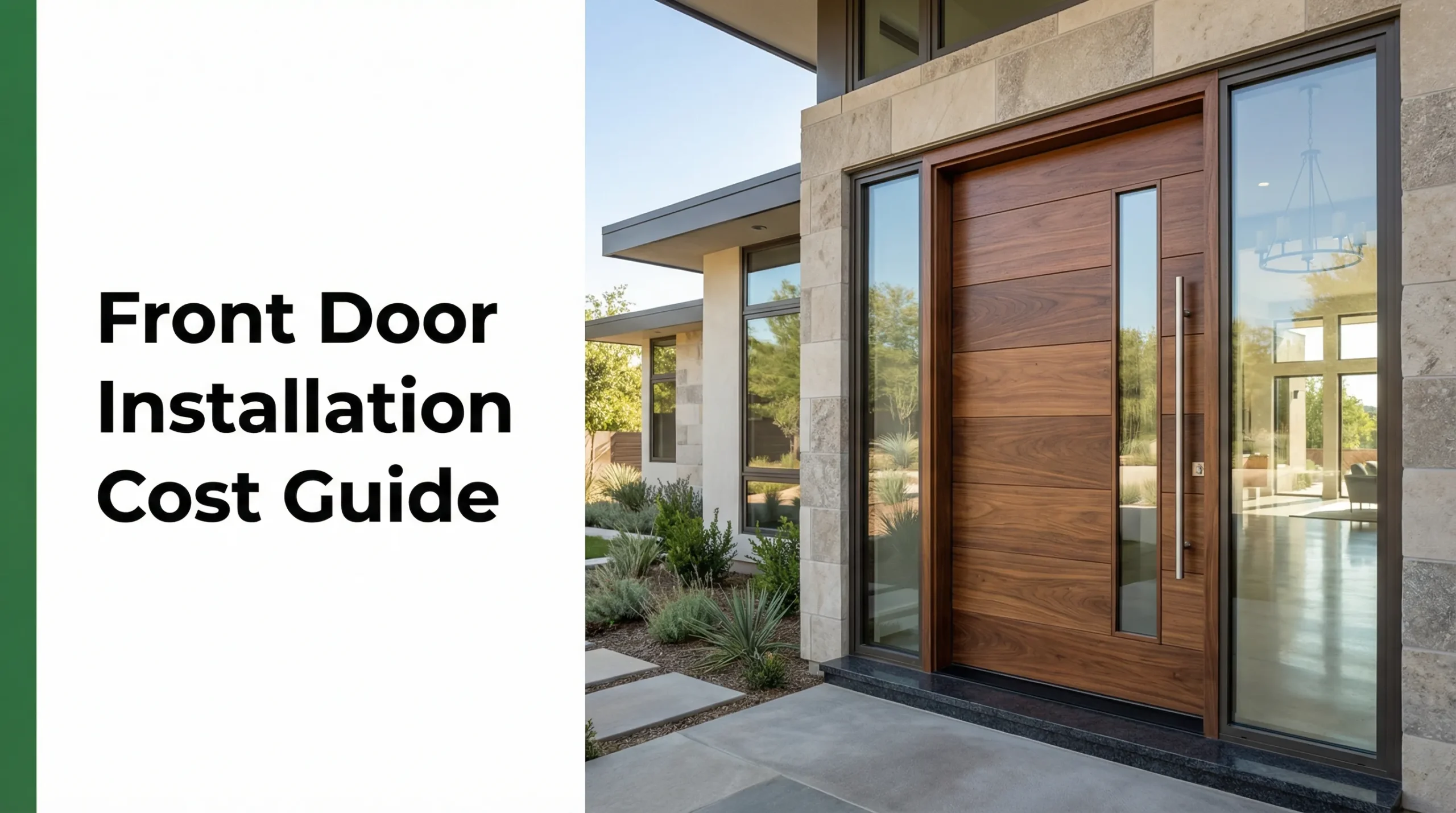
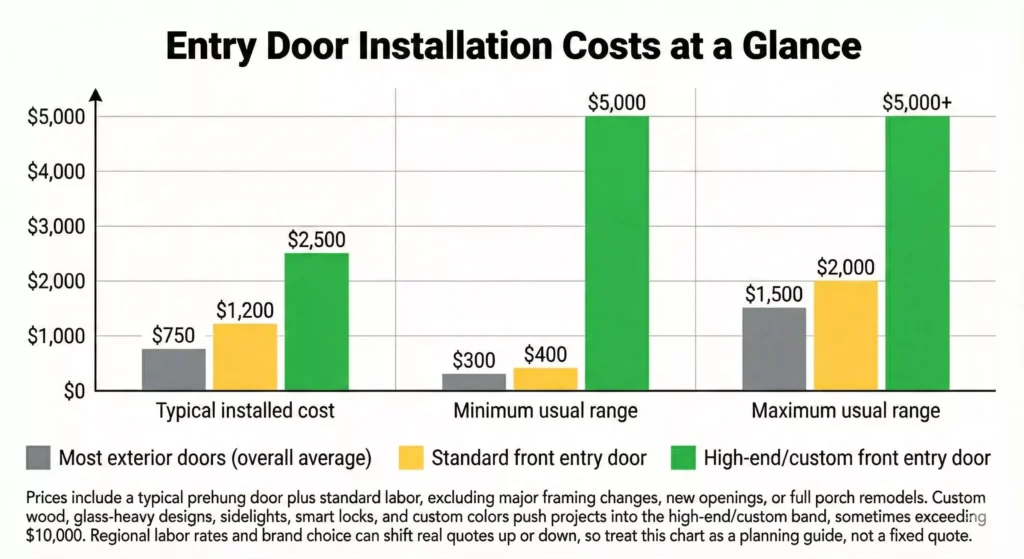
For 2025, most professionally installed front doors fall somewhere between $1,500 and $10,000+, depending on material, size, glass, and how much repair work is hiding behind your old frame. The wide online ranges you see—“$500–$10,000”—are technically true but useless without context.
As a direct door manufacturer, we see every part of the cost chain—raw timber, machining, finishing, glazing, hardware, and installation. This guide “peels back the curtain” so you can see where your money actually goes, from a basic steel entry door to a fully custom wood grand entrance.
Whether you are:
- A custom home builder planning a luxury entrance, or
- A homeowner replacing a basic steel door with a high‑quality wood entry.
Looking for a full budget across all door types in the home?
Once it’s live, see Door Installation Costs: The Complete Overview for interior, patio, and garage doors.
How Front Door Costs Compare to Other Door Types
Before zooming in on front doors, it helps to see how they sit within the wider door market. Entry systems command higher pricing because they must handle security, weather exposure, and curb appeal.
At‑a‑Glance Door Installation Costs by Type (Typical Installed Price)
| Door Type | Typical Installed Cost Range |
|---|---|
| Interior hinged | $200 – $900+ |
| Sliding patio | $650 – $4,500+ |
| Garage | $1,000 – $6,500+ |
| Front entry (basic) | $500 – $3,000+ |
| Front entry (custom wood) | $3,000 – $15,000+ |
Front doors sit above average because you are paying for more than just a slab—you’re investing in security hardware, insulation, weatherproofing, and architecture that sets the tone for the entire façade.
Anatomy of a Front Door Cost: It’s a System, Not Just a Slab
What are you really paying for in a front door?
You are not just buying a decorative panel; you are buying a complete entry system engineered for security and weather resistance.
- Keep water out
- Seal air and sound
- Lock securely
- Tie cleanly into your siding and interior trim
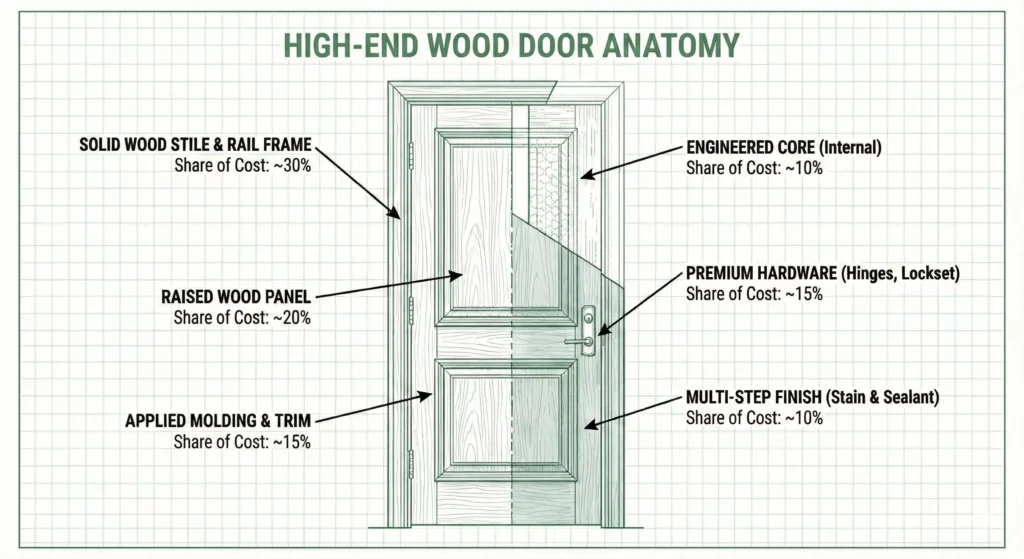
A typical exterior system includes:
- Door slab (solid or engineered wood, fiberglass, steel, aluminum or a combination)
- Jamb / frame
- Threshold and sill system
- Hinges, strike plate, and locking hardware
- Weatherstripping and sill seals
- Exterior brickmould or casing
- Optional sidelights and transom units
Pre‑Hung vs. Slab‑Only: Which is more cost-effective?
For exterior/front doors, a pre-hung unit almost always delivers better results and often a lower total installed cost.
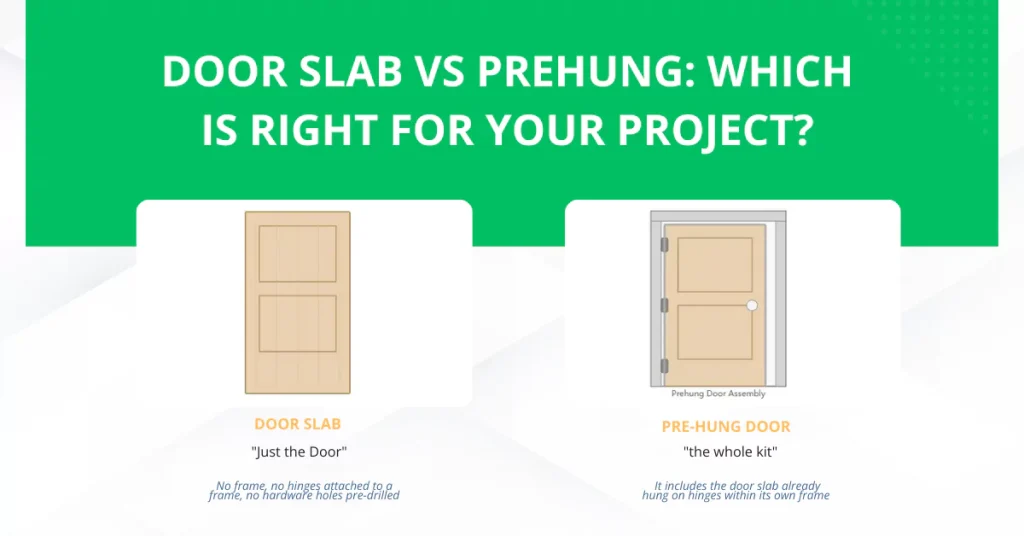
Slab‑Only Door
- What it is: Just the panel, no frame, threshold, or pre-installed hinges.
- Pros:
- Lower material price up front
- Useful if you must retain a historic frame in excellent condition
- Cons:
- Higher labor: hinge mortising, strike alignment, threshold integration done on site
- Greater risk of air/water leaks if the existing frame isn’t square or weather-tight
- Usually not recommended for modern exterior use
Pre‑Hung Door (The Pro & Builder Choice)
- What it is: A door mounted in a factory-built frame with threshold, weatherstripping, and hinges pre-installed.
- Pros:
- Faster installations and more predictable fit
- Factory-aligned weather seals and sill
- Reduced risk of callbacks for drafts and binding
- Cons:
- Higher material cost vs. slab-only, but often lower total installed cost once labor is included
Business Note: On new construction, pre-hung units can cut on-site door labor time by 30–50%, especially on multi-door or multi-unit projects.
Cost Factor #1: Material Breakdown
How do materials change the front door installation cost?
Material is one of the biggest drivers of both door-only cost and total system price.
Benchmark Materials: Steel & Fiberglass
These are common reference points:
- Steel doors
- Door-only: roughly $100 – $2,200
- Installed: $300 – $2,700
- Pros: Strong, secure, good value
- Cons: Can dent; may feel “colder” than wood
- Fiberglass doors
- Door-only: $200 – $2,300
- Installed: $400 – $2,800
- Pros: Excellent insulation, mimics wood grain, low maintenance
- Cons: Less “authentic” close-up vs. true solid wood
Use these ranges as benchmarks when you evaluate premium wood options.
Why Solid Wood Front Doors Cost More—and Deliver More
Solid wood is the premium choice for homeowners and builders who want:
- A “living material” with real depth, texture, and grain
- A substantial, heavy feel every time the door opens
- A front elevation that signals craftsmanship and status
Producing a solid wood entry requires:
- Carefully selected, kiln-dried lumber
- Precise joinery to resist warping and movement
- Multi-layer finishing systems (stains, sealers, clear coats)
Wood Species Pricing Tiers
Actual pricing depends on door size, glass, design complexity, and hardware, but these tiers reflect how most solid-wood front door projects are positioned in the market.
Tier 1 – Rustic Charm
- Example species: Knotty alder, Douglas fir.
- Relative cost: $$ (entry-level to mid-range among real wood doors).
- Best for: Farmhouse, Craftsman, lodge, and other rustic styles where knots, mineral streaks, and grain variation are desired features.
- Key notes:
Tier 2 – Refined Workhorse
- Example species: Mahogany, Sapele.
- Relative cost: $$$ (upper mid- to high-end, common in luxury homes).
- Best for: Upscale traditional, Mediterranean, and transitional designs, or any project that needs a rich look plus long-term durability.
- Key notes:
Tier 3 – Ultra‑Luxury Statement
- Example species: Black walnut (American walnut).
- Relative cost: $$$$ (top-tier, fully custom territory).
- Best for: Signature grand entrances, architect-led projects, and estate homes where the front door is treated like a piece of custom furniture in the façade.
- Key notes:
Cost Factor #2: Configuration & Customization
How Does Size Affect Front Door Cost?
Taller and wider doors increase material, shipping, and installation difficulty.
Typical milestones:
- Standard height: 6’8″ (80″)
- Luxury height: 8’0″ (96″) and higher
- Wider or taller doors:
- Need stronger jambs and hinges
- Add weight, which can require upgraded hardware or multi-point locks
- Take longer to install safely
Single vs. Double Doors: Why Double Entry Can Double the Budget
- Single Entry Door:
- One slab, one active leaf, single lock/handle set
- Lowest cost configuration for a high-performance entry
- Double Entry Doors:
- Two large slabs, active + passive leaf
- More complex framing and weather-seal details
- Often includes multi-point locking for security and alignment
Expect a double door system in the same material and style to run roughly 1.5–2x the cost of a single door once hardware and installation are included.
How do sidelights and transoms affect cost?
Adding glass elements increases both visual impact and budget:
- Sidelights:
- Typical add-on: $400 – $2,000+ depending on size and glass
- Transoms:
- Typical add-on: $300 – $900+
These components:
- Enlarge the rough opening
- Add glass, mullions, and weatherproofing complexity
- Extend installation time for precise fit and sealing
Many homeowners specifically search for “front door with sidelights cost”—for good reason, as these details are often where a $2,500 project becomes a $4,000+ project.
Cost Factor #3: The “Hidden” Install Fees Most Guides Ignore
What hidden costs can increase your front door installation quote?
Generic online calculators often mislead because they assume:
- Standard openings and trim
- Perfect framing
- No damage or rot
The Rot Factor: The Cost of What You Can’t See
Removing an old door may reveal:
- Rotted sub-sills or bottom plates
- Water-damaged framing or sheathing
- Insect damage
Cost impact: Structural repair typically adds $200–$800+ depending on:
- Extent of rot
- Accessibility
- Whether new framing and moisture barriers are required
Skipping this repair shortens the life of even the best custom door.
New Construction vs. Retrofit: Why Labor Differs
New Construction
- Open framing and clean access
- No demo or debris
- Siding, stone, and interior trim installed afterward
Result: Lower labor per opening, especially in volume.
Retrofit / Replacement
- Removal and disposal of existing door system
- Patching or modifying surrounding siding, stone, or stucco
- Adjusting interior casing and paint
Result: Higher, more variable labor charges—even with standard-size doors.
For simpler exterior doors (like back or garage service doors) with fewer decorative details, labor is often lower. See Exterior & Back Door Installation Costs once that guide is published.
Labor Time Estimates for Front Door Installs
Aligning with real installer experience (and what high-ranking guides surface), typical durations are:
- Pre-hung exterior door replacement:
- 3–5 hours, including removal, shimming, sealing, and basic trim
- New construction front door (open framing):
- 2–3 hours per opening (door-only, no complex trim packages)
- Custom grand entrance with sidelights/transom:
- 6–8+ hours, especially with detailed interior/exterior trim and multi-point hardware
Knowing time ranges helps you judge whether a quoted labor fee is realistic.
Permits and Fire-Rated Doors: When Do They Matter?
For many standard front door replacements, permits are not required if:
- You are not altering the size of the opening
- No structural headers or load paths are changed
Permits generally become relevant when you:
- Widen or move the opening
- Make structural changes (new header, removing load-bearing studs)
- Work on multi-family or commercial properties
Typical permit fees: $50–$300, depending on jurisdiction.
Fire-rated doors:
Not usually required for a main front entry, but mandatory in certain locations, such as:
- Between an attached garage and living space
- Certain multi-unit or commercial fire separations
Fire-rated doors are heavier, use specific cores and hardware, and generally add $300–$800 installed compared to a non-rated equivalent.
Price Scenarios: Good, Better, Best
These persona-based examples help you map our cost factors to real‑world budgets.
Scenario A: “The Curb Appeal Refresh”
- Product: Standard-size Mahogany single door, pre-hung, stained, upgraded handle set
- Project Type: Retrofit (replacement of a builder-grade steel door)
- Estimated Installed Range:
- $3,000 – $5,000, depending on:
- Glass/no glass
- Hardware selection
- Minor framing or rot repair
- $3,000 – $5,000, depending on:
- Best For:
- Homeowners who plan to stay for at least 5 years and desire a noticeable upgrade in curb appeal without having to rebuild the entire entry should consider this option.
Scenario B: “The Grand Entrance” (Contractor/ Luxury Build Focus)
- Product: Custom double entry in Mahogany or Black Walnut, 8’+ height, decorative glass and transom
- Project Type: New construction luxury build
- Estimated Installed Range:
- $8,000 – $15,000+, heavily influenced by:
- Door size and panel design complexity
- Glass type (clear, decorative, insulated, laminated)
- Hardware (standard vs. premium multi-point, smart locks)
- $8,000 – $15,000+, heavily influenced by:
- Best For:
- Custom home builders and estate projects where the entrance is a defining architectural feature.
Material Comparison Snapshot: Steel vs. Fiberglass vs. Wood Front Doors
To mirror the comparison depth of high-ranking guides, while reinforcing your wood specialty:
| Material | Typical Door Cost | Typical Labor | Total Installed Range | Notes |
|---|---|---|---|---|
| Steel | $100 – $2,200 | $200 – $500 | $300 – $2,700 | Entry-level, strong, paintable |
| Fiberglass | $200 – $2,300 | $200 – $500 | $400 – $2,800 | Mid-range, energy efficient, wood-look |
| Wood | $400 – $3,500+ | $250 – $800+ | $650 – $4,500+ | Premium feel, higher maintenance |
| Custom Wood | $1,500 – $12,000+ | $500 – $1,500+ | $2,000 – $15,000+ | High-end, fully customizable systems |
Why Buy Direct from a Manufacturer vs. Big Box Retail?
What are the advantages of working directly with a door manufacturer (like Hotian)?
1. Customization & Fit
- Retailers: Focus on standard SKUs and sizes.
- Manufacturers: we Build to your exact rough opening, which is crucial for:
- Critical for historic homes, thick walls, or non-standard masonry
- Reduces on-site “filler” solutions that compromise aesthetics and performance
2. Wood Quality & Construction
- Manufacturer-direct doors use furniture-grade lumber and performance joinery, designed to handle exterior exposure.
- Many mass-market doors use thin veneers over engineered cores; these can chip or delaminate in heavy-use or harsh-climate settings.
3. Direct Pricing & Support
- Fewer middlemen means more budget going into the door itself, not just markup.
- You gain direct access to:
- Species and finish consultation
- Hardware and multi-point lock selection
- Technical guidance on rough opening, sill details, and install best practices
Planning a whole‑home project? Once available, see our Interior Door Installation Cost Guide to coordinate interior and exterior packages from a single source.
Conclusion & Next Steps
A front door is more than an entry point—it’s a security upgrade, a weather barrier, and one of the highest-ROI curb appeal investments you can make. Understanding how material, configuration, and hidden site conditions affect cost helps you compare quotes on more than just the bottom line.
For Builders & Contractors
If you’re planning multiple homes or a high-end custom build:
- Access trade pricing on custom wood doors
- Standardize species, finishes, and hardware across your project
- Get technical guidance on rough openings, flashing, and installation details
- Discuss volume discounts, standardized specs, and delivery scheduling
👉 Are you a builder or contractor? Contact us today to access our Trade Price List and discuss volume discounts for your next project.
For Homeowners
If you’re upgrading a single entry:
- Compare rustic Knotty Alder, classic Mahogany, and statement Black Walnut designs
- Decide between single, double, or full entry systems with sidelights and transoms
- Get a clear, itemized quote that includes likely preparation and repair work
👉 Browse our Entry Door Collection to find the style, wood species, and configuration that matches your home—and get a transparent, manufacturer-direct quote for your 2025 front door installation.