A worn-out, drafty door threshold is more than an eyesore—it leaks energy, lets water in, and can damage flooring and framing.
The good news: replacing it is a fast, affordable DIY you can complete in under two hours. Follow this step-by-step guide with pro tips for a tight, weather-sealed fit on the first try.
Project Overview
- Time Required: 1–2 hours
- Skill Level: Beginner to Intermediate
- Estimated Cost: $25–$75
Safety first:
- Eye and hearing protection when cutting or prying.
- Use cut-resistant gloves when handling aluminum or sharp edges.
- If you expose older paint, consider lead-safe practices in pre-1978 homes.
Phase 1: What Should You Choose and Buy for a Perfect Fit?
Measure width, depth, and height before you shop; then choose the material that matches your climate, traffic, and maintenance goals.
How to Measure for a Perfect Fit
- Width: Measure the clear distance between the bottom ends of the door jambs. This is your overall threshold length.
- Depth: Measure from the exterior edge of the existing threshold to its interior edge. Match or slightly exceed it to cover flooring gaps.
- Height: Confirm the new threshold will fit under the door sweep/leaf without binding. If your old one was adjustable, plan on an adjustable replacement for fine-tuning.
Pro check:
- Identify door swing:Inswing doors seal on the interior face of the threshold; outswing doors seal on the exterior edge or bumper. Buy the correct profile.
Material Matters: Aluminum vs. Wood vs. Composite
| Material | Pros | Cons | Best For |
|---|---|---|---|
| Aluminum (often with vinyl insert) | Durable, rot-proof, commonly adjustable, easy to clean | Can feel cold; shows scratches; metallic look | Most exterior entries: heavy traffic |
| Hardwood (e.g., oak saddle) | Classic look; warm underfoot | Requires sealing; vulnerable to rot/moisture | Covered entries; aesthetic matches |
| Composite/PVC | Rot-proof, paintable, stable | Fewer natural looks; some profiles limited | Wet climates; low maintenance |
Tip: If you routinely fight drafts, choose an adjustable aluminum threshold and replace the door sweep at the same time for best results.
Phase 2: What Tools and Materials Do You Need?
Answer first: Basic carpentry tools plus 100% exterior silicone sealant and the new threshold.
- Tools
- Pry bar
- Hammer
- Oscillating multi-tool or jigsaw
- Tape measure
- Utility knife
- Caulking gun
- Screwdriver/drill and bits
- Screw extractor (for stripped screws)
- Wood file or sanding block
- Materials
- New threshold (correct width/depth, inswing/outswing profile)
- 100% silicone exterior sealant
- Screws (often included with adjustable models)
- Painter’s tape and rags

Phase 3: How Do You Remove the Old Threshold?
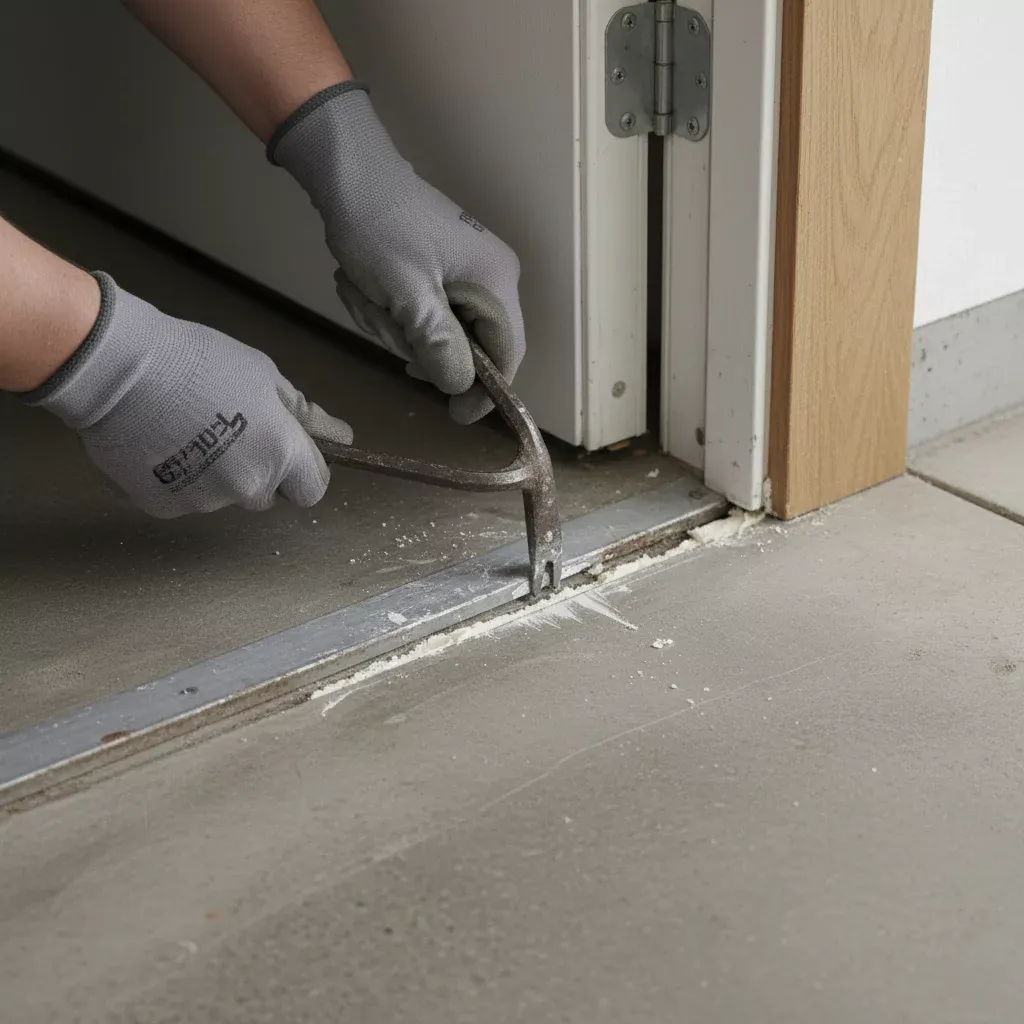
Unscrew it, cut the caulk, pry it free, and clean the sill to bare, dry material.
- Remove all visible screws
- If stripped, use a screw extractor or cut a new slot with a multi-tool and back them out with a flathead.
- Score caulk lines
- Run a utility knife along interior and exterior edges to break the seal without tearing flooring or trim.
- Pry the threshold out
- Start at one end; lift gradually to avoid splintering jambs or flooring.
- Troubleshooting (Stuck threshold): Use an oscillating multi-tool to cut the old threshold in the middle. Removing it in two halves relieves tension and protects the jambs.
- Clean the sill
- Scrape away old sealant and debris. Vacuum dust. The surface must be clean, flat, and dry for the new seal to bond.
Pro tip: Probe the corners of the sill. Soft or rotten wood suggests a more significant issue—please take a moment to review our explainer on Door Sill vs. Threshold. Consider adding a sill pan and repairing framing before proceeding.
Phase 4: How Do You Cut and Fit the New Threshold?
Answer first: Dry fit first, transfer jamb locations, notch around door stops, then fine-tune for a snug, gap-free fit.
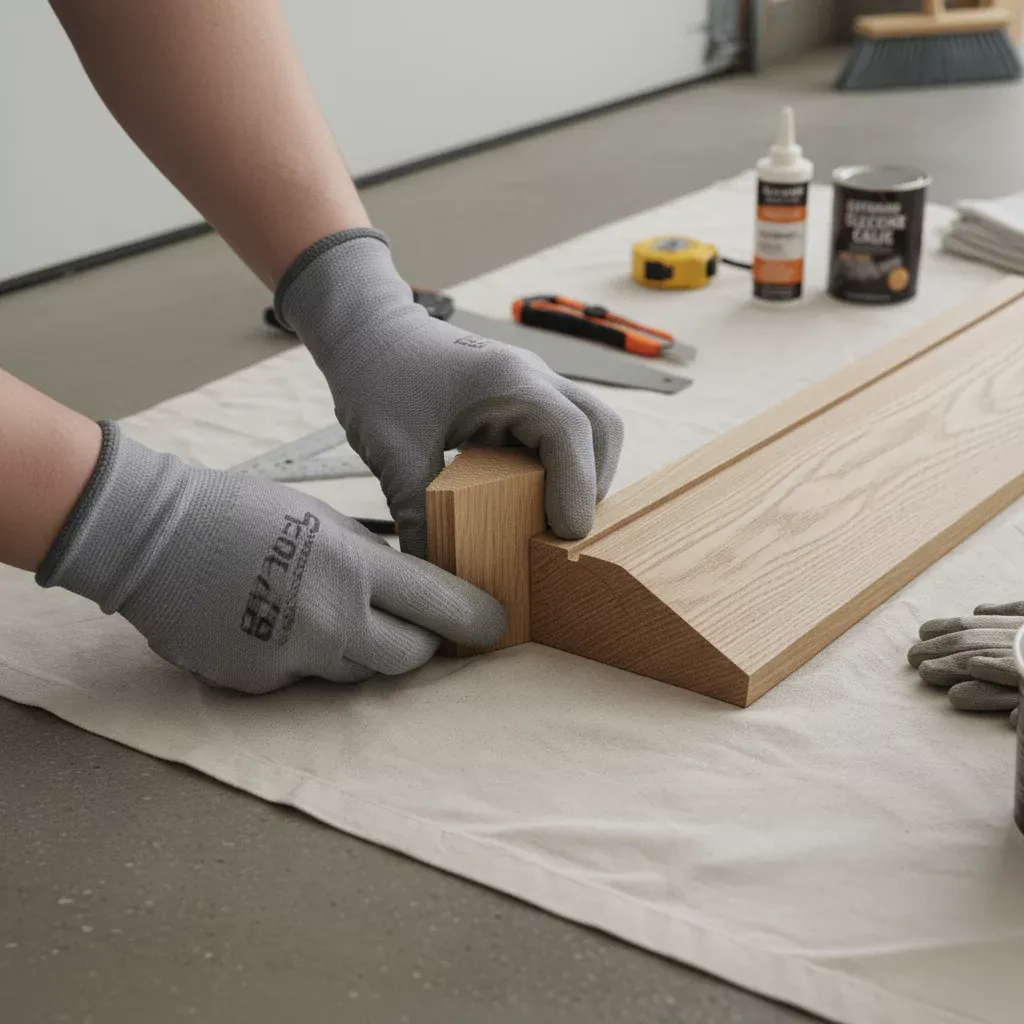
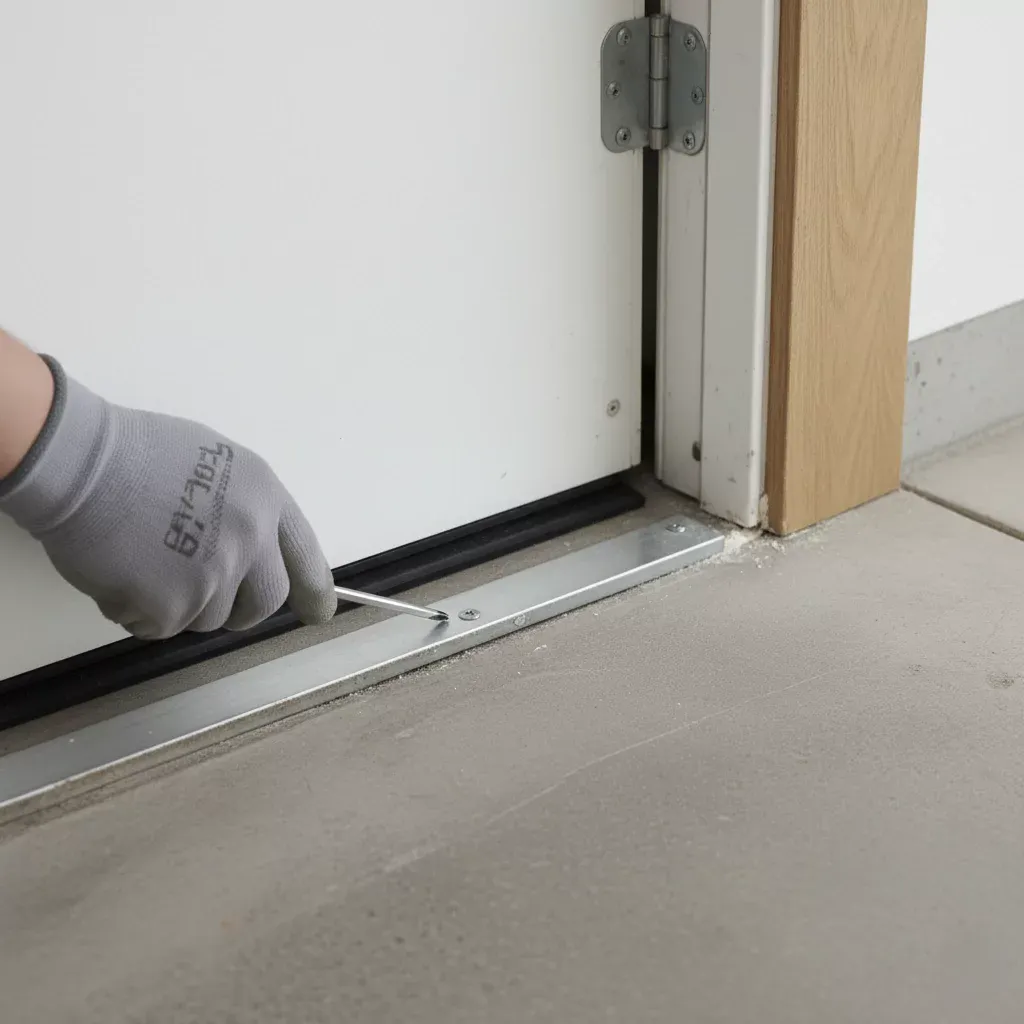
- Dry Fit and Mark
- Place the new threshold in the opening (it may be long—normal).
- Using a pencil, mark the points where both the inside and outside faces of the jambs meet the threshold.
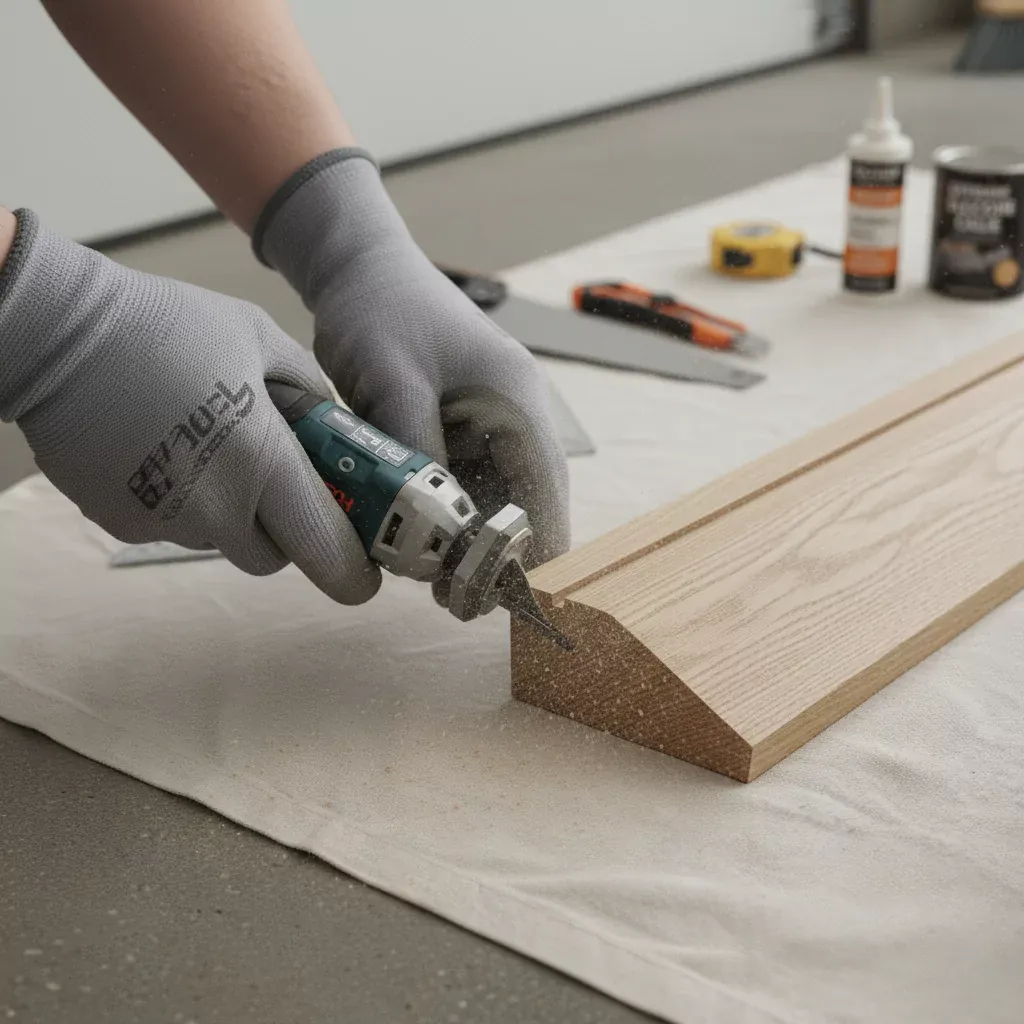
- Master the Notch Cut (Mini-Masterclass)
- Most thresholds must notch around the vertical door stops/jambs to slide fully into place. Hold the threshold against the opening and transfer the stop/jamb profile onto the threshold ends. Include any rabbet or step in the jamb. Add a small clearance (≈ 1/16 in) so it slides in without binding.
- Make Your Cuts
- Use a jigsaw for straight/curved sections and an oscillating tool to square inside corners.
- Deburr edges with a file for a tight, clean look.
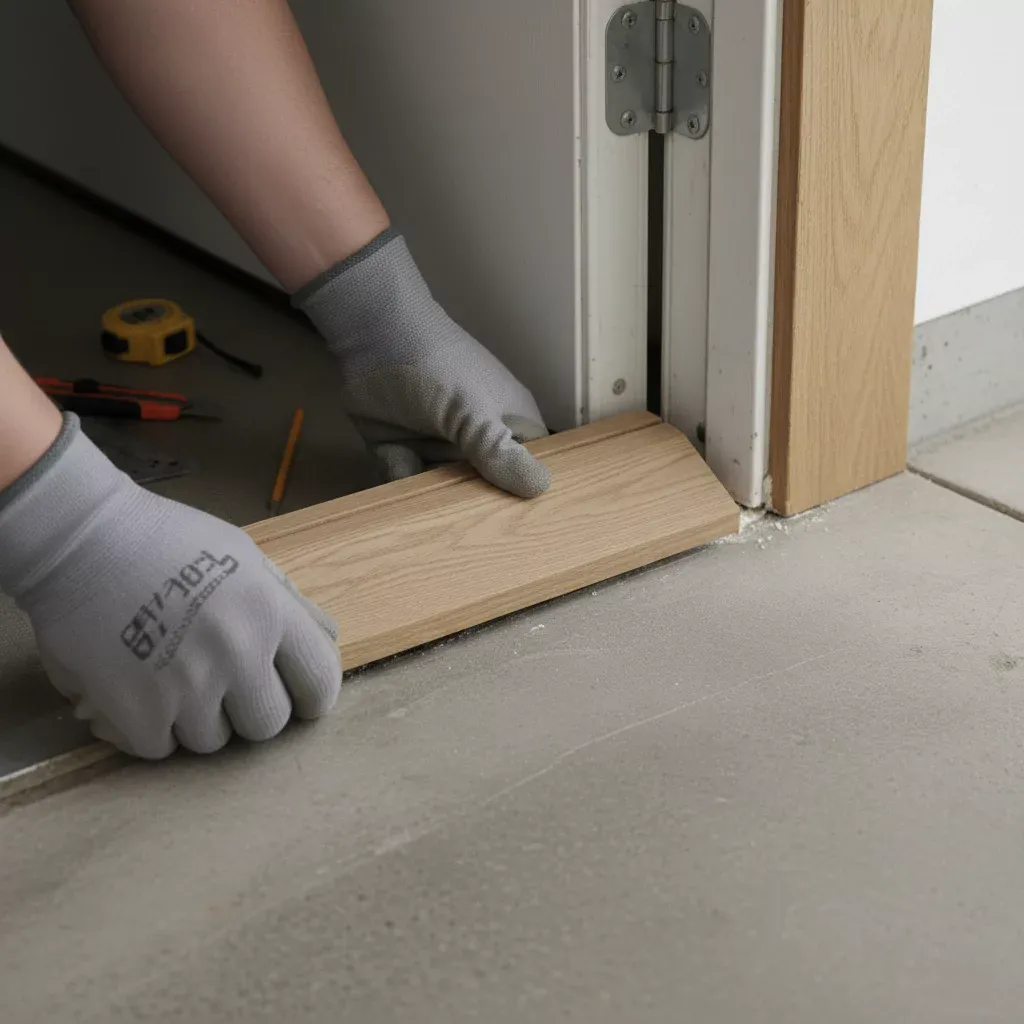
- Test the Fit
- Place it in the opening. It should be snug with minimal gaps at jambs.
- Fine-tune with a file/sander. Patience here pays off in appearance and sealing.
Pro tip: Keep the factory-drilled screw holes if present—avoid cutting away critical adjustment points on adjustable models.
Phase 5: How Do You Install and Weatherproof the New Threshold?
Lay continuous silicone beads, set and fasten the threshold, then fine-tune adjustable caps to kiss the door sweep evenly.
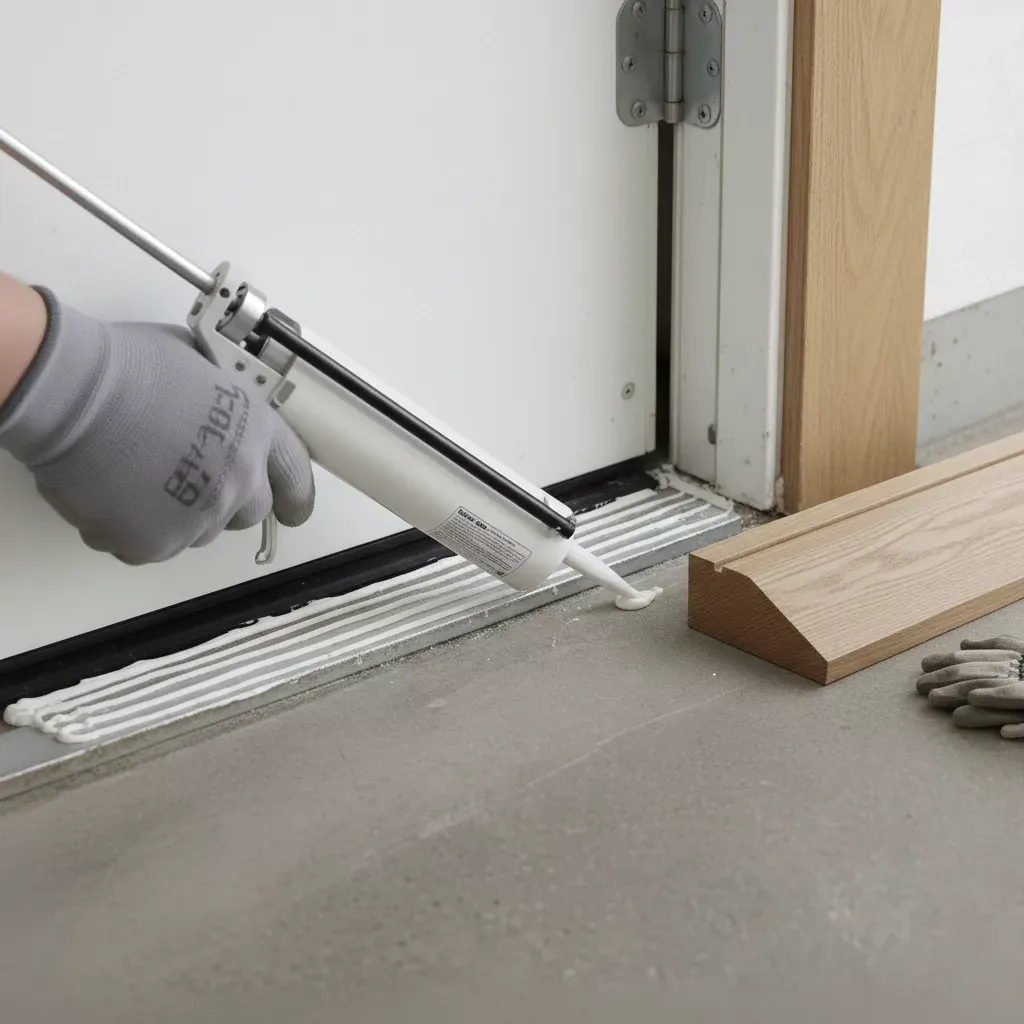
- Apply Sealant Like a Pro
- On the cleaned sill, run 2–3 continuous beads of 100% exterior silicone where the threshold will sit—one near the interior edge, one near the exterior, and one centered.
- Add a small bead at both end dams where the threshold meets the jambs to block corner leaks.
- If your threshold has weep features, don’t block them—apply sealant behind/around, not over the channels.
- Set the Threshold
- Press it firmly into place. Wiggle slightly to work out the bond.
- Fasten It Down
- Drill pilot holes (if needed) and drive screws. Do not overtighten—you can distort aluminum caps or strip wood.
- For concrete substrates, use masonry-compatible fasteners and seal against moisture.
- Final Touches
- For adjustable thresholds, turn the adjustment screws to raise the cap until it makes light contact, even with the door sweep across the full width. Use a dollar bill to confirm that a slight drag indicates a good seal.
- Tool away any squeeze-out with a damp cloth. Allow sealant to skin before foot traffic, per label.
Pro tip: After adjustment, close the door and look for daylight. No light should show. Adjust sweep and threshold until the seal is even.
Conclusion: A Perfect Seal and a Professional Look
That’s it: careful removal, accurate notch cuts, and generous silicone are the keys to a durable, draft-free threshold. You’ve just completed a high-impact project that improves comfort and lowers energy bills.
Next step: ensure the rest of your door is sealed tight—learn How to Install Weatherstripping.
- Greener choices: Eco-Friendly Door and Window Materials
- Frame basics: Door Frame Types
- Patio systems: Sliding Door Parts Names
- Planning sizes: Average Door Size
- Trends check: Are Barn Doors Out of Style in 2025
- Closet planning: Standard Folding Door Sizes
- Buying decision: Door Slab vs Prehung
- Style guide: French Door Buyer’s Guide
- Prehung basics: What Is a Pre-Hung Door?