For a typical 12–16 ft patio opening, bifold doors usually cost around $10,000–$35,000 installed, while comparable sliding patio doors more often fall in the $3,000–$15,000 installed range, depending on material, glass, and hardware. The real gap is even bigger than catalog prices suggest: a proper retractable or pleated screen for a wide bifold can add roughly $800–$2,000 per opening, whereas a standard sliding screen door is often only $150–$300. At the factory level, however, the door‑only cost difference for a 12–16 ft span is typically just $800–$1,500, which means most of what homeowners and builders pay extra for bifolds comes from distribution markups, heavier hardware, more complex installation, and the hidden screen system—not from raw aluminum and glass.
For homeowners, bifold doors give you up to 90% clear opening width (vs about 50% for sliders), creating a true indoor–outdoor living effect, but they weigh 60–80% more and rely on heavy‑duty tracks, hinges, and rollers that drive up both cost and maintenance. Performance‑wise, typical sliding systems achieve better thermal insulation and tighter air sealing (U‑factors often in the 0.28–0.35 range and lower air infiltration), while standard bifold systems with multiple panel joints more often fall around 0.35–0.45 with 2–3× higher air leakage unless you pay for upgraded, thermally broken designs. In mild, temperate climates (roughly zones 3–5), the energy penalty is modest and the “full‑width opening” effect can be worth the premium; in very cold or very hot zones (1–2, 6–8), sliding doors usually deliver a better long‑term comfort and energy cost profile.
For contractors and builders, bifold projects typically bring higher ticket sizes and 40–50% higher gross profit per opening compared to standard sliders, but also carry more callback risk for track alignment, roller wear, and screen integration—especially when doors and screens are sourced from different suppliers.
A simple rule of thumb:
- luxury homes + wide openings + mild weather = bifold is often the right call; budget‑driven projects, climate extremes, or narrow openings = sliding is usually the smarter, lower‑risk choice.
The Cost Reality: What Nobody Tells You
Most “bifold vs sliding” articles stop at a vague line like “bifold doors are more expensive.” That’s true—but not very helpful if you’re trying to quote real projects or build a pro forma. Here is what the cost structure actually looks like at different stages for a typical 12–16 ft aluminum patio opening with insulated glass, based on common market ranges and factory‑direct pricing from China.
Door Pricing: Factory vs Retail (12–16 ft Opening)
| Cost Level | Sliding Patio Door (12–16 ft) | Bifold Door System (12–16 ft) | Delta (Bifold − Sliding) | Hotian Typical Range |
|---|---|---|---|---|
| China factory (FOB) | $1,200–$2,500 | $2,000–$4,000 | +$800–$1,500 | Sliding: $1,200–$2,000 Bifold: $1,800–$3,500 |
| Landed cost (US port) | $1,800–$3,200 | $2,800–$5,200 | +$1,000–$2,000 | N/A |
| Contractor purchase (volume) | $2,200–$4,000 | $3,500–$6,500 | +$1,300–$2,500 | Bundled door+screen: $2,500–$4,500 |
| Retail installed (doors only) | $3,000–$8,000 | $6,000–14,000 | +$3,000–$6,000 | N/A |
Example ranges only, assuming aluminum frames with Low‑E insulated glass and standard hardware; actual bids vary by brand, region, and structural requirements.
your material cost for bifolds might go up by roughly $1,300–$2,500 on a 12–16 ft opening compared to a good sliding door, but the installed price you can reasonably charge often increases by $3,000–$6,000. That leaves an extra $1,500–$3,500 of gross profit potential per opening on the door package alone—before you even talk about the retractable screen system.
Hidden Screen Costs: Why Bifold Screens Are So Expensive
One of the biggest cost differences that almost no “bifold vs sliding” guide talks about is the screen system. For a standard sliding patio door, the screen is usually a simple aluminum frame with fiberglass mesh that runs in a bottom track, and a complete unit often adds only about $150–$300 to the total installed price in North American markets. Many mid‑range and premium sliding doors even treat the screen as a near‑standard accessory rather than a major upgrade.
Bifold doors are different. Because the panels fold completely clear of the opening, you cannot just hang a basic sliding screen in front of them without blocking the door operation. Instead, wide bifold openings require a full retractable or pleated screen system that spans the entire width and stacks neatly away when not in use. These systems typically include an aluminum cassette housing, precision top and bottom tracks, tensioned rollers, and more robust meshes designed to withstand frequent extension and retraction.
A realistic installed cost comparison in the North American market looks like this:
| Screen Type | Sliding Door (per opening) | Bifold Door (per opening) | Delta (Bifold − Sliding) |
|---|---|---|---|
| Basic sliding screen | $150–$300 | Not compatible | — |
| Manual retractable screen | $400–$600 (optional) | $800–$2,000 (often needed) | +$400–$1,400 |
| Motorized retractable screen | $1,200–$2,000 (rare) | $3,000–$6,000 (wide spans) | +$1,800–$4,000 |
Typical ranges for residential patio openings; exact pricing varies by brand, span, and features.
In practice, homeowners routinely pay in the $800–$2,000 range to add a good‑quality manual retractable screen to a large bifold opening, and premium or motorized systems for 16–20 ft spans can easily reach $3,000–$6,000 installed once local labor and brand markup are included. That means on many projects, the “invisible screen” for a bifold can cost as much as—or more than—the entire sliding door + screen package for the same opening.
The Manufacturing Reality: Factory Cost vs Retail Price
From the factory side, the economics look very different. China‑made pleated and retractable screen systems for doors and large openings are commonly quoted at tens to low hundreds of U.S. dollars per square meter depending on mesh type, profile thickness, and configuration, putting the hardware‑and‑mesh cost for a full patio opening in the low hundreds of dollars before freight and duties. For example, a pleated insect screen door kit with aluminum frame and PP or polyester mesh for a multi‑meter opening can be supplied ex‑factory at a few hundred dollars per set at volume, far below North American installed pricing.
A simplified cost build‑up for a manual retractable screen sized for a 12 ft bifold might look like this:
| Cost Level | Manual Retractable Screen (12 ft opening) | Markup vs Previous Step |
|---|---|---|
| Factory cost (China, FOB) | $180–$350 | Baseline |
| Landed cost (US) | $280–$500 | +$100–$150 freight/duty |
| Distributor price | $500–$900 | +$220–$400 |
| Contractor purchase | $600–$1,200 | +$100–$300 |
| Retail installed | $1,200–$2,000 | +$600–$800 labor/markup |
Illustrative example only; actual programs vary by brand, territory, and volume.
By the time the system reaches the homeowner, the total markup from factory to installed retail can easily reach 500–600% or more, especially for branded retractable solutions sold through multi‑layer distribution. This is why the same class of product that costs only a few hundred dollars ex‑factory in China can end up as a $1,200–$2,000 line item on a North American bifold project.
Hotian’s Supply‑Chain Advantage: Doors and Screens from One Source
This is exactly where a manufacturer‑direct partner like Hotian can change the cost equation. Hotian designs and manufactures aluminum folding doors, sliding doors, and compatible fly screen systems in China, with options including stainless steel mesh, aluminum mesh, fiberglass mesh, and innovative retractable or “invisible” screens for large openings. Because the door and screen packages are engineered to work together and produced within an integrated supply chain, Hotian can bundle them at near‑factory pricing instead of stacking multiple layers of distributor markup.
For contractors and developers, that typically translates into:
- Bundled pricing: A 12 ft aluminum bifold plus retractable screen ordered as a package from Hotian can often land in a total cost range that is similar to, or lower than, what local markets charge just for the retractable screen add‑on alone, when door and screen are sourced separately.
- Single point of responsibility: One manufacturer is accountable for door panels, tracks, hinges, and screen cassettes, eliminating the common “door vs screen supplier” finger‑pointing when alignment or operation issues appear.
- Factory‑tested integration: Thresholds, screen tracks, panel stacking clearances, and drainage details are designed together from the start, reducing on‑site adjustments and expensive callbacks.
A representative comparison for a 12 ft opening illustrates how this plays out:
| Source Type | Door Cost (12 ft bifold) | Screen Cost | Total Package | Notes |
|---|---|---|---|---|
| Local brands (separate suppliers) | $5,500–$8,000 | $1,200–$2,000 | $6,700–$10,000 | Door and screen from different brands, multiple markups |
| Hotian bundled system (factory‑direct) | $3,800–$5,500 | $400–$700 (bundled) | $4,200–$6,200 | Integrated door + screen, export‑grade packaging |
Example ranges based on typical aluminum systems exported from China; final quotes depend on spec, finish, glass type, and shipping terms.
Beyond the headline numbers, the integrated approach also reduces soft costs: fewer site coordination meetings, fewer mis‑measured openings, fewer re‑orders, and fewer service trips to fix screen‑door conflicts. For B2B customers—contractors, builders, and developers—that combination of lower landed cost, higher margin, and lower callback risk is often the real reason to reconsider how they source bifold and sliding door packages.
Total Cost Comparison: The Real Numbers
Most comparisons stop at “bifold doors cost more than sliding doors” and only look at the door slabs. In real projects, you pay for doors + screens + hardware upgrades + installation complexity. Here is what a full 12 ft exterior opening often looks like when you total everything up.
Standard 12 ft Opening (4‑panel bifold or 2‑panel slider)
| Component | Sliding Door System (12 ft) | Bifold Door System (12 ft) | Delta (Bifold − Sliding) |
|---|---|---|---|
| Door panels (installed) | $3,000–$8,000 | $6,000–$14,000 | +$3,000–$6,000 |
| Screen system | $150–$300 (basic screen) | $800–$2,000 (retractable) | +$650–$1,700 |
| Hardware / track upgrades | $0–$200 | $400–$800 (heavy‑duty) | +$400–$600 |
| Installation complexity (labor) | $500–$1,000 (standard) | $800–$1,500 (complex) | +$300–$700 |
| Total installed cost | $3,650–$9,500 | $8,000–$18,300 | +$4,350–$8,800 |
Example ranges only, based on typical aluminum patio systems with insulated glass; complex structural work (new headers, wall openings) can add significantly more, especially on large‑span bifolds.
Key observation: The screen system alone often accounts for roughly one‑quarter.
Quick Guide for Homeowners: Which Should I Choose?
| Your Priority | Better Choice | Why (in plain English) | Typical 12 ft Total Cost |
|---|---|---|---|
| Keep overall budget lower | ✅ Sliding | 40–50% lower total installed cost | ~$3,500–$9,500 |
| Maximize opening width | ✅ Bifold | Opens ~90% vs ~50% for sliders | ~$8,000–$18,000 |
| Cold / very hot climate | ✅ Sliding | Better insulation and tighter air sealing | ~$3,500–$10,000 |
| Mild climate (zones 3–5) | ⚖ Either | Choose based on budget and indoor–outdoor goals | Both viable |
| Low maintenance | ✅ Sliding | Fewer moving parts, simpler hardware | ~$3,500–$9,500 |
| “Indoor–outdoor living” | ✅ Bifold | Full‑width opening and stronger visual impact | ~$8,000–$18,000 |
| Coastal / high winds | ✅ Sliding | More robust under wind load in most systems | ~$4,000–$11,000 |
In short, bifold makes sense when you are paying for an experience—wide spans, resort‑style openings, and design impact—more than for strict efficiency. Sliding doors usually win on cost, energy performance, and simplicity, especially in harsh climates or on standard‑width openings.
The Contractor’s Profit & Risk Analysis
Beyond Aesthetics: The Business Case
For contractors, bifold projects don’t just change how the opening looks—they change ticket size, margin structure, and callback risk. On a typical 12 ft exterior opening, the economics often look like this:
| Project Type | Your Material Cost | Install Labor | Retail Price (to client) | Your Gross Profit | Approx. Margin |
|---|---|---|---|---|---|
| Sliding door + basic screen | $2,200–$4,000 | $500–$800 | $4,500–$7,500 | $1,800–$2,700 | ~40–45% |
| Bifold + retractable screen (mixed) | $4,200–$7,700 | $800–$1,500 | $8,000–$15,000 | $3,000–$5,800 | ~37–42% |
| Bifold + screen (Hotian bundled) | $3,200–$5,500 | $800–$1,500 | $8,000–$15,000 | $4,000–$8,300 | ~50–60% |
Illustrative ranges for 12 ft aluminum systems with insulated glass; based on typical U.S. installed prices and factory‑direct export pricing from China.
Key takeaways:
- Moving from sliding to bifold typically adds $1,200–$3,100 in gross profit per opening, even when you buy doors and screens from separate local suppliers.
- Switching from mixed local suppliers to an integrated, factory‑direct package (door + retractable screen) from a manufacturer like Hotian can add another $1,000–$2,500 of margin per project because you’re cutting out duplicated markups on the screen system.
The Hidden Risk: Callback Costs
Higher revenue is only part of the story. Bifold systems also have more moving parts and tighter tolerances, which means more things can go wrong if the design, installation, or product selection isn’t right.
Typical first‑3‑year callback patterns reported by pros working with both systems:
| Issue | Sliding Doors (3 yrs) | Bifold Doors (3 yrs) | Typical Repair Cost | Root Causes |
|---|---|---|---|---|
| Track alignment issues | ~5–8% of installs | ~15–20% of installs | $200–$500 | Substrate movement, poor prep |
| Roller failure | ~3–5% | ~8–12% | $150–$400 per panel | Undersized rollers vs panel weight |
| Hinge binding / panel sag | Rare | ~10–15% | $100–$300 | Inadequate hinges, frame twist |
| Screen track misalignment | ~2–4% (simple screen) | ~12–18% | $300–$600 | Different door & screen suppliers |
| Weatherstrip compression | ~10–15% | ~20–25% | $150–$350 | Heavy panels, multiple seal lines |
Approximate experience‑based ranges; actual rates vary by brand, installer skill, and site conditions.
Sliding doors are simpler and generally have lower callback rates because there are fewer hinges, fewer moving interfaces, and usually a single panel‑to‑panel seal line. Bifold doors, especially wide systems with 4–6 panels, add multiple hinges, more seals, and more hardware points that can drift out of adjustment over time, particularly if the track and header weren’t engineered for the true load.
When a bifold system and its retractable screen come from different suppliers, screen‑related callbacks—misaligned tracks, cassettes interfering with panel swing, water tracking into screen channels—are a frequent pain point and can easily consume $300–$600 per service visit between labor and travel. Bundling the door and screen from a single manufacturer with factory‑tested integration can cut these screen‑related issues dramatically, because track geometry, threshold details, and clearances are designed as one system.
For contractors, that often means:
- Higher average ticket and higher gross profit on bifold projects, especially with factory‑bundled screens.
- Meaningfully lower lifetime service cost when the entire system—door, hardware, and screen—comes from one engineering team rather than being cobbled together on site.
Engineering Reality: Weight, Track & Hardware
Why Bifold Is So Demanding on Hardware
From an engineering standpoint, the biggest difference between bifold and sliding doors is weight distribution and the number of moving interfaces.
Typical panel weights (3′ × 8′ aluminum frame with glass):
- Sliding panel, double‑pane Low‑E: roughly 90–110 lb
- Bifold panel, double‑pane Low‑E: typically 120–150 lb
On a common 12 ft bifold with 4 panels, you are easily looking at 480–600 lb of moving glass and aluminum, which the track, rollers, and hinges must carry with margin for dynamic loads. Underspec’d systems often fail first at the top track (bowing), rollers (bearing wear), bottom pivots, or panel‑to‑panel hinges, leading to dragging, binding, and poor sealing.
High‑quality bifold systems address this with:
- Heavy‑gauge extruded aluminum tracks (often 2.5–3.0 mm wall thickness and wider profiles) instead of lightweight residential tracks.
- Larger, sealed ball‑bearing rollers rated for 150–200 lb per panel, not the 50–75 lb range used on many light sliding units.
- Continuous or heavy‑duty hinges with higher cycle ratings, designed to keep panel edges aligned over tens of thousands of openings.
This upgraded hardware is a major reason why bifold systems cost more at every level—but it is also why some cheaper “residential‑grade” folding doors tend to sag or go out of alignment within a few seasons when used on large exterior openings.
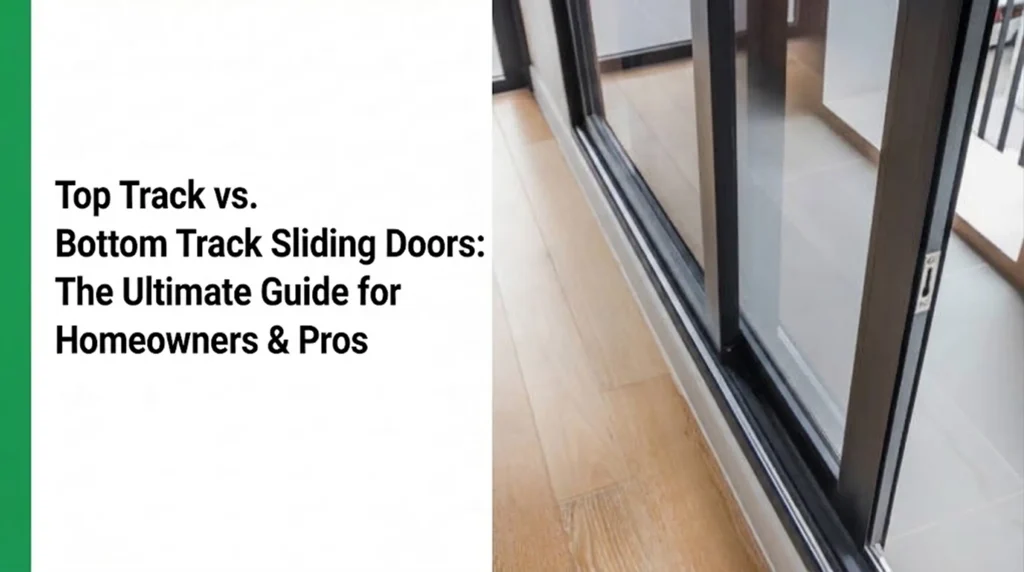
Bottom‑Rolling vs Top‑Hung: Trade‑Offs
Bifold systems for patios and exteriors are usually built in one of two ways:
- Bottom‑rolling (more common, lower upfront cost):
Panels ride on rollers in the bottom track, with the top track used mainly for guidance.- Pros: Lower hardware cost, easier to install on non‑structural headers, more forgiving of minor framing movement.
- Cons: Bottom track collects dirt and debris, can be a trip hazard, and requires careful drainage detailing in wet or freezing climates.
- Top‑hung (premium, cleaner threshold):
Panels hang from heavy‑duty rollers in the top track, with a low‑profile guide at the bottom.- Pros: Flush or near‑flush threshold (better accessibility and aesthetics), less debris in tracks, better water management.
- Cons: Requires a properly engineered structural header capable of supporting the full door weight, higher hardware cost, tighter installation tolerances.
For exterior applications where you want indoor–outdoor continuity and minimal step‑over, a top‑hung system with a carefully detailed threshold often gives the best user experience—but it needs to be priced and engineered like a small structural element, not like a standard interior bifold closet door.
Performance Comparison: Energy, Air & Sound
From a performance standpoint, sliding doors generally beat standard bifolds on thermal efficiency and air tightness, while bifolds win on opening percentage and visual impact.
Approximate tested ranges for aluminum systems with Low‑E insulated glass:
| Configuration | U‑Factor (lower = better) | Air Infiltration (cfm/ft²) | Notes |
|---|---|---|---|
| Sliding patio door (2‑panel) | ~0.28–0.35 | ~0.20–0.30 | Fewer seals, strong compression gaskets |
| Standard bifold (multi‑panel) | ~0.35–0.45 | ~0.50–0.80 | More joints, hinge gaps, longer seal perimeter |
| High‑performance bifold (thermal break) | ~0.30–0.38 | ~0.30–0.50 | Upgraded frames, better locks and seals |
Implications by climate zone:
- In mixed / mild climates (zones 3–5), the extra heat loss or gain from a bifold is usually modest compared with the overall envelope, so design and lifestyle benefits can justify the premium.
- In very cold or very hot zones (1–2, 6–8), the 25–40% U‑factor gap and higher air leakage can add up over time, making a well‑sealed sliding system or a thermally broken bifold the smarter choice if energy costs are a priority.
On sound, sliding doors with good compression seals and optional laminated glass typically achieve higher STC ratings than comparable bifolds, which have more panel junctions and micro‑gaps along hinges. For homes near highways, airports, or busy streets, a high‑performance sliding door with laminated glass is often the most cost‑effective way to cut noise.
Application Guide: When Bifold vs Sliding Makes Sense
Thinking in terms of application rather than just product type helps homeowners and pros make clearer decisions.
Best use cases for bifold doors:
- Wide openings (12–20 ft and beyond): You get up to ~90% clear opening, which can effectively double the usable opening width vs a standard slider on the same span.
- Luxury or design‑driven projects: Custom homes, high‑end remodels, and hospitality spaces where indoor–outdoor living and visual impact are primary goals.
- Mild, coastal‑like climates with many “shoulder season” days: When the doors are often open and the line between inside and outside is blurred.
Best use cases for sliding doors:
- Budget‑sensitive projects: New builds or replacements where you want large glass but need to keep total installed cost under control.
- Cold / very hot / very windy climates: Where tighter sealing and simpler hardware reduce drafts, energy use, and service risk.
- Standard and narrow openings (6–10 ft): The gain from switching to a small bifold is limited, while the cost premium is still significant—up‑sizing a slider often gives better value.
A simple decision pattern:
- Wide span + design focus + mild climate + strong budget → Bifold
- Any climate extreme, tight budget, or narrow span → Sliding
- In‑between cases → Compare “cost per foot of clear opening” and lifecycle cost, then decide.
Why Hotian Is Well‑Positioned for Bifold & Sliding Projects
For builders, contractors, and distributors, the real strategic question is not just “bifold or sliding,” but “where do I source them, and in what configuration, to protect my margin and minimize headaches?”
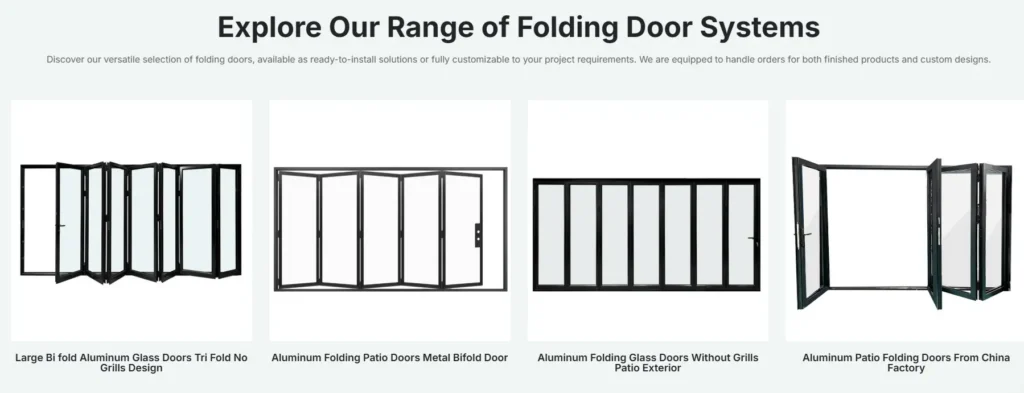
Hotian’s positioning as a China‑based manufacturer of aluminum doors, windows, and screen systems means:
- You can source sliding doors, folding/bifold doors, and matching screen solutions from a single factory, with coordinated hardware, thresholds, finishes, and glass options.
- You get factory‑direct pricing on both doors and retractable / invisible screens, preserving more of the door‑plus‑screen value for your own margin instead of passing it to multiple middlemen.
- You have one engineering team providing CAD details, loading info, and integration guidance instead of trying to make door tracks and third‑party screens work together on site.
View our Sliding Door Solutions →
For developers and larger contractors, bundling sliding and bifold packages from one manufacturer also simplifies logistics—mixed containers, matched finishes across windows and doors, and predictable lead times from a single export hub.
Bottom Line for Different Buyers
For homeowners:
- Expect a well‑specified bifold package (door + retractable screen + installation) on a 12–16 ft opening to cost roughly $3,000–$8,000 more than a good sliding system with a basic screen on the same span.
- That premium buys you a much wider clear opening and a different lifestyle experience, but also more hardware, more seals, and somewhat higher maintenance.
For contractors and builders:
- Bifold projects can increase gross profit per opening by a few thousand dollars compared to sliders, and working with an integrated manufacturer like Hotian can push margins into the 50–60% range on door‑plus‑screen packages while reducing callback risk.
- The main levers are: choosing the right door type for the climate and span, controlling screen costs via factory‑bundled systems, and insisting on hardware and installation practices suited to the actual loads.