Choosing the right bifold door size can feel daunting—a fraction of an inch can mean the difference between a smooth‑gliding door and a stuck, frustrating one.
This guide demystifies sizing with a complete chart, a foolproof 3‑step measuring method, and pro tips so you get the perfect fit the first time.
What Sizes Do Bifold Doors Come In? The Ultimate Sizing Chart
“Nominal size” is the call‑out (e.g., 24″ × 80″), but the actual panels and the opening you need are different. Use the chart below; always verify with your manufacturer’s spec.
“Actual Door Size” is for standard interior, top‑track closet bifolds.
“Finished Opening” is drywall‑to‑drywall (or jamb‑to‑jamb) after finishes.
“Rough Opening” is stud‑to‑stud, before drywall.
Typical formula of bifold doors:
For Single Bifold Doors
- Rough Opening Width:
Door slab width + 9/16 inch
(Some sources suggest up to 2 inches, but 9/16 inch is common for most residential interior installations.) - Rough Opening Height:
Door slab height + 2 7/8 inches
For Double Bifold Doors
- Rough Opening Width:
(2 × door slab width) + 15/16 inch - Rough Opening Height:
Door slab height + 2 7/8 inches
Standard Height: 80″ Nominal
| Nominal Door Size | Panels | Actual Door Size (Approx.) | Required Finished Opening | Required Rough Opening |
|---|---|---|---|---|
| 24″ × 80″ | 2 | 23‑1/2″ × 79″ | 24″ × 80‑3/4″ | 26″ × 82‑1/2″ |
| 28″ × 80″ | 2 | 27‑1/2″ × 79″ | 28″ × 80‑3/4″ | 30″ × 82‑1/2″ |
| 30″ × 80″ | 2 | 29‑1/2″ × 79″ | 30″ × 80‑3/4″ | 32″ × 82‑1/2″ |
| 32″ × 80″ | 2 | 31‑1/2″ × 79″ | 32″ × 80‑3/4″ | 34″ × 82‑1/2″ |
| 36″ × 80″ | 2 | 35‑1/2″ × 79″ | 36″ × 80‑3/4″ | 38″ × 82‑1/2″ |
| 48″ × 80″ | 4 | 47‑1/2″ × 79″ | 48″ × 80‑3/4″ | 50″ × 82‑1/2″ |
| 60″ × 80″ | 4 | 59‑1/2″ × 79″ | 60″ × 80‑3/4″ | 62″ × 82‑1/2″ |
| 72″ × 80″ | 4 | 71‑1/2″ × 79″ | 72″ × 80‑3/4″ | 74″ × 82‑1/2″ |
Tall Height: 96″ Nominal
| Nominal Door Size | Panels | Actual Door Size (Approx.) | Required Finished Opening | Required Rough Opening |
|---|---|---|---|---|
| 24″ × 96″ | 2 | 23‑1/2″ × 95″ | 24″ × 96‑3/4″ | 26″ × 98‑1/2″ |
| 30″ × 96″ | 2 | 29‑1/2″ × 95″ | 30″ × 96‑3/4″ | 32″ × 98‑1/2″ |
| 36″ × 96″ | 2 | 35‑1/2″ × 95″ | 36″ × 96‑3/4″ | 38″ × 98‑1/2″ |
| 60″ × 96″ | 4 | 59‑1/2″ × 95″ | 60″ × 96‑3/4″ | 62″ × 98‑1/2″ |
| 72″ × 96″ | 4 | 71‑1/2″ × 95″ | 72″ × 96‑3/4″ | 74″ × 98‑1/2″ |
Caveats:
- Manufacturers can deviate by ±1/8″ to ±1/4″. Always consult the product data sheet.
- Older homes may have 78‑3/4″ to 79″ finished heights; choose products matched to your smallest measured height.

How Do You Measure for a Bifold Door? A Foolproof 3‑Step Guide
Measure width and height in three spots each and use the smallest number. Then confirm depth for hardware and folded panels.
- Measure the Width (Top, Middle, Bottom)
- Record all three; use the smallest width.
- If variation exceeds 1/4″, plan to shim the jamb or tune drywall edges.
- Measure the Height (Left, Center, Right)
- Please record all three measurements and use the smallest height.
- Verify the finished flooring thickness if not yet installed.
- Check the Depth
- Standard interior bifolds are typically 1‑3/8″ thick panels and allow hardware and swing/stack clearance.
- A minimum clear jamb depth of approximately 2″–2‑1/2″ is generally recommended for tracks and pivots; please ensure your hardware kit is verified.

How Do You Fix Common Measuring Problems?
Use the smallest measurement, then correct the opening with shims, jambs, and trim.
- Opening not square (diagonals don’t match)
- Please adjust the hinge/pivot side jamb to ensure it is plumb, and then set the track to be Bifolds tolerate minor out‑of‑square if the head is level and pivots are aligned.
- Different widths or heights in spots
- Order to the smallest dimension. Use jamb shims and finish trim to disguise gaps. Avoid forcing a too‑large door—it will bind.
- Non‑standard size
- Easiest: reframe to a standard finished opening from the chart.
- Alternatively, order a custom size (higher cost, longer lead time). Some wood bifolds can be trimmed slightly—check the manufacturer’s “trim allowance.”
- Flooring not installed yet
- Deduct final flooring thickness from the measured height or delay measuring until floors are in.
- Sizes and tools: Standard Folding Door Sizes (with Chart & Converter)
- Comparisons: Sliding vs Folding Doors
- Custom: Custom Bifold Door from Hotian
- Materials: Steel Door Guide
- Materials: French Door Materials (Wood, Fiberglass, Steel) & Hardware Guide
- Garage reference: Aluminum vs. Steel Garage Doors
Interior vs Exterior Bifold Doors: What’s the Difference?
This guide covers lightweight interior closet/pantry bifolds with a simple top track. Exterior bifolds are a different category.
- Interior Bifolds
- Lightweight; 1‑3/8″ thick panels common; top‑track hardware; straightforward DIY.
- Exterior Bifolds (Patio Systems)
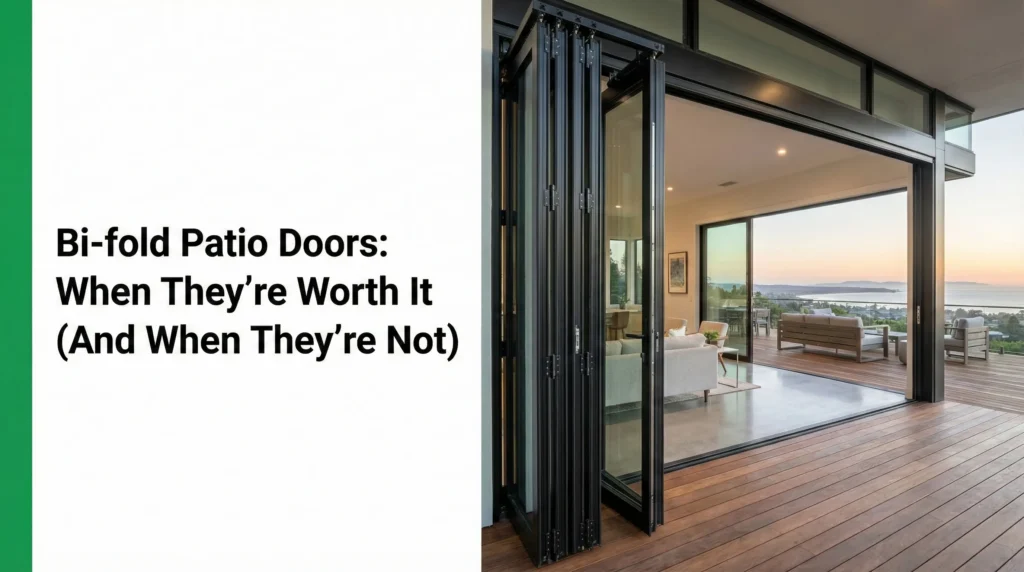
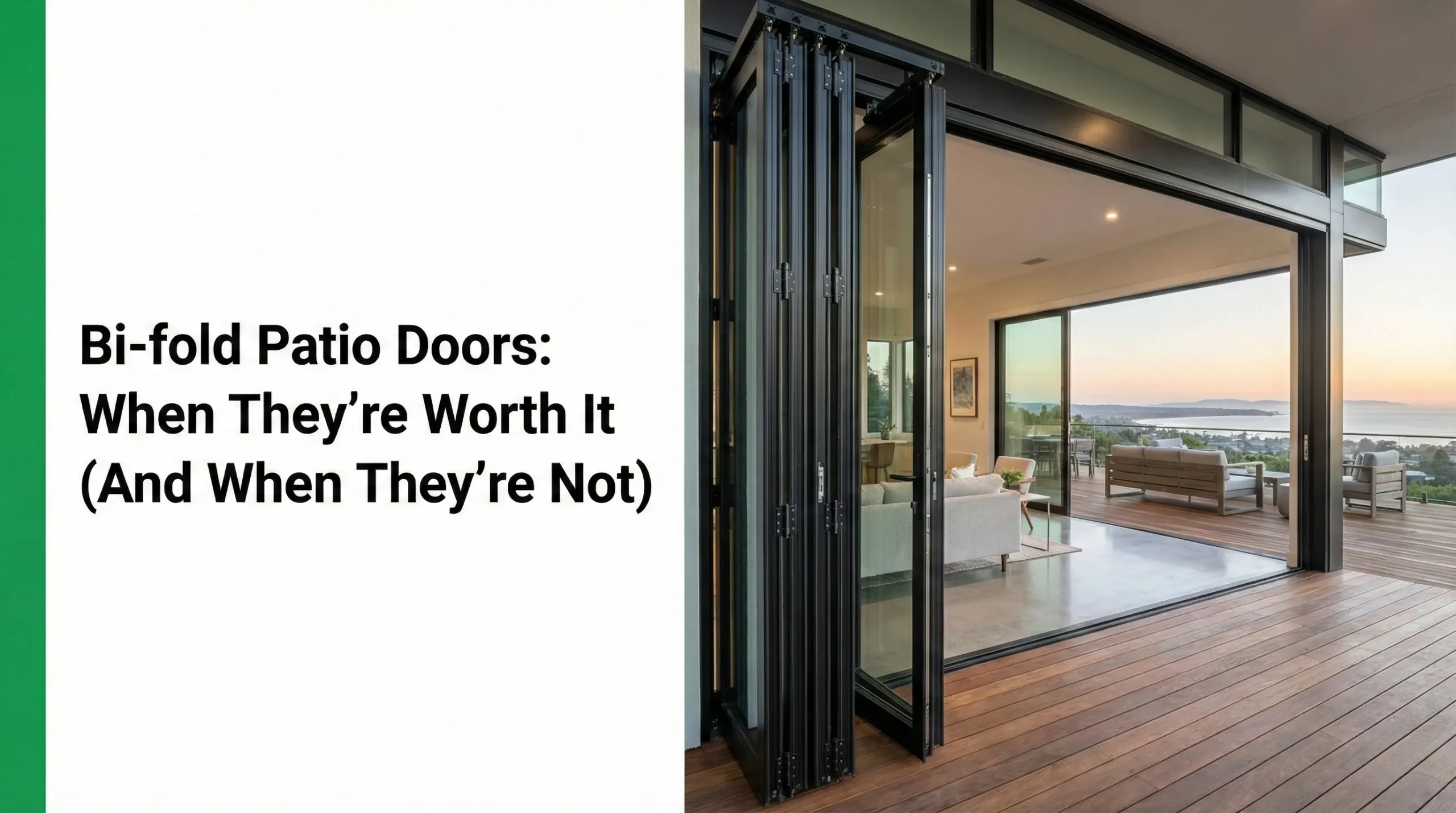
- Heavy, weather‑sealed units with sills, multi‑point locks, and complex frames. Almost always custom and professionally installed. Consult the manufacturer for exact rough opening and load support.
Conclusion: Measure Three Times, Buy Once
The key to a smooth‑gliding bifold is precise measuring and using the smallest width/height you record. With your finished and rough openings dialed, you’re ready to choose a door that will operate flawlessly for years.
- You’ve got your size! Shop our complete selection of bifold doors to find the perfect style for your home.
- Questions? Share your opening dimensions in the comments—happy to sanity-check them.