Window trim is the architectural detail that acts as the “picture frame” for your view—shaping the room’s character far more than most people realize.
Whether you’re a DIYer or collaborating with a pro, this guide gives you the vocabulary, decision framework, and style options to confidently choose the perfect window trim.
What Are the Parts of Window Trim? (Anatomy 101)
A complete interior trim package typically includes four elements—head casing, side casings, stool, and apron.
- Head Casing: The horizontal top piece that caps the window.
- Side Casings (often called “jamb casings”): The vertical pieces on each side.
- Stool: The horizontal “shelf” at the bottom on the room side.
- Apron: The trim is mounted below the stool to finish the assembly.
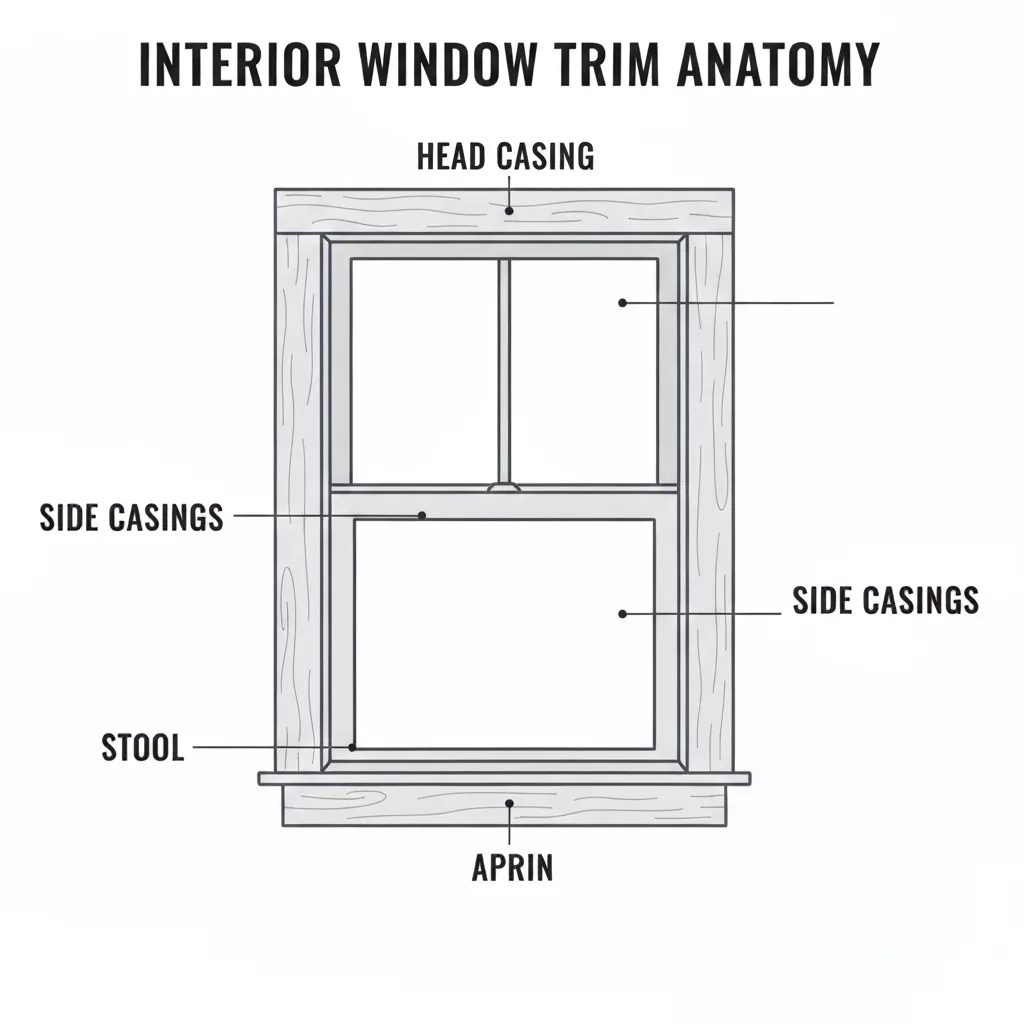
Pro tip: “Casing” covers the gap between the wall and window frame. The structural “jamb” is part of the window unit; your side casing trims over it.
How Do You Choose the Right Trim Style for Your Home?
Match the home’s architecture, get the scale right, and coordinate with existing millwork for a cohesive look.
- Match Your Home’s Architectural Style
- Rule of thumb: Keep language consistent. For example, a Craftsman home should have Craftsman trim, while a Colonial home should have Colonial/Traditional trim.
- Consider Scale and Proportion
- Large, ornate trim can overwhelm a small room; too-thin trim becomes lost in tall spaces. Balance casing width with ceiling height and window size.
- Coordinate With Other Millwork
- Align profiles and proportions with baseboards, door casings, and crown for a unified composition.
Quick Sizing Cheat Sheet
- 8 ft ceilings: 2.25–3.5 in casings
- 9–10 ft ceilings: 3.5–4.25 in casings
- 10 ft+ ceilings or large picture windows: 4.25–5.5 in casings with bolder head details
Expanded guidance:
- Narrow windows (< 30 in): keep casing slimmer to avoid crowding.
- Wide/tall windows: scale up casings and consider a more prominent head casing.
- Match or slightly exceed door casing width for visual continuity.
10+ Interior Window Trim Styles to Inspire You
Answer first: Use these style patterns as templates—each includes key traits, best-fit homes, and practical notes for execution and maintenance.
Craftsman Trim
- Style Anatomy
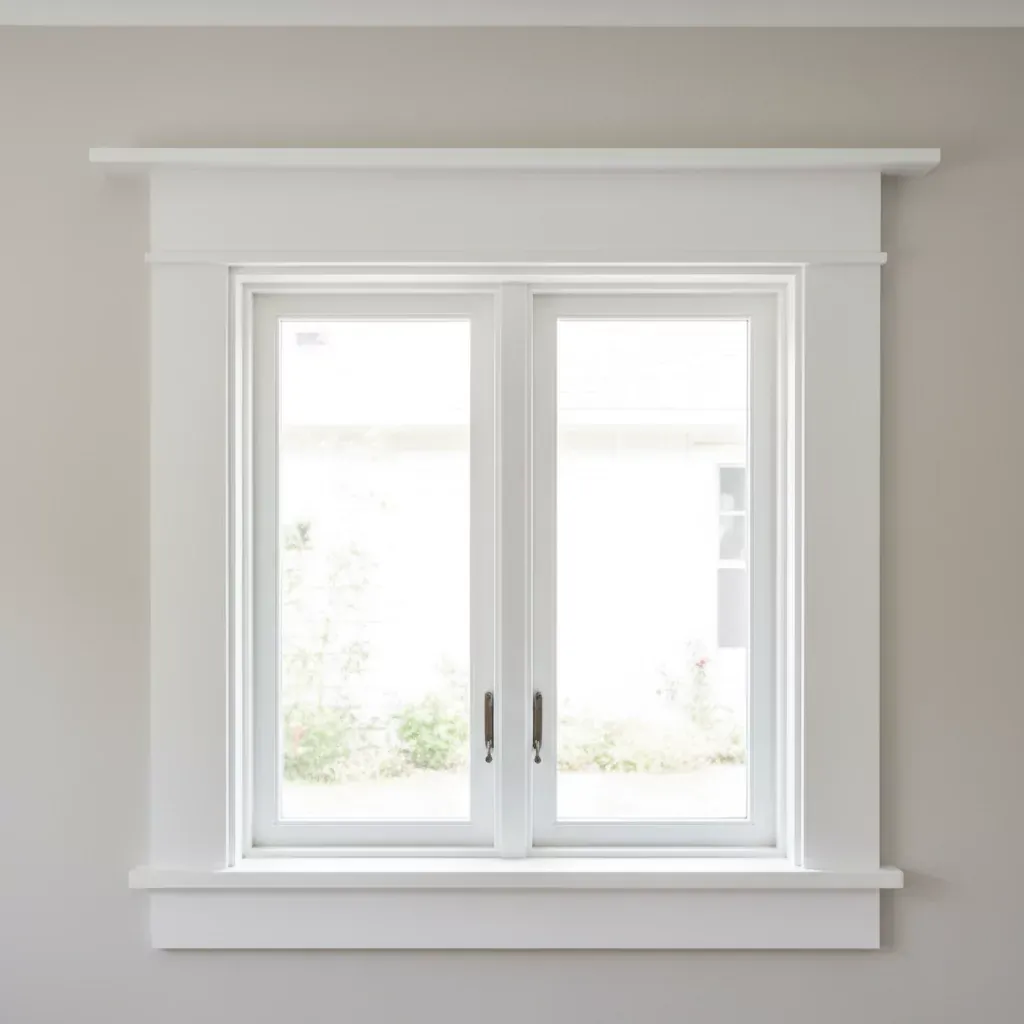
- Key Characteristics: flat stock boards, proud head casing that extends beyond sides, square edges, butt joints (not mitered).
- Best For: Arts & Crafts, Bungalow, Modern Farmhouse.
- Typical Sizes: 3.5–4.25 in side casings; 5–7 in head casing built-up.
- Finish: Painted white or medium-stained oak/ash.
- Execution tip: Build up the head with a wider cap and a thin reveal for shadow lines.
Modern & Minimalist Trim
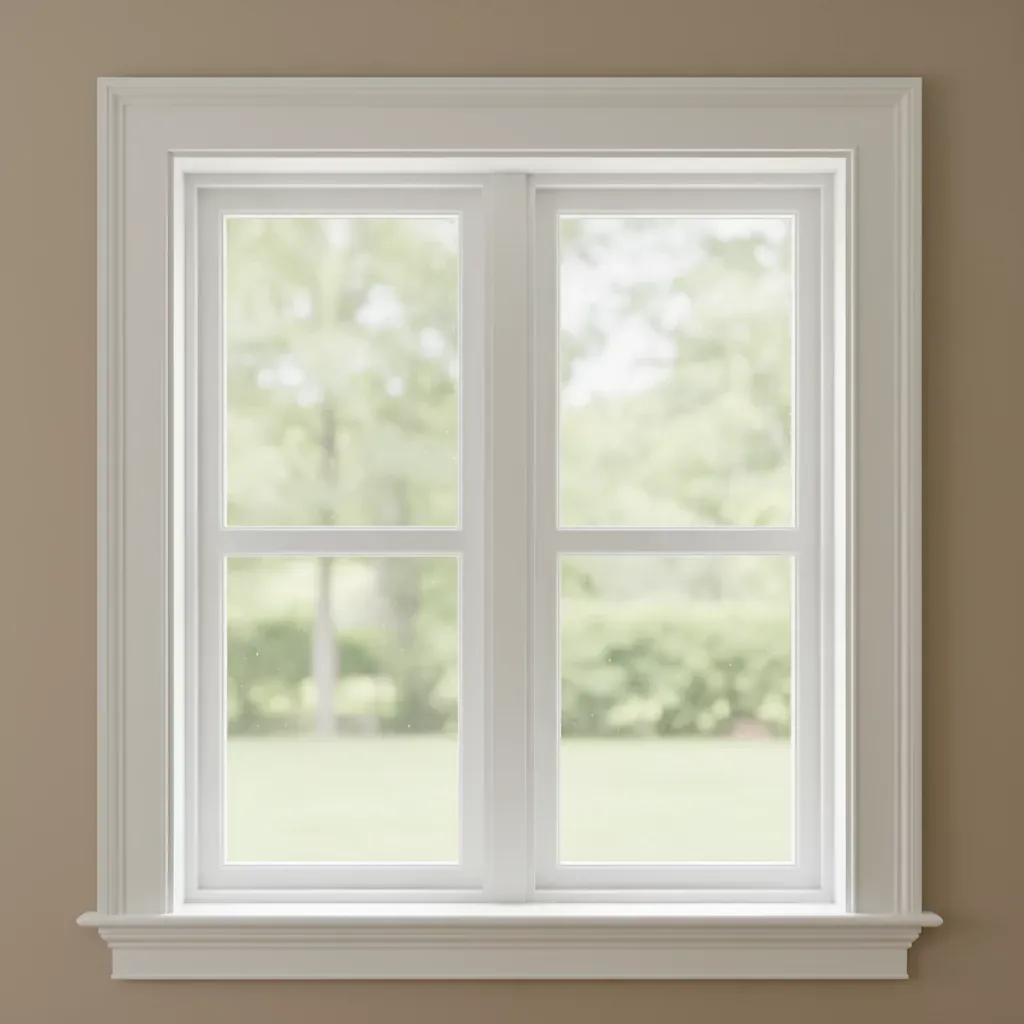
- Style Anatomy
- Key Characteristics: Ultra clean lines; slender flat casings or drywall returns (no casing) for a flush look.
- Best For: Contemporary, Mid-Century Modern, and Minimalist Interiors.
- Typical Sizes: 1.5–2.5 in. or drywall return; square-edge profiles.
- Finish: White, black, or wall-matched paint.
- Execution tip: Drywall returns demand precise alignment and high-quality corner beads.
Traditional & Colonial Trim
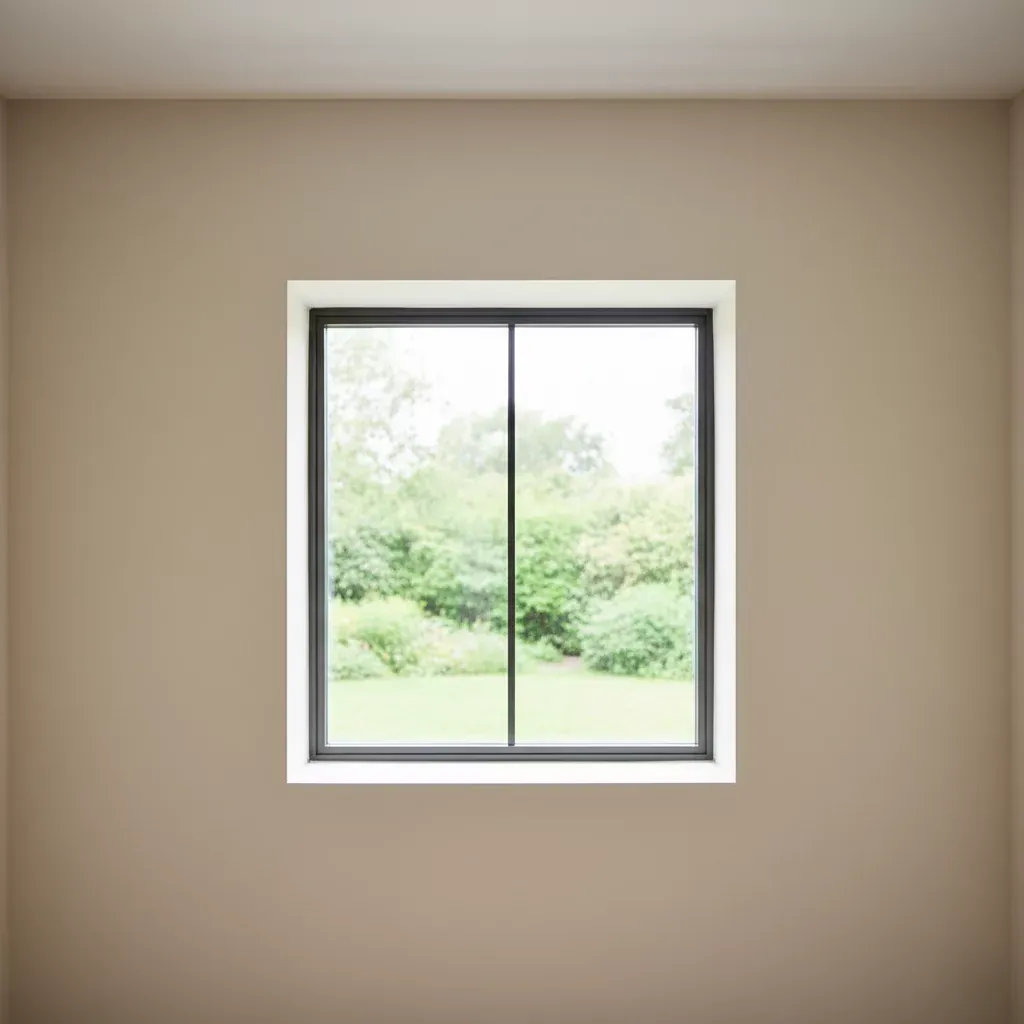
- Style Anatomy
- Key Characteristics: Profiled moldings, mitered corners, classic stool with ogee or bullnose edge, and apron.
- Best For: Colonial, Cape Cod, Traditional American styles.
- Typical Sizes: 2.25–3.5 in casings; built-up headers optional.
- Finish: Painted white/cream for heritage look.
- Execution tip: Use matching door casings to keep the millwork language consistent.
Farmhouse Trim

- Style Anatomy
- Key Characteristics: Simple flat boards, slightly wider head, often painted white; mixes Craftsman simplicity with Traditional warmth.
- Best For: Modern Farmhouse, Rustic, Country.
- Typical Sizes: 3.5–4.25 in sides; 5–6 in head.
- Finish: Bright white or soft neutral.
- Execution tip: Add a subtle head cap or shiplap wall backdrop for texture.
Coastal & Beach House Trim
- Style Anatomy
- Key Characteristics: Casual, airy; flat casings in white or soft blues/grays that keep focus on the view.
- Best For: Coastal, Beach, Cottage.
- Typical Sizes: 3–4 in casings; minimal profile.
- Finish: Moisture-resistant paints in light tones.
- Execution tip: In humid zones, choose moisture-tolerant materials (PVC or primed hardwoods).
Shaker Trim
- Style Anatomy
- Key Characteristics: Honest, square-edged flat stock with restrained proportions; zero ornament.
- Best For: Shaker, Transitional, Scandinavian.
- Typical Sizes: 2.5–3.5 in casings; simple stool and apron.
- Finish: Painted neutrals; natural finishes in light woods.
- Execution tip: Perfect reveals at corners matter more than fancy profiles.
Transitional Trim
- Style Anatomy
- Key Characteristics: Blends traditional profiles with modern simplicity—clean casing with a modest built-up head.
- Best For: Transitional remodels, new builds bridging styles.
- Typical Sizes: 3–4 in casing; 4–6 in understated head.
- Finish: Soft whites, warm grays, and greiges.
- Execution tip: Keep the ornament subtle to avoid tipping full traditional.
Victorian Trim
- Style Anatomy
- Key Characteristics: Ornate profiles, plinth blocks, rosettes at corners, and layered heads with entablature cues.
- Best For: Victorian, Queen Anne, and high-formality interiors.
- Typical Sizes: 3.5–5.5 in casings; 6–9 in built-up head.
- Finish: Painted multi-tone or rich darks.
- Execution tip: Use rosettes to avoid perfect compound miters on deep profiles.
Tuscan/Mediterranean Trim
- Style Anatomy
- Key Characteristics: Thick, rounded, or eased profiles; warm woods; heavier head elements.
- Best For: Tuscan, Mediterranean, and Spanish Revival.
- Typical Sizes: 3.5–5 in casings; 6–8 in head.
- Finish: Stained walnut, chestnut, or warm paint palette.
- Execution tip: Pair with textured plaster walls for authenticity.
Southwestern / Pueblo Trim
- Style Anatomy
- Key Characteristics: Chunky timbers, rounded edges, natural wood tones; sometimes no stool, just deep returns.
- Best For: Southwestern, Adobe, Pueblo Revival.
- Typical Sizes: 3.5–5 in.; generous depths.
- Finish: Natural or oiled wood.
- Execution tip: Embrace knots and natural grain for character.
Scandinavian Trim
- Style Anatomy
- Key Characteristics: Light woods, slim flat casings, highlights, and high-contrast simplicity.
- Best For: Nordic, minimal, small spaces.
- Typical Sizes: 2–3 in casings.
- Finish: Whitewashed oak, birch, or matte white.
- Execution tip: Favor high VT glass and simple fabrics to enhance daylight.
Industrial / Loft Trim
- Style Anatomy
- Key Characteristics: The design features metal angles or very thin black-painted casings that emphasize the window frame grid.
- Best For: Lofts, Industrial, Urban Modern.
- Typical sizes include 1–2 inches of drywall returns.
- Finish: Black, graphite, or raw metal tones.
- Execution tip: Coordinate with black window frames or SDL grids for cohesion.
What About Exterior Window Trim Styles?
Exterior trim must shed water first and style second—use profiles and materials that integrate with your cladding and climate.

Common styles:
- Simple Picture Frame: Flat casing on all four sides; clean and versatile.
- Wide Decorative Casing: 5/4×4–5/4×6 boards for a bold modern farmhouse/coastal look.
- Architectural Header: Crosshead or pediment above the window for classic or formal facades.
- Brickmould: Traditional rounded profile often seen on brick homes.
Water management essentials:
- Always include or integrate a drip cap at the head (metal flashing or a profiled head with cap flashing).
- Maintain siding clearances per the cladding manufacturer.
- Use compatible sealants and flashings at transitions.
Which Trim Material Should You Choose? (Side-by-Side Comparison)
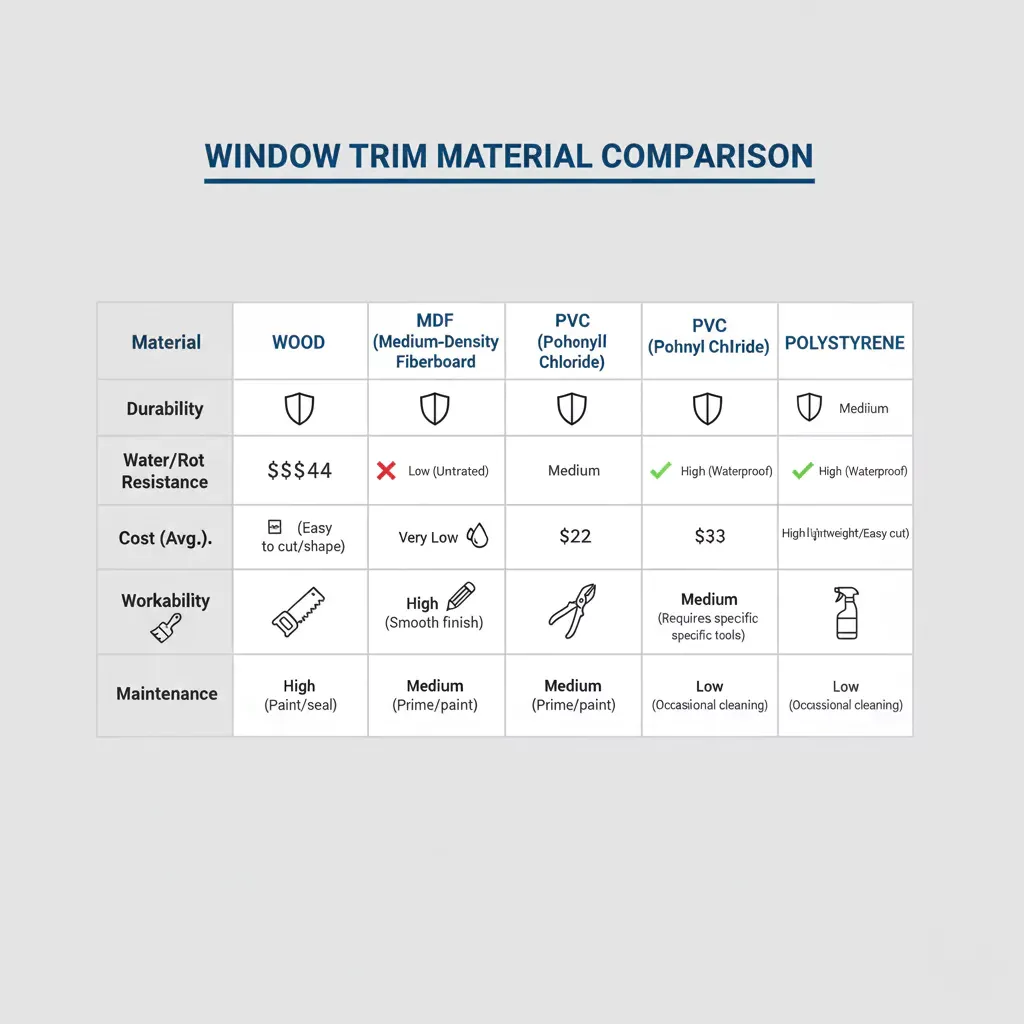
Pick material based on location (interior vs. exterior), moisture exposure, finish plans, and maintenance capacity.
| Material | Cost | Durability | Best For | Key Consideration |
|---|---|---|---|---|
| Solid Wood | High | High | Stain-grade, premium paint, historic homes | Requires sealing; can rot/warp if neglected |
| MDF | Low | Medium | Painted interiors, budget projects | Swells/crumbles if wet; avoid baths/wet areas |
| PVC (Cellular PVC) | Med | Excellent | Exteriors, baths, high-moisture zones | Only paintable; can be brittle in cold cuts |
| Polystyrene | Low | Low | Lightweight decorative interiors | Dents easily; looks/feels less substantial |
Also consider:
- Finger-Jointed Pine (Primed): Budget-friendly paint-grade interior; inspect joints before finishing.
- Engineered Wood Trim (e.g., LP SmartSide): Exterior paint grade; follow strict sealing/clearance details.
- Aluminum-Clad (Trim Coil over Wood): Site-formed exterior wrap; excellent weathering with correct flashings.
- Hands-on installation details: How to Install Window Trim
- Layout and orientation choices: Vertical vs. Horizontal Windows
- Frame material comparison: Aluminum vs. Vinyl Windows
- Operational styles compared: Single-Hung vs. Sliding Windows
- Ventilation and views: Casement vs. Double-Hung Windows
- Bay window inspirations: 8 Types of Bay Windows
- Glazing fundamentals: Single-Pane vs. Double-Pane Windows
- Comfort and savings: Energy-Efficient Windows
- Quiet room planning: Soundproof Windows Cost
- Dress the view: Window Decoration Ideas for Bedroom
Conclusion: Frame Your View with Confidence
Choosing a window trim style powerfully shapes your home’s character. Use the anatomy terms, scale guidelines, and style templates provided above to plan a trim package that complements your architecture, harmonizes with existing millwork, and ensures long-term performance.
Next step: shortlist two or three styles that fit your home, mock them up on one window, and evaluate in natural light before committing house-wide.