
Feeling a draft? Air leaks around doors can account for up to 20% of your home’s heating and cooling losses.
This guide gives step-by-step instructions for the most effective weatherstripping types—so you can seal leaks and boost comfort in under an hour.
Step 1: How Do You Find Your Air Leaks? (The 30‑Second Test)
Use the dollar bill test around the top, bottom, and both sides; if it slides out easily, you’ve found a leak.
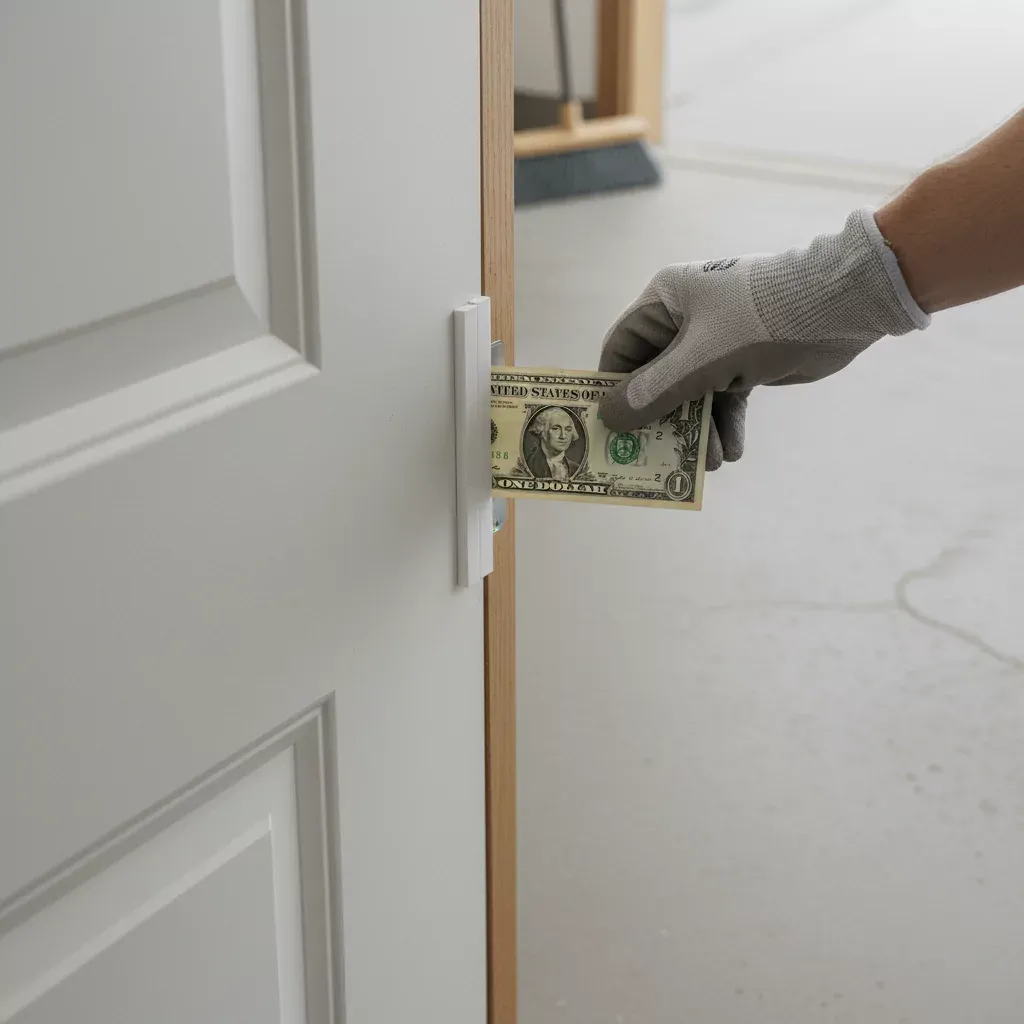
- The Dollar Bill Test
- Close the door on a bill at multiple points (latch side, hinge side, head, and bottom).
- If it pulls free without resistance, there isn’t enough compression—add or upgrade weatherstripping there.
- Quick alternatives
- Use an incense stick or smoke pen to observe the movement of smoke toward any gaps.
- Night light test: turn off interior lights, and look for daylight around the door perimeter.
Step 2: Which Weatherstripping Should You Choose?
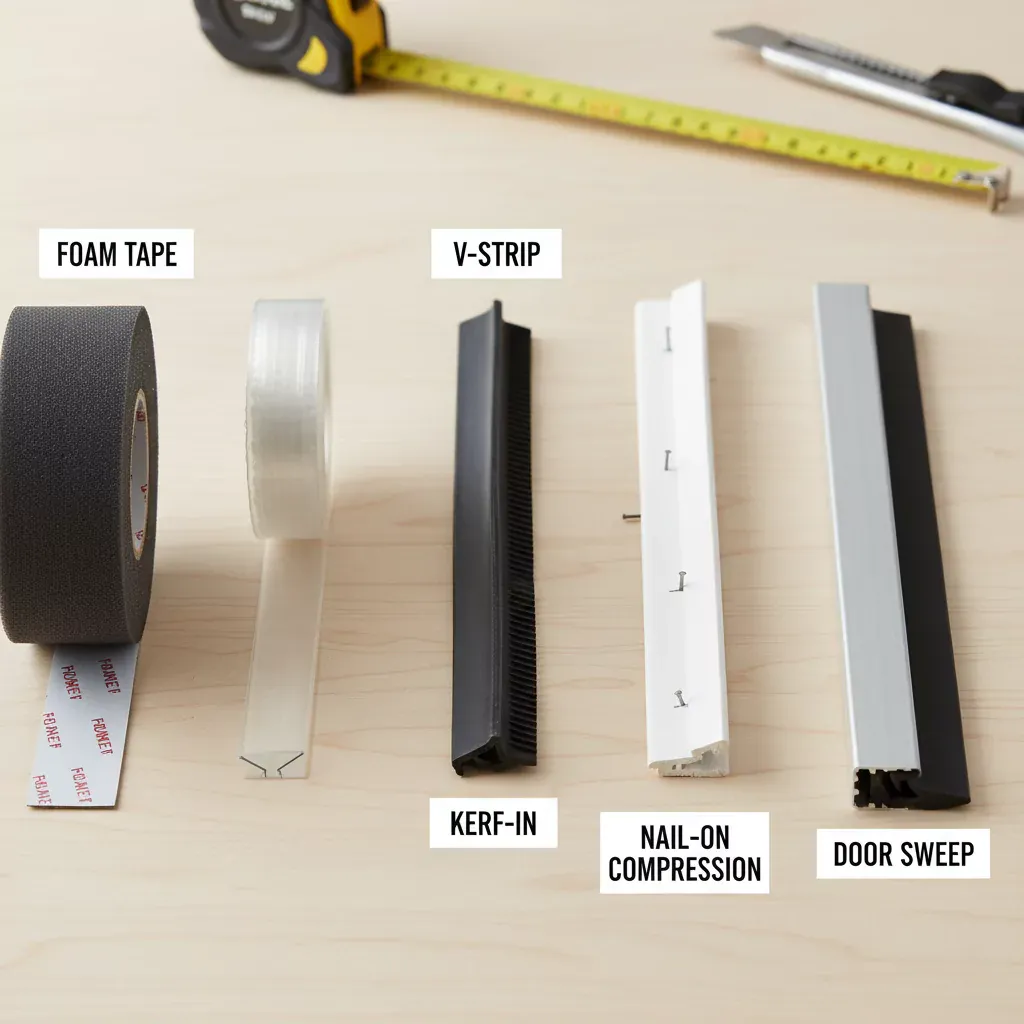
Match the product to your door’s condition and your goals—foam tape for quick fixes, compression seals for durability, and a door sweep for the bottom.
| Type | Ease of Installation | Durability | Cost | Best For |
|---|---|---|---|---|
| Self-Adhesive Foam Tape | ★★★★★ (Easiest) | ★☆☆☆☆ (Low) | $10–$12 per roll | Quick fixes, renters, low-traffic doors |
| V‑Strip (Tension Seal) | ★★★★☆ (Easy) | ★★★☆☆ (Med) | $4–$10 per package | Sides/head of door stops; tight-fitting doors |
| Kerf‑In (Compression Seal) | ★★★★☆ (Easy) | ★★★★★ (High) | $6–$30 per piece | Modern prehung doors with a kerf groove |
| Nail‑On (Compression Seal) | ★★☆☆☆ (Harder) | ★★★★★ (High) | $12–$25 per set | The bottom of the door (required for complete seal) |
Pro tip: A truly draft‑proof door usually combines perimeter compression seals (sides/head) with a door sweep and an adjusted threshold at the bottom.
Step 3: How Do You Prep for a Lasting Seal?
Gather basic tools, remove old material, and clean with rubbing alcohol so adhesives and seals bond well.
- Gather tools
- Utility knife, tape measure, putty knife
- Pliers (for brittle seals), screwdriver/drill
- Cleaning rag, rubbing alcohol (70–90%)
- Optional: adhesive remover for stubborn residue
- Remove old weatherstripping
- Peel-and-stick: Lift an edge with a putty knife, and pull back slowly; use adhesive remover as needed.
- Kerf-in: Grip with pliers and pull straight out of the groove.
- Nail-on: Back out fasteners or gently pry the carrier strip.
- Clean the surfaces
- Wipe jambs/stops and the door bottom with alcohol; let dry completely.
- For adhesive products, install above 10°C/50°F for best tack.
Step 4: How Do You Install Each Type?
Follow these short, type-specific steps; always dry-fit first and avoid stretching seals so they don’t shrink later.
Jump to:
How to Install Self-Adhesive Foam Tape
Measure, cut, and then peel and stick to the stop where the door meets it, compressing slightly on close.
- Measure and cut
- Measure each side independently; cut pieces slightly long.
- Place and adhere
- Start at the top hinge side; stick to the flat face of the stop where the door contacts.
- Do not stretch the foam; press firmly along its length.
- Corners and finish
- Miter corners at 45° or butt cleanly to avoid gaps.
- Close the door to verify light and even compression.
Pro tips
- Choose a thickness that compresses ~25–50% when closed.
- For durability, consider high-density EPDM foam.
How to Install V-Strip (Tension Seal)
Cut to length, fold the V, and adhere or staple along the stop so the “open V” compresses when the door closes.
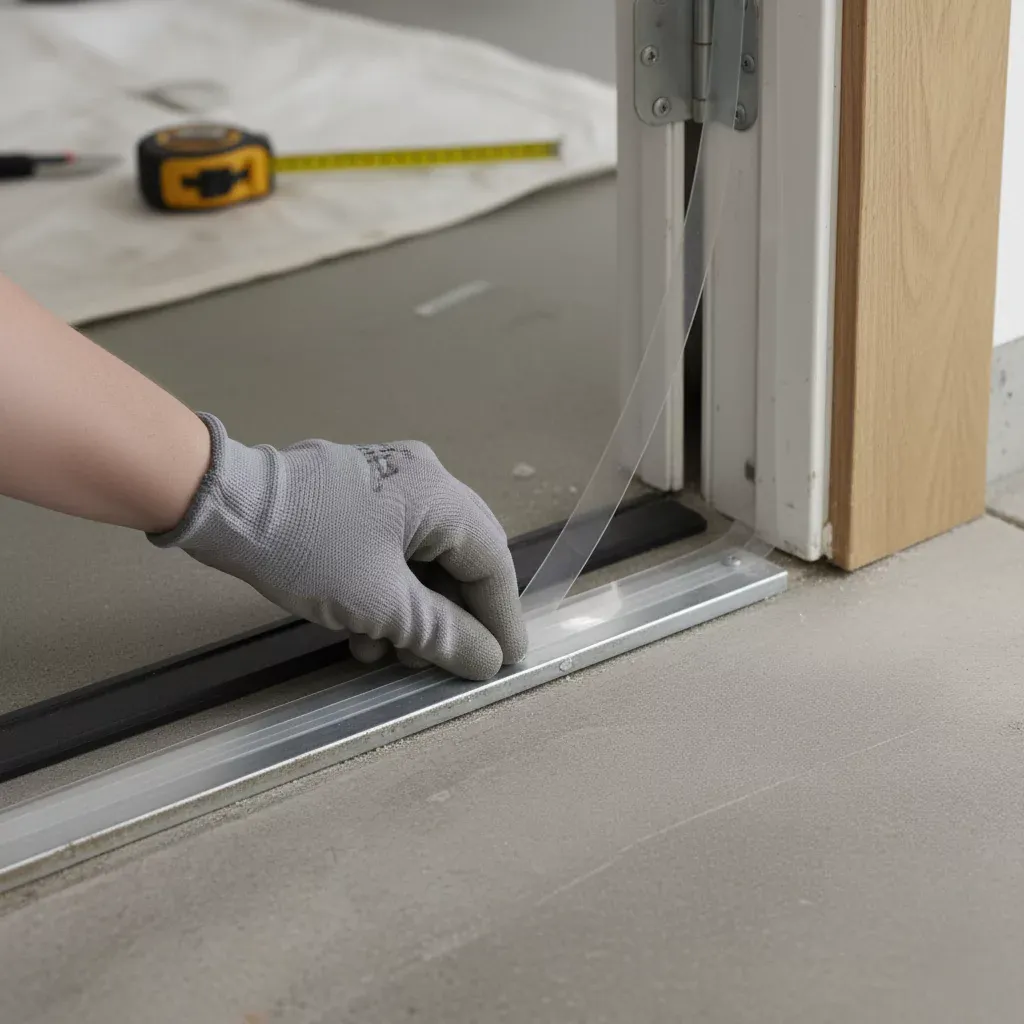
- Cut to length for both sides and the head.
- Fold the material and position it so that the open side of the V faces the door edge.
- Adhere (peel-and-stick) or tack with 1/2″ brads/staples every 8–10 in.
- Please verify the closure and adjust the position to ensure gentle tension without slamming.
Pro tips
- Start at the latch side to improve latch-side sealing first.
- Avoid over-compression that makes latching difficult.
How to Install Kerf-In Weatherstripping
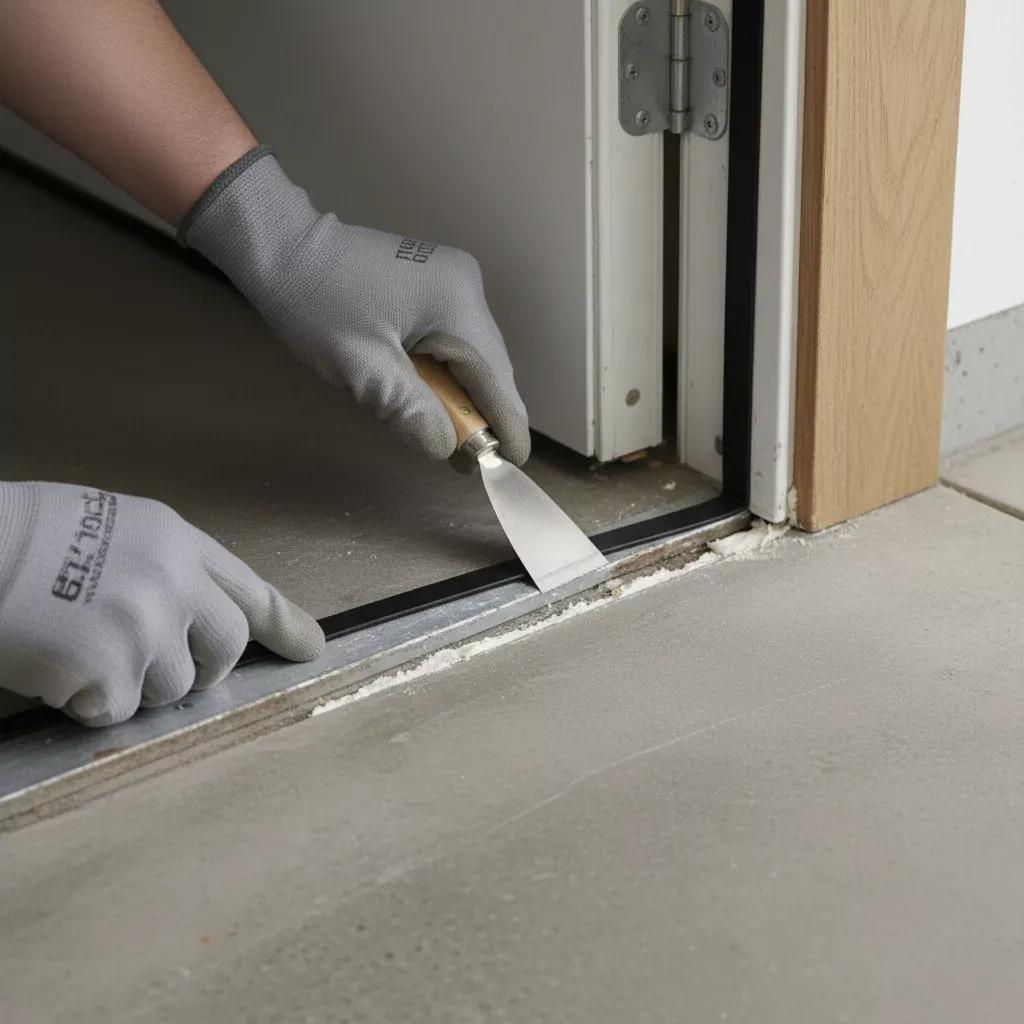
Press the barbed spine into the jamb’s kerf groove with a putty knife; don’t stretch; butt the corners tightly.
- Confirm kerf size (commonly ~3–4 mm wide, ~10–12 mm deep).
- Cut side pieces and a headpiece to length; dry-fit.
- Starting at the top, press the barbed edge into the kerf using a putty knife or roller.
- Butt corners neatly; avoid stretching to prevent future shrink-back.
Pro tips
- Add corner pads at the top latch corner to stop “halo” leaks.
- Choose a bulb size that lightly kisses the door when closed.
How to Install Nail-On Compression Weatherstripping
Attach the carrier strip to the stop so the bulb compresses slightly against the closed door.
- Dry-fit and mark a straight line on the stop.
- Pre-drill the carrier strip if needed; use corrosion-resistant fasteners.
- Fasten from the top down, checking door closure every 12–18 in.
- Adjust placement to maintain light, even compression; avoid bowing the strip.
Pro tips
- If the door binds, plane/sand the door edge lightly rather than overcompressing the seal.
- Seal nail holes and ends with a dab of caulk in wet climates.
How to Install a Door Sweep
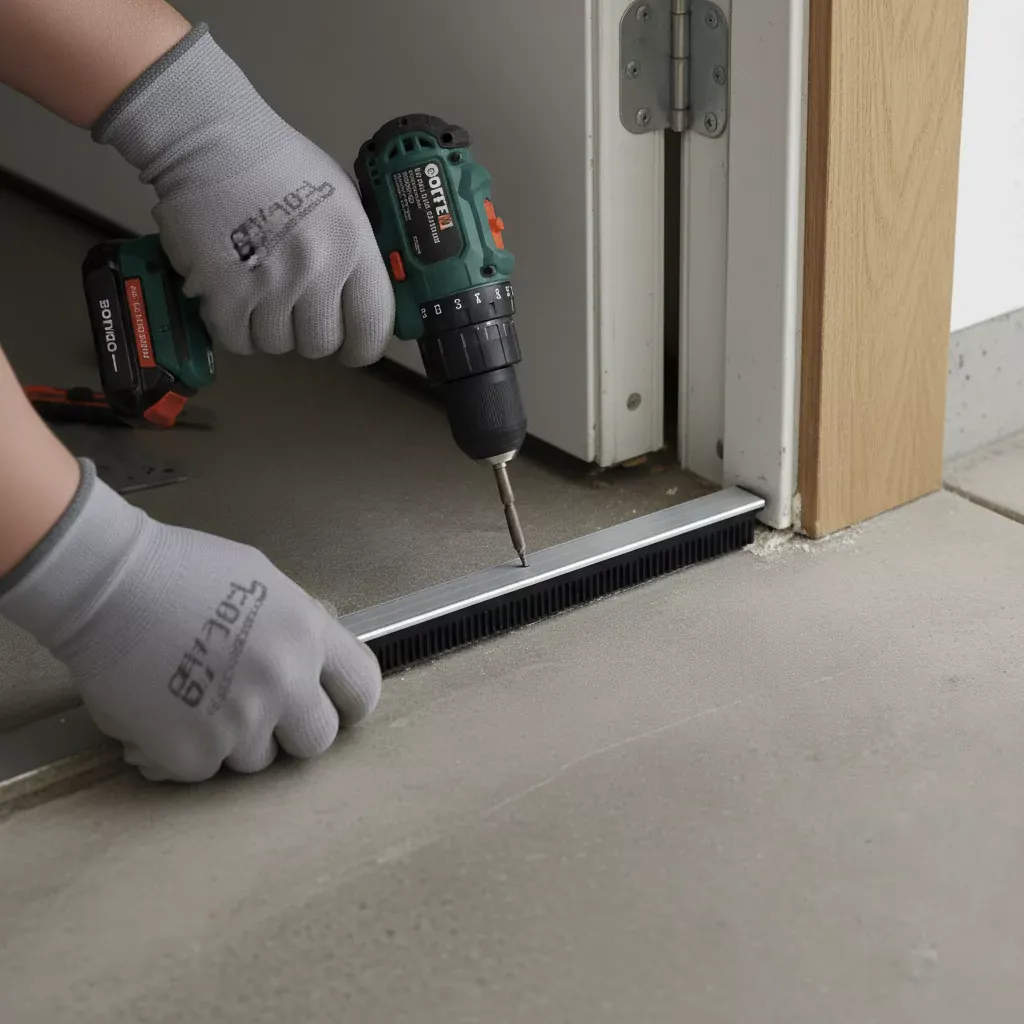
Cut the sweep to width, position it to just brush the threshold, and fasten it with screws for a uniform seal.
- Measure and cut
- Measure the door width; trim the aluminum carrier and insert to length.
- Position
- With the door closed, hold the sweep so the fin/bristles just touch the threshold; use a playing card as a spacer for a smooth glide.
- Fasten
- Pre-drill pilot holes; screw in place. Recheck contact along the full width.
- Fine-tune
- For adjustable sweeps, set even contact. Coordinate with adjustable thresholds by raising/lowering to a “light kiss.”
Pro tips
- For rough thresholds, use a dual-fin or brush sweep.
- Outswing doors may need a drip cap above to prevent water entry.
Step 5: How Do You Test and Fine‑Tune the Seal?
Please re-run the Dollar Bill Test and adjust the seal position, threshold height, or sweep placement until the compression is even and the latching is smooth.
- The dollar bill test should show consistent resistance at all edges.
- Look for daylight at night; none should be visible.
- The latch should engage without forcing; if not, reduce compression slightly or adjust the strike plate.
- At the bottom, raise/lower an adjustable threshold to meet the sweep evenly.
Pro tip: Lightly dust the seal with chalk, close the door, then inspect the transfer on the door edge to confirm even contact.
- Style decisions: Modern vs. Traditional Door Designs: Which Suits Your Home?
- Buying strategy: Custom Doors vs. Pre‑Fabricated Doors
- Planning sizes: Standard Door Size
- Trends: Are Barn Doors Out of Style in 2025
- Closet planning: Standard Folding Door Sizes
- Pre-hung basics: Door Slab vs Prehung
- Patio elegance: French Door Buyer’s Guide
- Essentials : What Is a Pre‑Hung Door?
The Complete Door Seal: What’s the Systems Approach?
Seal the sides and head with weatherstripping and the bottom with a sweep and adjusted threshold; repair/replace the threshold if damaged.
- Jambs & head: Compression seals (kerf-in, V‑strip, or nail‑on).
- Bottom: Door sweep and properly adjusted threshold.
- If the threshold is warped or rotted, replace it before tuning the sweep.
Learn more about bottom sealing in “Door Sill vs. Threshold” and the installation process in “How to Replace a Door Threshold.”
Conclusion: Enjoy a More Comfortable, Efficient Home
Well-installed weatherstripping cuts drafts, lowers energy bills, and quiets outside noise—often in under an hour.
You’ve successfully completed a high-impact upgrade. Next up: seal your windows too—see our tutorial, How to Weatherstrip Your UPVC Windows.