Einführung
Fenster prägen das Herzstück Ihres Zuhauses, doch die schier unendliche Auswahl an Fenstern kann schnell überfordern. Ob Sie als Hausbesitzer eine umfassende Renovierung planen, als Käufer verschiedene Austauschoptionen vergleichen oder sich einfach nur über die Grundlagen der Fenstertechnik informieren möchten: Schiebefenster zählen aufgrund ihres platzsparenden Designs und der ungestörten Aussicht zu den besten Optionen. Damit Sie eine fundierte Entscheidung treffen können, bietet Ihnen dieser umfassende Schiebefenster-Ratgeber alle wichtigen Informationen übersichtlich zusammengefasst. Wir erklären Ihnen die grundlegende Funktionsweise und den Aufbau von Schiebefenstern, wägen die Vor- und Nachteile ehrlich ab und geben Ihnen praktische Tipps zum Kauf und zur Pflege – individuell auf jedes Projekt zugeschnitten.
Was ist ein Schiebefenster?
Einfach ausgedrückt, ein Ein Schiebefenster (manchmal auch Gleitfenster genannt) ist ein Fenstertyp, der sich durch horizontales Verschieben entlang einer Schiene öffnen und schließen lässt. Man kann es sich als eine verkleinerte Version einer Glasschiebetür vorstellen, nur dass sie an einer Wand montiert ist.
Im Gegensatz zu Drehkippfenstern, die nach außen gedrückt werden, oder Schiebefenstern, die nach oben geöffnet werden, nehmen Schiebefenster Platz ein. absolut kein zusätzlicher Innen- oder Außenraum Im geöffneten Zustand bietet ein Schiebefenster maximale Glasfläche und optimale Belüftung bei gleichzeitig bündigem Abschluss mit der Wand. Typischerweise besteht es aus einer feststehenden Glasscheibe und einem beweglichen (gleitenden) Flügel oder mehreren frei verschiebbaren Flügeln.
Um besser zu verstehen, wie es diesen “platzsparenden Aufbau” erreicht, wollen wir zunächst seine innere physikalische Anatomie aufschlüsseln.
Aus welchen Teilen besteht ein Schiebefenster?
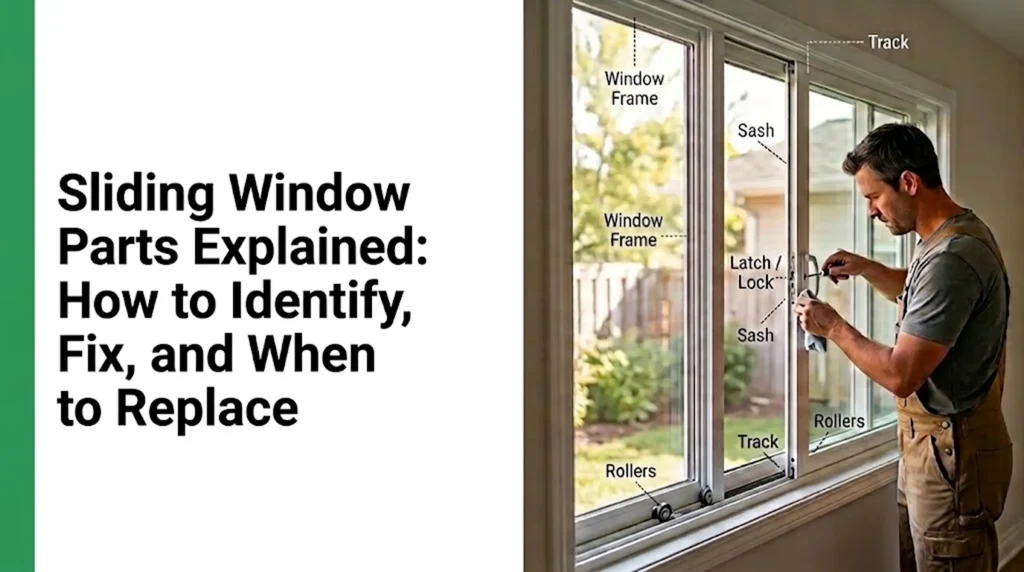
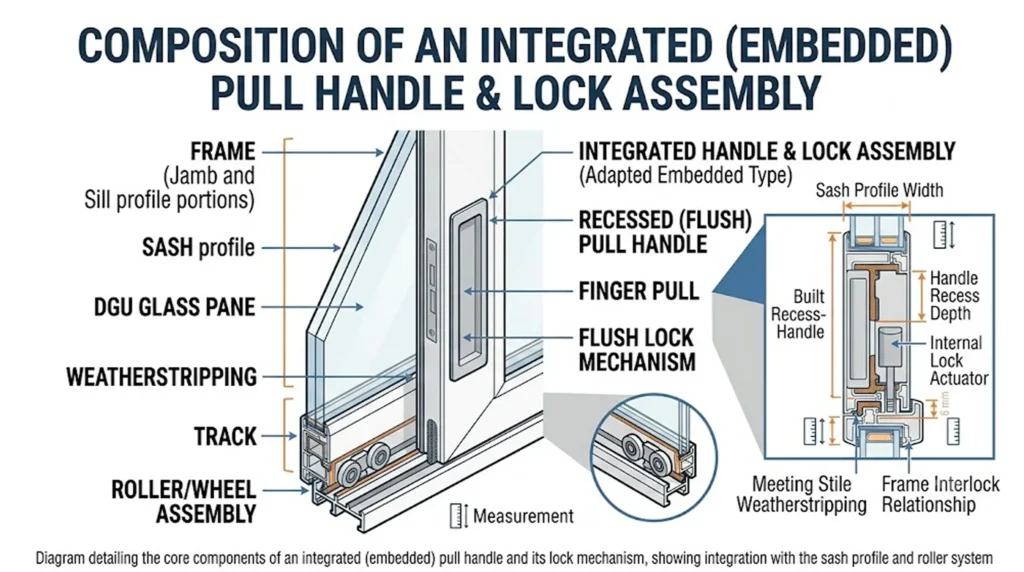
Das Verständnis der Fensterstruktur ist der erste Schritt zu einer fundierten Entscheidung. Um Ihnen eine anschauliche Darstellung zu bieten, haben wir dieses Diagramm der Schiebefensterstruktur erstellt:
Erläuterung der Kernkomponenten:
- Rahmen: Die äußere Fensterschale, die die Gesamtstabilität gewährleistet, einschließlich Sturz, Pfosten und Fensterbank.
- Schärpe: Der Rahmen, der das Glas an seinem Platz hält, unterteilt in bewegliche (Schiebe-) und feste Flügel.
- Glasscheibe: Das Herzstück des Fensters. Wir empfehlen dringend Doppelverglasungseinheiten (DGU), um die Energieeffizienz deutlich zu steigern.
- Schiene: Die Nuten im oberen und unteren Rahmen dienen als Gleitführung für den Flügel. Sie müssen regelmäßig gereinigt werden.
- Rollen-/Radbaugruppe: Die entscheidenden Beschläge sind am unteren Ende des beweglichen Fensterflügels verborgen und bestimmen direkt, wie leichtgängig das Fenster gleitet.
- Dichtungsstreifen: Zusammen mit Bürstendichtungen und Kompressionsdichtungen bildet dies die erste Verteidigungslinie gegen Regen und Zugluft.
- Griff & Schloss: Bietet Hebelwirkung für den täglichen Betrieb und gewährleistet die Sicherheit des Hauses.
Kennt man erst einmal diese Kernkomponenten, ist das Geheimnis hinter der mühelosen Bedienung eines Schiebefensters leicht zu verstehen.
Suchen Sie hochwertige Schiebefenster für Ihr neues Zuhause oder Ihr Bauprojekt? Als erfahrener Fensterhersteller mit Direktvertrieb eliminieren wir die Zwischenhändler für Sie!
Fordern Sie unseren Katalog 2026 an und sichern Sie sich Preise direkt vom Hersteller.Wie funktioniert ein Schiebefenster?
Der Grund, warum sich ein Schiebefenster mühelos mit einer Hand öffnen lässt, liegt darin “Gewichtsverteilung” Und “Reibungsreduzierung”.” Das Funktionsprinzip ist einfach und beruht hauptsächlich auf dem Zusammenwirken zweier Schlüsselsysteme:
- Horizontales Schienensystem: Die obere Führungsschiene dient hauptsächlich der Führung und Fixierung des Fensterflügels und verhindert dessen Kippen oder Wackeln. Die untere Führungsschiene bildet den eigentlichen tragenden Kern und stützt das gesamte Gewicht von Glas und Fensterflügel.
- Rollen und Gleitmechanismus: Die bereits erwähnte Rollenanordnung spielt hier eine entscheidende Rolle. Wenn Sie den Griff fassen und seitlich drücken, gleiten die unteren Rollen sanft auf der Führungsschiene und wandeln so die hohe Gleitreibung in minimale Rollreibung um. Deshalb lässt sich selbst ein schweres, bodentiefes Glasfenster mühelos mit nur einem Finger öffnen.
Vor- und Nachteile von Schiebefenstern
Die Vorteile
- Platzsparende Wunder: Sie ragen weder nach innen noch nach außen hervor und passen perfekt in Flure, Balkone, enge Räume oder Außenwände, die durch Bepflanzung verdeckt sind.
- Unverbaute Sicht: Die großen Glasflächen, die ohne aufwendige Gitter oder Sprossen auskommen, lassen viel natürliches Licht herein und bieten einen herrlichen Ausblick.
- Benutzerfreundlichkeit: Kein mühsames Kurbeln mehr nötig. Ein sanfter Druck genügt, wodurch sie sich besonders für ältere Menschen oder schwer zugängliche Stellen eignen.
- Kosteneffizienz: Die vergleichsweise einfache Konstruktion senkt effektiv das Gesamtbudget für die Sanierung ganzer Fenster im Haus oder für großflächige Fensteraustausche.
Die Nachteile
- Eingeschränkte Belüftung: Da sich die Flügel überlappen müssen, kann man niemals eine Fensteröffnungsfläche von 100% erreichen, egal wie man sie verschiebt.
- Abdichtungsherausforderungen bei extremen Wetterbedingungen: Im Vergleich zur Kompressionsdichtung von Drehkippfenstern sind die Bürstendichtungen von Schiebefenstern bei extremen Taifunen oder starken Regenfällen in Bezug auf Wasser- und Windbeständigkeit etwas unterlegen.
Arten von Schiebefenstern
Um Ihnen die Auswahl wie ein Fensterexperte zu erleichtern, müssen wir die verschiedenen Arten von Schiebefenstern auf dem Markt in drei Dimensionen verstehen: Konfiguration, Material und Glasart.
1. Nach Konfiguration
- Einzelner Schieber: Nur ein Flügel lässt sich horizontal verschieben, der andere ist fest. Eine hervorragende Wahl für kleine Budgets, perfekt für Standard-Schlafzimmer- und Badezimmeröffnungen.
- Doppelschieber: Beide Flügel lassen sich frei verschieben. Das Fenster bietet maximale Flexibilität bei der Belüftung und ermöglicht es Ihnen, die Öffnung je nach Windrichtung anzupassen, um die Luftzirkulation im Innenraum zu fördern.
- 3-Licht-Schieberegler (Panorama-Schieberegler): Verfügt über eine große, feststehende Glasscheibe in der Mitte und kleinere Schiebefenster an beiden Seiten. Konzipiert für besonders breite Öffnungen in Wohnzimmern oder großen Esszimmern, bietet es einen unvergleichlichen Panoramablick.
2. Nach Rahmenmaterial
- Vinyl / UPVC: Bietet ein ausgezeichnetes Preis-Leistungs-Verhältnis, hervorragende Wärmedämmung und ist praktisch wartungsfrei (verblasst nicht und rostet nicht).
- Aluminium: Bekannt für minimalistische, schlanke Rahmen und außergewöhnliche Sicht. Hochwertige Produkte nutzen häufig die Technologie des thermisch getrennten Aluminiums, um das Problem der schnellen Wärmeübertragung im Metall zu lösen.
- Holz: Bietet ein Höchstmaß an Premium-Feeling und traditioneller, klassischer Ästhetik, ist aber teuer und erfordert regelmäßige Pflege (Schleifen und Streichen), um Fäulnis und Schädlingsbefall vorzubeugen.
- Fiberglas: Der Alleskönner unter den Materialien. Extrem robust und äußerst widerstandsfähig gegenüber extremen Klimabedingungen – damit ist er eine erstklassige Wahl für gehobene Ansprüche.
3.Nach Glasart
Die richtige Wahl treffen Glasarten für Ihre Fenster ist genauso wichtig wie die Wahl des Rahmenmaterials. Hier sind die gängigsten Konfigurationen:
- Doppelverglasung / DGU: Der Standard für moderne Gebäude, der eine Schall- und Wärmedämmung bietet, die der von Einfachverglasung weit überlegen ist.
- Low-E-Glas: Mit einer unsichtbaren Metallschicht überzogen, die im Sommer die Hitze von außen reflektiert und im Winter die Wärme im Inneren speichert. Es ist die ultimative Lösung zum Energiesparen.
- Gehärtetes Glas (Sicherheitsglas): Es ist 4- bis 5-mal stärker als normales Glas. Beim Zerbrechen zerfällt es in stumpfe, harmlose Kieselsteine und schützt so Ihre Familie.
Standardgrößen entsprechen nicht immer architektonischen Vorstellungen. Als Direktvertriebspartner bieten wir umfassende OEM/ODM-Services für Schiebefenster. Ob Sie maßgefertigte, extra breite 3-teilige Schiebefenster für Luxusvillen oder kostengünstige Vinyl-Schiebefenster für größere Wohnbauprojekte benötigen – wir verfügen über die nötige Produktionskapazität.
Schiebefenster vs. Drehkippfenster: Was ist besser?
Dies ist das häufigste Dilemma für Hausbesitzer beim Vergleich verschiedener Immobilien. Fenstertypen. Anhand der folgenden Tabelle können Sie die wichtigsten Unterschiede zwischen den beiden Modellen visuell vergleichen und die beste Entscheidung für Ihr Zuhause treffen:
| Besonderheit | Schiebefenster | Flügelfenster |
| Betrieb | Gleitet horizontal auf einer Schiene | Kurbelt sich an Scharnieren nach außen |
| Platzbedarf | Null Platz (vollständig bündig mit der Wand) | Erfordert ausreichend Freiraum im Freien |
| Maximale Belüftung | Ca. 50% (weniger für 3-Lite) | 100% (Die gesamte Öffnung kann belüftet werden) |
| Wetterversiegelung | Gut (basiert auf Bürstendichtungen) | Exzellent (Kompressionsdichtungen aus Gummi) |
| Wartung | Die Gleise müssen regelmäßig gereinigt werden, um Staub zu entfernen. | Die Scharniere sind wartungsarm, aber die Außenverglasung ist schwer zu reinigen. |
| Kosten/Wert | Höherer Wert (einfachere Struktur und Hardware) | Teurer (hochbelastbare Kurbeln und Scharniere kosten mehr) |
Die besten Orte für den Einbau von Schiebefenstern
- Über der Küchenspüle: Man muss sich nicht mehr über ein breites Spülbecken beugen, um eine Kurbel zu drehen; zum Lüften einfach seitlich verschieben.
- Zugewandt von Gehwegen oder Terrassen: Sie werden im geöffneten Zustand niemals in die Wege im Freien hineinragen und so versehentliche Zusammenstöße mit Passanten verhindern.
- Breite Wohnzimmerwände: Wenn Ihre Wand breiter als hoch ist, ist eine 3-teilige Schiebetür die beste Wahl, um das natürliche Licht und den Blick nach draußen optimal zu nutzen.
Der Instandhaltungsleitfaden für Hausbesitzer
Durch ordnungsgemäße Wartung kann die Lebensdauer Ihrer Schiebefenster um ein Vielfaches verlängert werden:
- Vierteljährliche Gleisreinigung: In der unteren Schiene sammeln sich leicht Staub, Tierhaare und tote Insekten an. Saugen Sie zunächst den groben Schmutz ab und reinigen Sie die Rillen anschließend mit einer alten Zahnbürste und milder Seifenlauge, bevor Sie sie trocken wischen.
- Schmierung ist entscheidend: Wenn das Gleiten schwergängig wird, sprühen Sie ein Gleitmittel auf Silikonbasis Reinigen Sie die Walzen jährlich. Verwenden Sie niemals ölbasierte Schmierstoffe wie WD-40, da diese mehr Staub anziehen und die Walzen schließlich blockieren.
- Dichtungsprüfung: Überprüfen Sie die Bürstendichtungen alle sechs Monate. Sollten Sie Abflachungen, Abnutzungserscheinungen oder Ablösungen feststellen, ersetzen Sie diese umgehend, um die Wärmedämmung und Wasserdichtigkeit Ihres Hauses zu gewährleisten.
Häufig gestellte Fragen zu Schiebefenstern
F: Sind Schiebefenster sicher?
A: Moderne, hochwertige Schiebefenster sind mit Mehrpunktverriegelungen und Aushebesicherungen ausgestattet und bieten daher hohe Sicherheit. Für absolute Sicherheit nachts oder auf langen Reisen können Sie zusätzlich physische Fensterheber oder Sicherheitsgitter anbringen.
F: Kann ich nur die Glasscheibe meines Schiebefensters austauschen?
A: Wenn nur die Scheibe versehentlich gesprungen ist, ist der Austausch der einzelnen Scheibe kostengünstiger. Wenn Sie jedoch die Energieeffizienz Ihres Hauses verbessern möchten (z. B. durch den Austausch von Einfach- gegen Doppelverglasung mit Wärmeschutzglas), empfehlen wir einen kompletten Fensteraustausch, da alte Rahmen die Dicke und das Gewicht moderner Scheiben oft nicht tragen können.
F: Woran erkenne ich, ob die Rollen meines Schiebefensters ausgetauscht werden müssen?
A: Wenn Sie ein deutliches metallisches Schleifgeräusch hören, der Fensterflügel beim Verschieben heftig ruckelt oder sich der Fensterflügel auch nach der Reinigung der Schiene nur mit viel Kraftaufwand bewegen lässt, bedeutet dies, dass die Rollen wahrscheinlich stark abgenutzt oder verformt sind und fachmännisch ausgetauscht werden müssen.
Abschluss
Mit ihren einzigartigen Vorteilen – extrem platzsparend, mit weitem Ausblick und hoher Wirtschaftlichkeit – haben sich Schiebefenster über die Jahre bewährt und sind nach wie vor eine klassische und beliebte Wahl für modernes Wohndesign. Indem Sie ihre innere Konstruktion verstehen, die idealen Anwendungsfälle sowie die Vor- und Nachteile abwägen und wissenschaftliche Wartungsmethoden befolgen, finden Sie garantiert das perfekte Fenster für Ihr Zuhause.
Als professioneller Fensterhersteller bieten wir Ihnen nicht nur hochwertige Schiebefenster, sondern eliminieren auch alle Zwischenhändler, um Ihnen echte Qualität zu garantieren. Preise direkt vom Hersteller!
Holen Sie sich ein kostenloses Angebot direkt vom Hersteller.