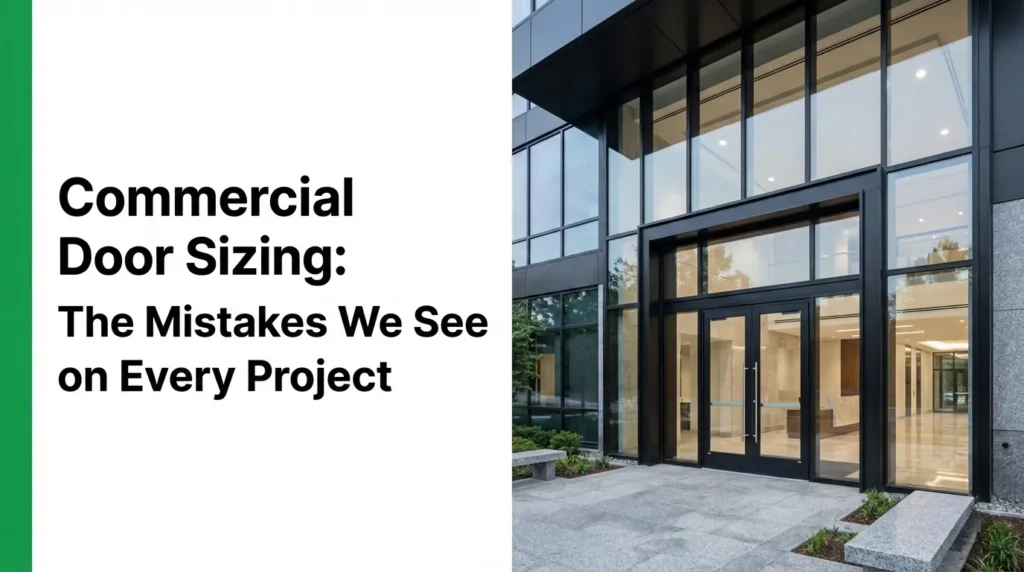
We see the same door sizing mistakes on nearly every commercial project. Contractor orders 3′-0″ doors when code requires 36″ clear width—doesn’t realize the frame eats 2″ of that. Developer specs standard 8 ft patio opening for a restaurant, discovers after opening that server traffic doesn’t flow. GC frames the rough opening (RO) before getting manufacturer’s actual dimensions, ends up with doors that don’t fit.
These aren’t product problems. They’re specification and coordination problems that happen months before installation. Here’s what actually goes wrong and how to avoid it.
The “36 Inch Door” Problem
When code says “36” clear width,” contractors often spec a 3′-0″ door. But here’s what they miss: that’s nominal door size. Actual clear width after frame and door thickness? 33.5-34 inches. Fails ADA (per IBC/ADA standards).
You need 38-40″ nominal door to get 36″ clear width. This catches people constantly on restaurant ADA entry access, hotel accessible rooms, office suite entries. Double doors compound it: two 36″ doors for “6 ft clear”? Actually 5′-2″ to 5′-4″ after center post and thickness—too tight for service carts or luggage.
Quick fix: Always ask manufacturer “what’s clear width at 90° open” before ordering. Don’t calculate yourself. Hotian provides verified clear width for all configurations during quoting—we’ve seen this mistake too many times.
Restaurant Patio Doors: Why 8-10 Feet Never Works
Standard residential patio = 6-8 ft. Fine for homeowners. But restaurant developers spec 8-10 ft commercial openings, thinking “bigger than residential, should suffice.” Nope. Math that matters: server with tray needs 3 ft; two customers: 5 ft; simultaneous = 8 ft minimum.
8 ft is uncomfortable at peak (150 covers Saturday night). Aim 12-16 ft for smooth flow. Cost: 8→16 ft adds $10-15K, but +8-12 patio seats = $600-800 extra revenue per weekend service. Pays back in 6-8 weeks.
Mistake: sizing for “fit” not “performance.” When developers say “10 ft patio,” Hotian recommends 14-16 ft—not upselling, but from watching undersized patios bottleneck for 15 years.
The RO Coordination Sequence Nobody Follows
What should happen:
- Decide door config/size
- Get RO dims from manufacturer
- Engineer designs header for loads
- Frame RO
- Order doors
What happens: Architect sketches door; framer guesses “standard” RO; doors ordered later—don’t fit/header undersized/no bi-fold stack space.
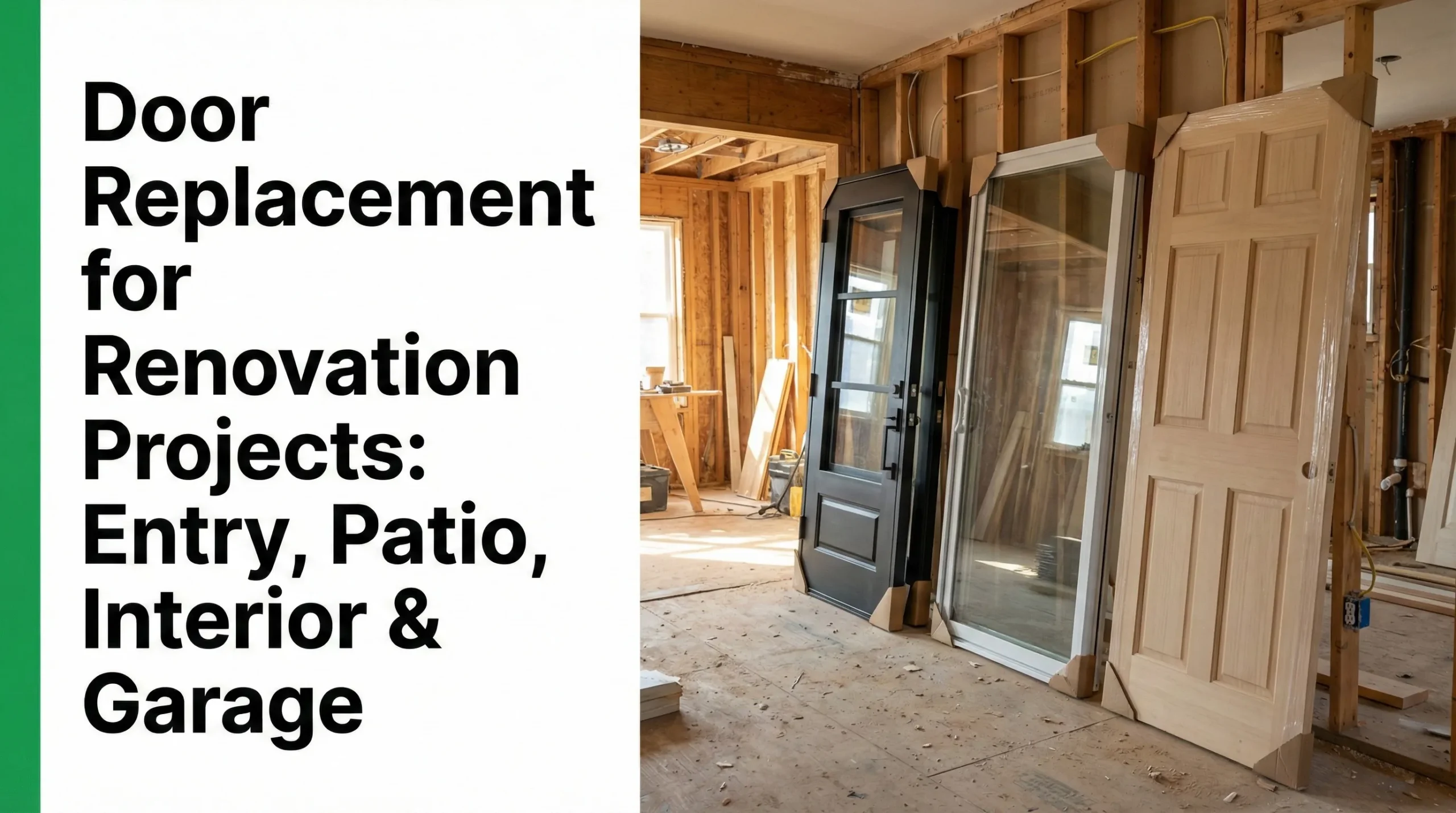
Root: RO specs too late. Fix: Get manufacturer RO in design phase, pre-framing. Reframing costs 10x more. Critical for >8 ft/custom: 12 ft patio may need 12′-3″ RO + 800 lb header load. Engineer needs real data, not assumptions. Seen $15K beam sistering post-install—early coord prevents.
Hotian sends RO dims/header loads early—even pre-order.
Custom vs Standard: When It Actually Matters
Standard = cheaper/faster (8-10 wk lead). Custom = +10-15% cost, +2-3 wks.
Standard fine for:
- Office terraces (8 ft sliders adequate)
- Hotel balconies (6-8 ft standards)
- Budget projects
Custom worth it for:
- Restaurant patios (traffic optimization)
- Retrofits (fit existing RO)
- Aesthetic modules
Contractors default “standard saves”—right 60%. Other 40%: 20-yr performance hit for $3K upfront save. Ask: “Does standard compromise function?” Ex: Hotel 14′-6″ legacy RO—12 ft wastes space (odd look), 16 ft needs $20K mods; custom 14′-6″ +$4K solves clean.
| Scenario | Standard Size | Custom Benefit | Hotian Cost/Lead |
|---|---|---|---|
| Restaurant Patio | 8-10 ft | 14-16 ft no bottleneck | +$10-15K, 12-14 wk |
| Hotel Balcony | 6-8 ft | Exact RO fit | +10%, no MOQ |
| Office Terrace | 8 ft slider | Module aesthetics | 8-10 wk |
What to Actually Provide Manufacturers
Minimum:
- Application (restaurant patio/hotel balcony/office terrace)
- Desired clear opening (e.g., “8 ft clear fully open,” not “8 ft door”)
- RO if framed
- Timeline
Better for recs:
- Traffic volume/pattern
- Budget priorities
- Integrations (access/fire rating)
No-app quote? Red flag. Good ones ask traffic—8 ft slider vs 12 ft bi-fold depends. Hotian details to avoid mismatches.
Swing Doors vs Patio Doors: Different Sizing Logic
Swing (entry/office/restroom): Standardized 32″/36″/42″ x 80″/84″—code-driven, simple.
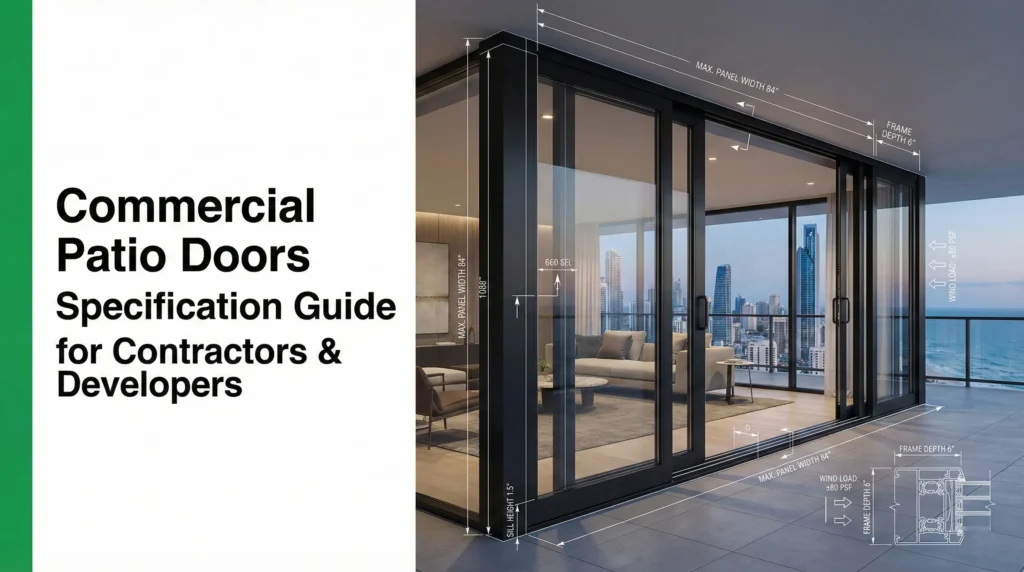
Patio/storefront: Sized to needed opening, not list. Restaurant 16 ft for traffic; office 10 ft for module. Mistake: Treat patio like swing—”standard commercial patio size”? None. Function/architecture drives; hence more early coord need.
Working with Hotian: Standard & Custom Commercial Doors
Hotian builds for restaurants/hotels/offices/retail—standard/custom.
Capabilities:
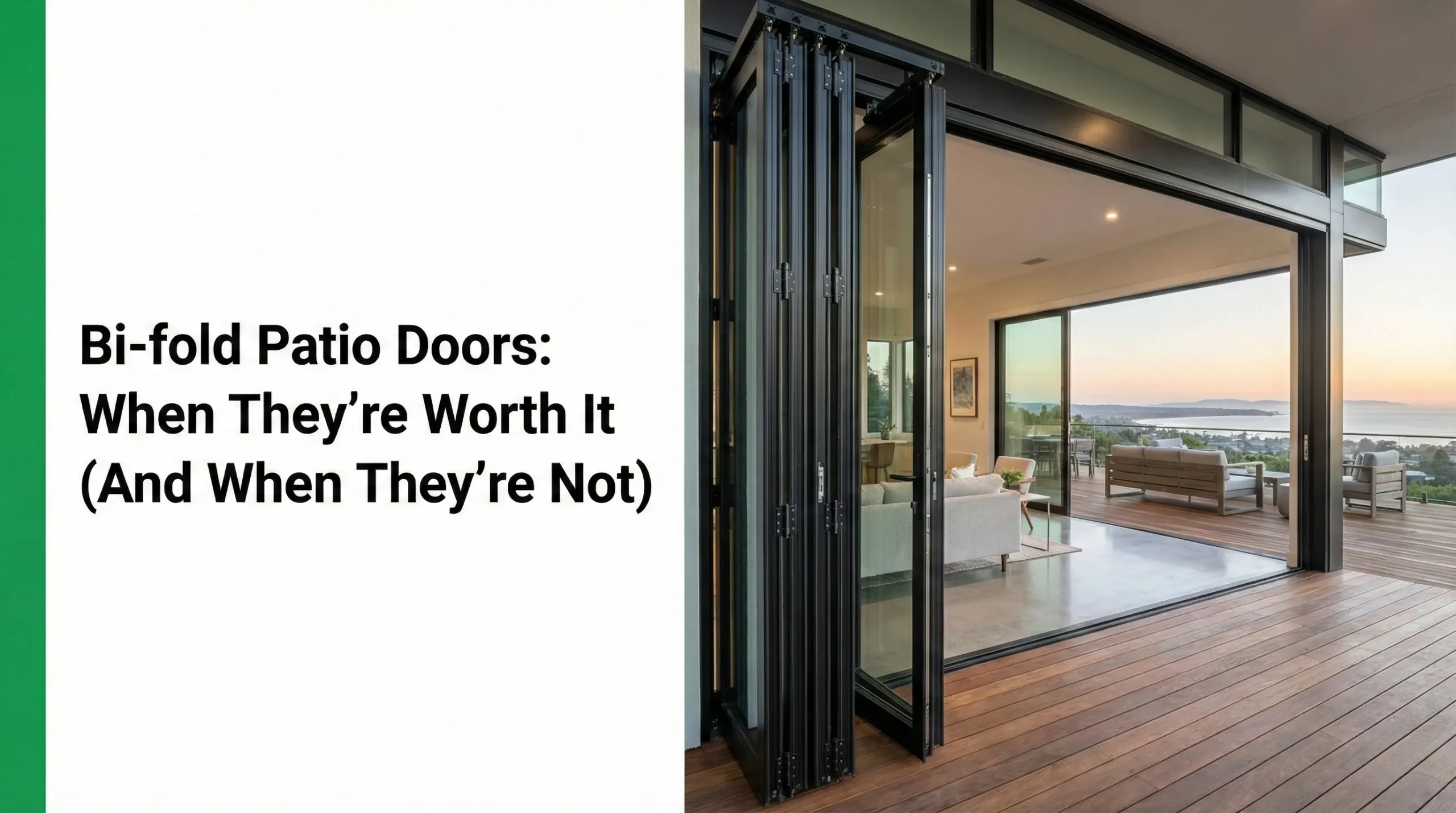
- Patio: 6-20 ft (slider/bi-fold/French)
- Entry swings: std/custom
- No MOQ (single to multi-building)
- Custom +10-15%, 12-14 wk
Early deliverables:
- RO dims/header loads
- Traffic-based configs
- ADA clear width verify
- System integration
Ex: 120-seat restaurant 10 ft patio initial; we rec 14 ft for peak (2 servers+guests). +$8K doors, but top revenue patio Season 1—no bottlenecks. Adequate vs optimized.
Get Started: Request RO Dimensions
Submit specs—app type, opening goals, RO plans. 24-hr RO dims/loads/config recs. Coord early, avoid costly fixes.
Submit Project →
Schedule Consult →
Sizing questions? Hotian engineering replies 1 biz day.