High-quality uPVC windows typically last between 20 and 35 years. With proper installation, UV-stabilized profiles, and basic routine maintenance, premium uPVC frames can easily exceed three decades of reliable service without rotting, rusting, or warping.
However, a window is a complete mechanical system rather than a single piece of plastic. While the uPVC frame itself endures for decades, secondary components—such as weather seals, multi-point locks, and double-glazed glass units—experience daily wear and generally require servicing or replacement sooner.
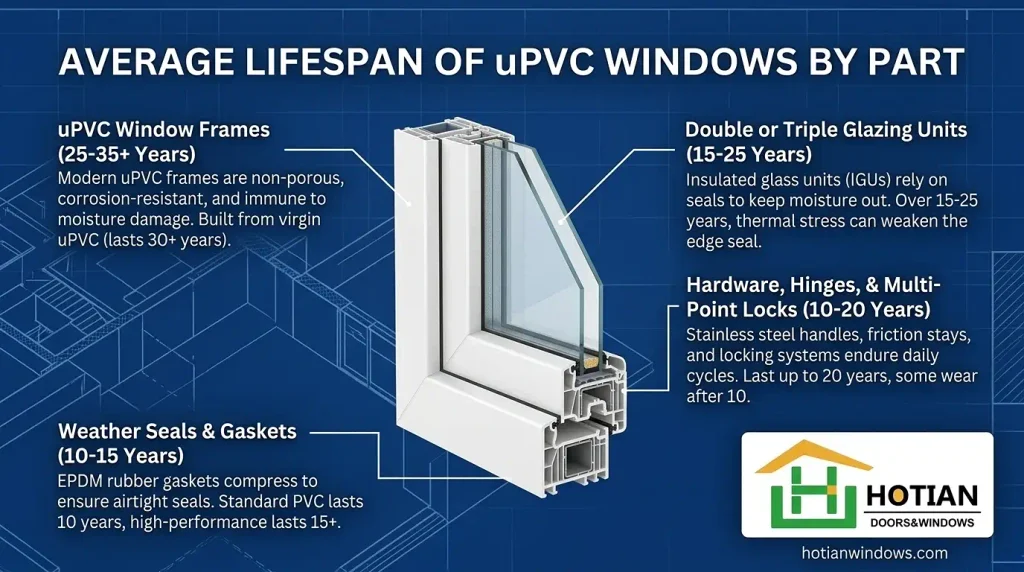
Average Lifespan of uPVC Windows by Part
When evaluating the longevity of uPVC windows, it helps to separate the structural frame from its moving and sealed parts.
uPVC Window Frames
Modern uPVC frames are non-porous, corrosion-resistant, and immune to moisture damage. Engineered multi-chambered profiles made from virgin uPVC compound routinely last 30 years or more before showing structural fatigue.
Double or Triple Glazing Units
Insulated glass units (IGUs) rely on perimeter seals and desiccants to keep moisture out of the air or argon-filled cavity. Over 15 to 25 years, thermal expansion and contraction can gradually weaken the edge seal, leading to internal condensation.
Hardware, Hinges, and Multi-Point Locks
Handles, friction stays, and espagnolette locking systems endure thousands of opening and closing cycles. High-grade stainless steel or anti-corrosion coated hardware typically lasts up to 20 years, while lower-grade hardware may loosen after a decade.
Weather Seals and Gaskets
Perimeter gaskets compress every time the sash closes. Standard PVC seals may harden or shrink within 10 years, whereas high-performance EPDM (ethylene propylene diene monomer) rubber gaskets retain their elasticity for 15 years or longer.
5 Key Factors That Determine How Long uPVC Windows Last
Not all uPVC windows are manufactured to the same standard. Two windows that look identical on the surface can have a 15-year difference in real-world service life depending on the following five variables.
Profile Wall Thickness and Virgin Material Ratio
The quality of the raw uPVC formulation is the single biggest predictor of longevity. Top-tier profiles conform to EN 12608 Class A standards (with exterior wall thicknesses of 2.8 mm to 3.0 mm) and are extruded using 100% virgin uPVC resin. Lower-cost alternatives often rely on high percentages of recycled filler or thinner Class B/C walls, making the corners more prone to cracking under thermal stress.
Internal Galvanized Steel Reinforcement
Because uPVC expands and contracts more than metal when temperatures fluctuate, large window frames and casements require internal structural support. In commercial and multi-unit residential manufacturing, engineering profiles with galvanized steel reinforcement inside the main chambers is standard practice to prevent bowing, sagging, and wind-load deformation over a 30-year service life.
UV Stabilization and Climate Exposure
Early generations of uPVC windows earned a reputation for turning yellow after a decade in the sun. Modern, high-grade profiles prevent this by incorporating high levels of titanium dioxide (TiO2) and specialized UV stabilizers directly into the compound. In regions with intense solar radiation, coastal salt spray, or extreme freeze-thaw cycles, UV-stabilized formulations and laminated foil finishes are essential to prevent chalking and brittleness.
Glazing Sealant and Spacer Technology
The lifespan of the glass unit depends heavily on how it is assembled. Units built with dual-seal systems (a primary polyisobutylene moisture barrier paired with a secondary silicone or polysulfide structural seal) and warm-edge spacers resist thermal pumping far better than single-sealed units, significantly reducing the risk of premature fogging.
Installation Quality and Structural Flashing
Even a 35-year-rated window can fail within five years if installed improperly. Incorrect shimming, missing sill flashing, or failing to leave proper expansion gaps around the perimeter puts uneven stress on the frame. Over time, this leads to misaligned sashes, jammed locks, and water infiltration around the rough opening.
uPVC vs. Aluminum vs. Wood Windows: Lifespan & Value Comparison
When weighing long-term durability against upfront and ongoing costs, uPVC sits in a sweet spot for most residential and commercial developments.
← Swipe horizontally to compare all specifications →
| Window Frame Material | Average Lifespan | Maintenance Requirements | Thermal Insulation | Overall Cost-Efficiency |
|---|---|---|---|---|
|
uPVC Best Value | 20–35 Years | Very Low (Occasional cleaning & hardware lubrication) | High (Multi-chambered low conductivity) | Best Value (Low upfront cost + minimal upkeep) |
| Thermally Broken Aluminum | 30–45 Years | Low (Powder coating lasts decades) | Moderate to High (Requires thermal break) | Moderate (Higher initial investment) |
| Engineered Timber / Wood | 30–50+ Years | High (Requires repainting/sealing every 5–8 years) | High (Natural insulator) | Lower (High initial and lifetime upkeep costs) |
While aluminum offers slightly longer structural life for oversized architectural spans and wood offers classic aesthetics, uPVC delivers the highest return on investment when factoring in energy savings and near-zero maintenance.
Repair or Replace? 5 Warning Signs Your uPVC Windows Are Failing
If existing uPVC windows are between 15 and 25 years old, you do not always need a full-frame replacement. Use these five warning signs to decide whether targeted repairs or full replacement makes more sense.
- Condensation Between the Glass Panes: Moisture or fog trapped inside double glazing means the hermetic seal has failed. Verdict: If the uPVC frame is still straight and uncracked, you can replace just the insulated glass unit rather than the whole window.
- Persistent Drafts or Whistling Sounds: Air leaks around closed sashes usually stem from flattened weather gaskets or misaligned hinges. Verdict: Replacing EPDM gaskets and adjusting the locking cams often restores airtightness.
- Warped, Cracked, or Severely Discolored Frames: Visible splits at the welded corners, bowing along the transoms, or brittle, chalky surfaces indicate structural end-of-life. Verdict: Full window replacement is required.
- Difficulty Opening, Closing, or Locking: If a sash drags against the frame or the handle refuses to engage smoothly even after lubrication, the internal gearing or frame alignment has likely failed. Verdict: Repairable if isolated to the lockbox; replace if caused by frame sag.
- Noticeable Spikes in Heating and Cooling Costs: Older uPVC windows installed in the 1990s or early 2000s often used outdated air-filled glazing with poor U-values. Verdict: Upgrading to modern low-E, argon-filled uPVC systems pays back quickly through reduced HVAC loads.
Simple Maintenance Tips to Maximize uPVC Window Longevity
uPVC is famously low-maintenance, not zero-maintenance. Spending 15 minutes twice a year on basic care can easily add five to ten years to a window’s working life:
- Clear the Drainage Slots: Open the sash and inspect the small weep holes along the bottom track. Flushing out dust and debris with warm water prevents trapped rainwater from corroding internal steel reinforcements.
- Lubricate Moving Hardware Annually: Apply a light silicone-based spray or machine oil to hinges, locking rollers, and keeps once a year to prevent metal-on-metal friction.
- Clean Frames with Mild Soapy Water: Wash frames and gaskets with warm water and mild dish soap. Avoid abrasive pads, bleach, or solvent-based cleaners, which strip away the UV-protective surface layer.
- Condition the Rubber Seals: Wipe weather gaskets clean and apply a thin coat of silicone grease every couple of years to keep them supple and airtight.
Sourcing High-Performance uPVC Windows for Your Next Project?
At Hotian, we manufacture architectural-grade uPVC window and door systems engineered for a 30+ year service life. Built with 100% virgin UV-stabilized Class A profiles, galvanized steel reinforcement, and certified multi-point hardware, our fenestration solutions are tailored for contractors, builders, property developers, and window distributors.
Whether you are specifying windows for a multi-unit residential project, commercial build, or expanding your regional wholesale catalog, our technical team supports custom sizing, glazing specs, and reliable bulk supply.
Frequently Asked Questions
Do uPVC windows turn yellow over time?
Modern uPVC windows do not turn yellow. While early uPVC formulations from the 1980s lacked adequate UV stabilizers, today’s quality profiles are manufactured with high-grade titanium dioxide (TiO2) compounds that resist sun discoloration and maintain their original finish for decades, even in high-UV climates.
Can you replace just the glass in a uPVC window?
Yes. uPVC windows are designed with removable glazing beads that hold the glass unit in place. If the glass cracks or develops internal condensation, a glazier can swap out the insulated glass unit in under an hour without disturbing the main frame or surrounding wall finishes.
Are uPVC windows worth it compared to aluminum?
For most residential and commercial buildings, yes. uPVC provides superior thermal and acoustic insulation at a significantly lower price point than thermally broken aluminum, making it easier to meet modern energy-efficiency building codes without inflating construction budgets.
Do uPVC windows warp in extreme heat or cold?
Quality uPVC windows will not warp in extreme weather when properly engineered. Profiles extruded with Class A wall thickness and reinforced internally with galvanized steel cores are designed to withstand wide temperature fluctuations, intense summer heat, and freezing winters without bowing or losing their airtight seal.
What warranty comes with quality uPVC windows?
Most reputable manufacturers offer a 10- to 15-year structural warranty on uPVC profiles against discoloration, cracking, or warping, alongside 5- to 10-year warranties on insulated glass seals and hardware. Even after the formal warranty period expires, well-built systems routinely continue performing for 25 to 35 years.