Introdução
Para empreiteiros, construtoras e atacadistas de esquadrias estrangeiros, a busca pelo "processo de fabricação de portas de correr" raramente se resume a mera curiosidade. Trata-se de diligência prévia. Compreender como uma porta é fabricada é a maneira mais eficaz de auditar uma fábrica, identificar riscos ocultos na cadeia de suprimentos e avaliar se um fabricante atende aos códigos de construção locais.
Para ajudar você a navegar por esse complexo processo de fornecimento, compilamos um guia completo para compradores B2B na fabricação de portas deslizantes industriais.
A seguir, detalhamos cada etapa crítica da linha de produção. Para cada etapa, descrevemos o fluxo de trabalho padrão e fornecemos uma lista de verificação prática para avaliação de fornecedores, ajudando você a identificar possíveis problemas. Ao longo do texto, compartilharemos referências do setor — baseadas em nossos 20 anos de experiência em manufatura na Hotian — para que você saiba exatamente qual padrão de qualidade exigir para o seu próximo projeto.
Etapa 1: Extrusão da matéria-prima e quebra térmica
O Processo Padrão
A fabricação começa com a preparação do perfil bruto. Os tarugos de alumínio são extrudados através de matrizes de aço, resfriados e envelhecidos para atingir a dureza estrutural (T5/T6). Para maior eficiência energética, as máquinas inserem uma tira de polímero de baixa condutividade na cavidade do alumínio (a ruptura térmica) e a prensam firmemente. Finalmente, os perfis passam por tratamentos de superfície, como pintura eletrostática a pó ou anodização, em fornos de alta temperatura.
Como avaliar um fornecedor: materiais e extrusão
Ao auditar as matérias-primas de uma fábrica, procure por estes indicadores específicos:
| Ponto de Inspeção | Armadilhas comuns (O que evitar) | Melhores práticas do setor (O que especificar) |
| Material de ruptura térmica | Tiras de PVC reciclado (quebradiças, com baixo poder de isolamento). | Tiras de nylon PA66 (Alta integridade estrutural, resistência térmica superior). |
| Espessura do perfil | Perfis com espessura inferior a 1,4 mm para portas comerciais. | Alumínio virgem de 1,4 mm a 2,2 mm, dependendo dos requisitos de resistência ao vento. |
| Controle de qualidade de entrada | Basear-se exclusivamente em certificados de fornecedores, sem testes de fábrica. | O calibrador 100% verifica a espessura e a planicidade dos materiais antes que entrem na linha de produção. |
O Padrão Hotiano
Utilizamos estritamente Quebra térmica de nylon PA66 e perfis de UPVC multicâmara virgens (condutividade térmica de 0,17 W/m·K). Nossa equipe dedicada de controle de qualidade realiza o Inspetor de Qualidade de Entrada (IQC) 100% com paquímetros de alta precisão. Além disso, nossos acabamentos em pintura eletrostática a pó com zero VOC e fluorocarbono (PVDF) garantem uma vida útil de 10 anos sem desbotamento.
Etapa 2: Corte e usinagem de precisão CNC
O Processo Padrão
Os perfis são levados para estações de corte onde serras de esquadria dupla cortam o metal em ângulos precisos (geralmente 45° ou 90°). Em seguida, centros de usinagem CNC (Controle Numérico Computadorizado) de 3 ou 4 eixos perfuram e fresam automaticamente ranhuras para fechaduras multiponto, roletes reforçados e orifícios de drenagem de água.
Como avaliar um fornecedor: Precisão na usinagem
A tolerância de corte é a métrica mais crítica na fabricação de portas. Se os cantos não se encaixarem perfeitamente, você enfrentará folgas na instalação, infiltrações de água e correntes de ar.
- Pergunte sobre a tolerância de corte deles: Uma tolerância de ±1,0 mm ou superior causará folgas visíveis nos cantos. Exija uma tolerância de ±0,5 mm.
- Inspecione as marcas de suas máquinas: Cortes de alta qualidade exigem equipamentos de primeira linha. Procure por marcas renomadas de máquinas CNC (alemãs ou italianas) em vez de serras manuais sem marca disponíveis no chão de fábrica.
- Verifique o projeto do orifício de drenagem: Certifique-se de que as máquinas da fábrica tenham orifícios de drenagem escalonados com abas antirretorno para evitar que a chuva impulsionada pelo vento entre no sistema.
O Padrão Hotiano
Hotian utiliza Centros de corte CNC alemães de alta qualidade Elumatec. Essa precisão automatizada garante que nossas tolerâncias de corte de moldura sejam microscópicas. ±0,5 mm. Ao controlar a usinagem em nível milimétrico, garantimos cantos perfeitamente alinhados e molduras que se encaixam exatamente nas aberturas brutas, sem necessidade de forçar ou calçar.
Etapa 3: Montagem da estrutura e crimpagem dos cantos
O Processo Padrão
Para montar as esquadrias, cantoneiras de alumínio são inseridas nas cavidades dos cortes de 45 graus. Uma resina epóxi estrutural bicomponente é injetada na junta. Uma máquina hidráulica de crimpagem de cantos então fixa o alumínio firmemente na cantoneira interna. Finalmente, uma vedação contínua (juntas) é aplicada ao longo dos canais de envidraçamento.
Como avaliar um fornecedor: Integridade estrutural
Uma porta de correr deve suportar o peso de vidros pesados e a pressão de ventos com força de furacão.
| Ponto de Inspeção | Armadilhas comuns (O que evitar) | Melhores práticas do setor (O que especificar) |
| Montagem de canto | Juntas de parafuso manuais sem cantoneiras internas ou cola estrutural. | Crimpagem hidráulica automatizada com injeção de epóxi bicomponente para zero entrada de água. |
| Calafetagem | Espuma barata ou borracha de PVC (degrada-se rapidamente sob a ação dos raios UV). | Juntas de borracha EPDM (Qualidade automotiva, altamente durável, excelente vedação). |
| Segurança do selante | Selantes pungentes à base de solventes com alto teor de COVs (Compostos Orgânicos Voláteis). | Selantes estruturais ecológicos e isentos de formaldeído. |
O Padrão Hotiano
Nossa linha de montagem foi projetada para atender aos padrões Passivhaus e de resistência a impactos de furacões. Combinamos a crimpagem de cantos totalmente automatizada com juntas de borracha EPDM de alta qualidade. Isso garante que nossas estruturas finais alcancem a excepcional estanqueidade à água e ao ar exigida para atender às rigorosas classificações de resistência a impactos de furacões da NAMI.
Etapa 4: Instalação de Vidraças e Ferragens
O Processo Padrão
As unidades de vidro isolante (IGUs) são inseridas nas esquadrias já montadas, apoiadas por blocos de neoprene para garantir a drenagem adequada. O silicone estrutural fixa o vidro. Simultaneamente, trilhos deslizantes de aço inoxidável, roletes tandem reforçados, puxadores e engrenagens de travamento multiponto são integrados e calibrados.
Como avaliar um fornecedor: componentes essenciais
A vida útil de uma porta de correr depende inteiramente de suas peças móveis e da qualidade do vidro.
- Verifique as certificações do vidro: Vidro sem certificação representa um grande risco. Verifique se os parceiros da fábrica de vidro possuem as certificações locais para o seu mercado (por exemplo, SGCC/IGCC para a América do Norte, CE para a Europa).
- Verificar gás térmico: Confirme se as unidades de vidro isolante (IGUs) são preenchidas com argônio e possuem revestimentos Low-E para atender aos códigos de energia locais (valores U).
- Teste a capacidade de carga do hardware: As portas de correr suportam um peso imenso. Certifique-se de que a fábrica utilize roldanas duplas reforçadas, com capacidade adequada ao peso específico das folhas da sua porta, e verifique as marcas dos acessórios.
O Padrão Hotiano
Firmamos parcerias exclusivas com gigantes do setor, como CSG e XYG, para vidros com certificação CCC, SGCC e IGCC. Com preenchimento de gás argônio e revestimentos Low-E, nossas portas alcançam Valores U da NFRC entre 0,20 e 0,28. Para hardware, integramos marcas confiáveis como Kinlong e HOPO, garantindo que nossos trilhos de aço inoxidável e roletes reforçados suportem centenas de milhares de ciclos.
Obtenha uma avaliação de engenharia gratuita para o seu projeto →

Etapa 5: Verificação de desempenho e benchmarks de certificação testados em laboratório
Para arquitetos, empreiteiros e construtores de residências personalizadas, inspecionar o acabamento estético de uma porta de correr representa apenas metade da auditoria. A verdadeira proteção física do envelope de um edifício depende do desempenho comprovado em laboratório certificado.
Ao avaliar unidades de vidro isolante (IGUs) e conjuntos estruturais de um fabricante estrangeiro, as especificações de engenharia devem ser corroboradas por agências de testes credenciadas, como a Conselho Nacional de Classificação de Fenestração (NFRC), o Instituto Nacional de Acreditação e Gestão (NAMI), e organismos de teste independentes como Intertek.
Antes de aprovar desenhos de projeto ou emitir ordens de compra, utilize a matriz de dados de referência abaixo para verificar se um fornecedor de esquadrias atende aos códigos internacionais de energia, aos requisitos de carga de vento estrutural e aos padrões de atenuação acústica.
| Padrão e Agência | Métricas de teste principais | Benchmark de Conformidade Arquitetônica e de Código |
| Classificação térmica NFRC (EUA/Internacional) | Fator U: ≤ 0,30SHGC: ≤ 0,23VT: ≥ 0,45 | Verifica a condutividade térmica da unidade inteira e o ganho de calor solar. Essencial para atender aos requisitos. ENERGY STAR®, Título 24 da Califórnia, e IECC padrões sem correr o risco de atrasos na inspeção do projeto ou cargas excessivas de HVAC. |
| NAMI / AAMA Estrutural (ASTM E330 / E1886 / E1996) | Pressão de projeto: DP50+Zona de vento e impacto de projéteis de grande porte | Valida os limites de deflexão estrutural, as taxas de infiltração de ar (≤ 0,1 cfm/ft²) e a resistência à água sob pressões cíclicas de vento. Obrigatório para zonas costeiras sujeitas a furacões e para instalações comerciais em grandes altitudes. |
| Certificação acústica (Intertek / ASTM E90 / E413) | Classificação acústica: STC 38+(OITC 30+) | Quantifica a perda de transmissão sonora em configurações de unidades de vidro isolante (IGU) laminadas ou assimétricas. Um parâmetro de referência de STC 38 atenua mais de 80% de frequências de tráfego urbano, ferroviário e aéreo — uma base crítica para propriedades de luxo e hotelaria boutique. |
| Modelagem Térmica e Análise de Elementos Finitos (Intertek / ISO 10077) | Simulação computacional de isotermas térmicas | Avalia projetos de cavidades de estrutura por meio de análise de elementos finitos. Garante que perfis multicâmaras e rupturas térmicas impeçam a condensação localizada e pontes térmicas em diferentes diferenciais de temperatura entre o interior e o exterior. |
Lista de verificação de vidros e conformidade
- Demanda por classificações de unidade inteira acima do centro do vidro (COG): O desempenho térmico deve refletir o conjunto completo — incluindo espaçadores de borda de alumínio, câmaras de caixilho reforçadas e silicone estrutural — e não apenas uma amostra isolada de vidro.
- Confirmar a rastreabilidade do certificado: Solicite a Autorização para Marcação (ATM) do fabricante ou os números de registro no diretório para verificar se a extrusão do perfil, o sistema de espaçadores e as composições de vidro testadas correspondem exatamente à lista de materiais (BOM) especificada para o seu projeto.
- Adequar as classificações estruturais à categoria de exposição: Garanta que os relatórios de ensaios estruturais indiquem explicitamente as dimensões de teste iguais ou maiores que a sua maior abertura planejada, mantendo a margem estrutural sob cisalhamento de vento localizado.
Etapa 6: Testes de Controle de Qualidade e Embalagem para Exportação
O Processo Padrão
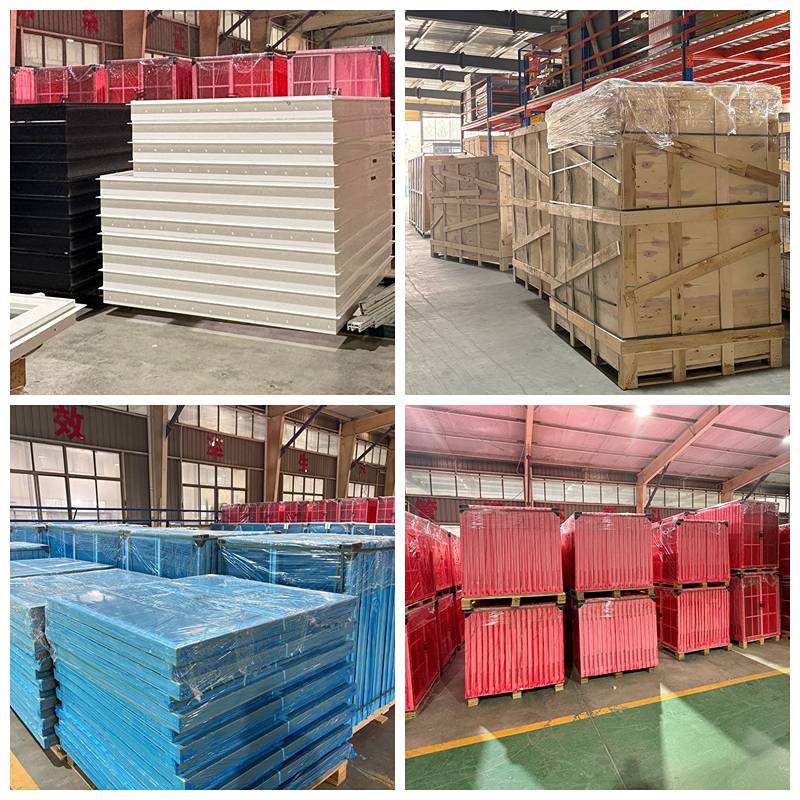
As portas acabadas passam por inspeções visuais e mecânicas em bancadas de teste. As unidades aprovadas são limpas, embaladas em película protetora, equipadas com cantoneiras de papelão rígido e acondicionadas em caixas de madeira reforçadas para exportação.
Como avaliar um fornecedor: riscos logísticos e de controle de qualidade
“O envio de produtos em "caixas surpresa" representa um risco enorme para compradores B2B. Receber unidades defeituosas ou quebradas meses após o pedido compromete os prazos do projeto.
| Ponto de Inspeção | Armadilhas comuns (O que evitar) | Melhores práticas do setor (O que especificar) |
| Comprovante de pré-embarque | A fábrica se recusa a mostrar os produtos acabados antes de receber o pagamento final. | Verificação remota: Fotos detalhadas e vídeos em funcionamento do seu pedido específico antes do embalamento. |
| Material para caixa | Papelão comum, plástico termoencolhível solto ou madeira não tratada (sujeito à rejeição pela alfândega). | Caixas de madeira compensada totalmente fechadas e isentas de fumigação, com bolsas de ar anti-balanço. |
| Manuseio portuário | Caixas com fundo plano que exigem manuseio manual brusco. | Paletes com fundo de ferro Integrado à caixa para manuseio seguro com empilhadeira (modelo 100%). |
O Padrão Hotiano
O controle de qualidade e a logística segura são os principais diferenciais da Hotian Windows. Nossos 5 engenheiros dedicados de Garantia da Qualidade/Controle de Qualidade mantêm um índice de aprovação de 95%+ na primeira passagem. Oferecemos 100% Verificação Remota antes de selar qualquer caixa. Além disso, nossa embalagem segura — com madeira compensada livre de fumigação e paletes padrão com fundo de ferro — mantém nossa taxa de danos durante o transporte estritamente controlada. abaixo de 1%.
Solicite as especificações comerciais B2B e os preços de fábrica →
Projetado para precisão e otimizado para transporte global.
Uma porta de correr superior é a convergência de fresagem CNC de precisão, envidraçamento estrutural certificado e engenharia de trânsito rigorosa. Na Hotian Windows, nossas linhas de produção são calibradas para entregar esquadrias de qualidade comercial diretamente da fábrica para a sua obra.
Como o transporte marítimo internacional atinge a máxima relação custo-benefício quando o espaço do contêiner é totalmente utilizado, nosso modelo de atendimento direto da fábrica é ideal para projetos arquitetônicos completos, construções residenciais inteiras e distribuição comercial de múltiplas unidades. Nossa equipe interna de engenharia fornece cronogramas de abertura completos, avaliações estruturais de carga de vento e consolidação de exportação personalizada.
Entre em contato com nossa equipe de engenharia de projetos na Hotian →
Perguntas Frequentes (FAQ)
Qual é o prazo de entrega típico para portas de correr arquitetônicas personalizadas?
A produção padrão geralmente leva de 25 a 35 dias úteis após a aprovação do desenho técnico final e o recebimento do depósito. Para unidades de grandes dimensões, perfis personalizados com ruptura térmica ou configurações especiais de vidro de alto desempenho, os prazos de entrega variam de 40 a 45 dias úteis. Fornecemos relatórios de marcos e progresso em cada etapa da fabricação.
Como garantir a segurança do produto e evitar danos durante o transporte marítimo?
Cada unidade passa por um processo de proteção de exportação em múltiplas camadas. Envolvemos as estruturas com película protetora antirriscos, protegemos os cantos com amortecedores de espuma EPE de alta resistência e embalamos os painéis de vidro em caixas de madeira compensada fumigadas e reforçadas com cintas de aço. As caixas possuem suportes internos com absorção de impacto para suportar o deslocamento do contêiner, variações de umidade e condições marítimas adversas.
Quais normas internacionais e códigos de construção suas portas de correr atendem?
Nossos sistemas são projetados para atender aos principais padrões internacionais de esquadrias, incluindo NAFS/AAMA/WDMA/CSA (América do Norte), AS2047 e AS1288 (Austrália) e CE EN 14351-1 (Europa). Relatórios completos de testes, abrangendo carga de vento estrutural, infiltração de ar, penetração de água e transmitância térmica (fator U/SHGC), estão disponíveis mediante solicitação.
Vocês oferecem embalagens desmontadas (KD) ou unidades totalmente pré-montadas?
Adaptamo-nos a ambas as estratégias logísticas com base nos requisitos do seu projeto:
Pré-montado (unitizado): Com acabamento em fábrica e calibrado para minimizar a mão de obra no local e garantir a estanqueidade ideal, é perfeito para projetos de tamanho padrão.
Derrubada (KD): As esquadrias e os caixilhos são pré-usinados com precisão e embalados planos junto com as unidades de vidro encaixotadas. Isso maximiza o volume do contêiner, reduz os custos de frete marítimo em até 40% e facilita o manuseio de estruturas arquitetônicas de grandes dimensões.