Einführung
Choosing the wrong sliding door track system can lead to daily frustration, constant cleaning, and even serious safety hazards from derailed panels. Whether you are a homeowner pursuing minimalist aesthetics, an architect designing seamless spaces, or a contractor prioritizing structural stability, understanding the engineering differences between top-hung and bottom-rolling systems is essential.
As a source manufacturer with years of expertise in door and window engineering, we skip the marketing fluff to provide an objective, comprehensive guide based on actual load capacities, architectural requirements, and real-world applications.
Top Track vs. Bottom Track Systems: Core Mechanisms, Pros & Cons
The fundamental difference between top-hung and bottom-rolling systems lies in load distribution. When making a head-to-head comparison, the decision ultimately comes down to structural capacity versus spatial aesthetics.
Bottom tracks are load-bearing workhorses designed for heavy, weather-tight exterior doors, but they can disrupt the visual flow of a floor space. Top tracks, conversely, offer a sleek, barrier-free aesthetic perfect for modern interior transitions, but they demand immense structural reinforcement from the ceiling header and have strict weight limitations. Understanding these trade-offs will dictate your hardware choices.
Bottom Track Sliding Doors (Floor Rolling)
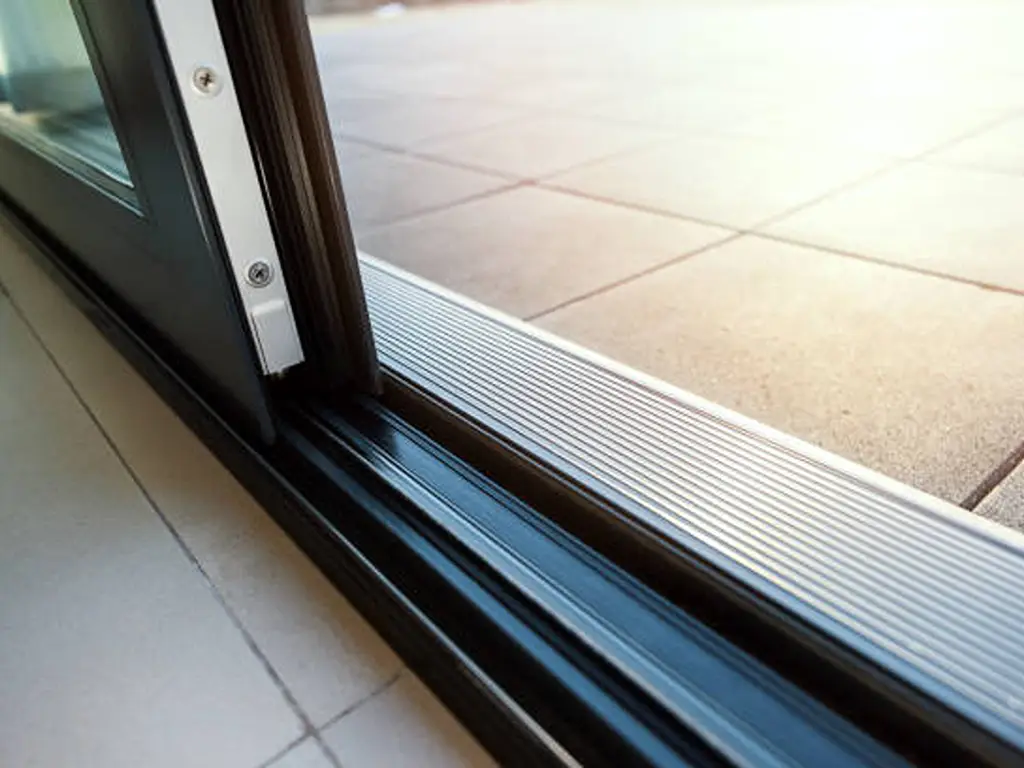
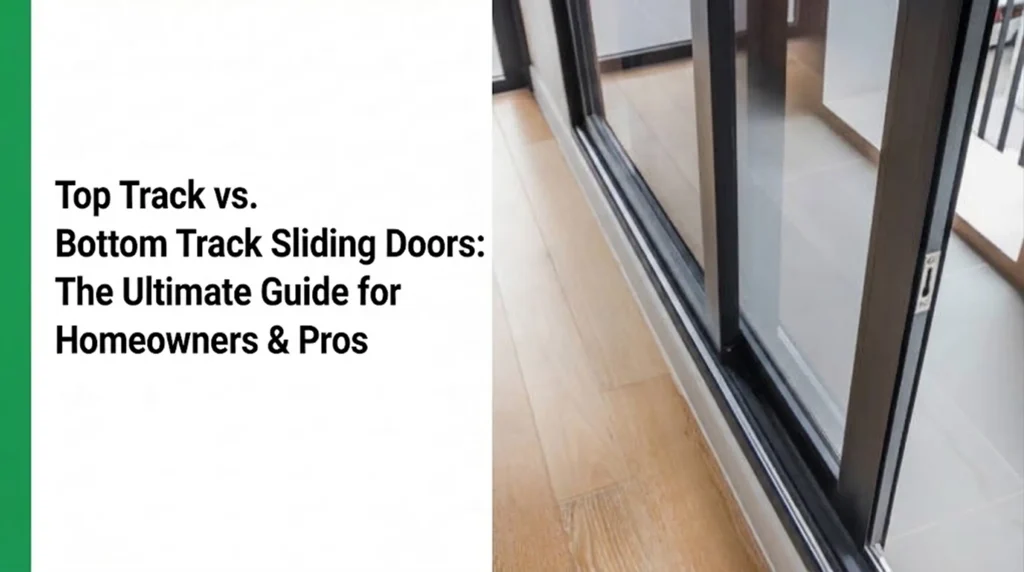
Bottom track systems transfer the entire weight of the door panels vertically to the floor, using the top track strictly for guidance and keeping the panels upright.
Pros & Cons:
- Vorteile: Virtually unlimited weight capacity (ideal for heavy double/triple glazing); exceptional structural stability and anti-sway performance; superior weatherproofing, water-tightness, and wind resistance for exterior use.
- Nachteile: Tracks can accumulate dust, hair, and debris; raised profiles present a tripping hazard; interrupts the continuous visual flow of interior flooring unless recessed.
Load Capacity & Profiles: Standard duty supports 50–120kg (110–260 lbs) per panel. Heavy/Commercial duty supports 150–400+kg (330–880+ lbs).
- U-Channel Track: The traditional design offering extreme stability but notorious for collecting dirt and debris.
- V-Groove Raised Track: Industrial-grade capacity with a self-cleaning profile where debris falls off the sides; presents a minor trip hazard.
- Low-Profile Flat Track: Ultra-thin tracks (often brass or aluminum strips) surface-mounted on existing floors. Ideal for retrofitting with minimal tripping risks.
- Recessed Flush Sill: The track is embedded directly into the subfloor, combining massive load capacity with a seamless, ADA-compliant transition.
Top Track Sliding Doors (Top Hung)
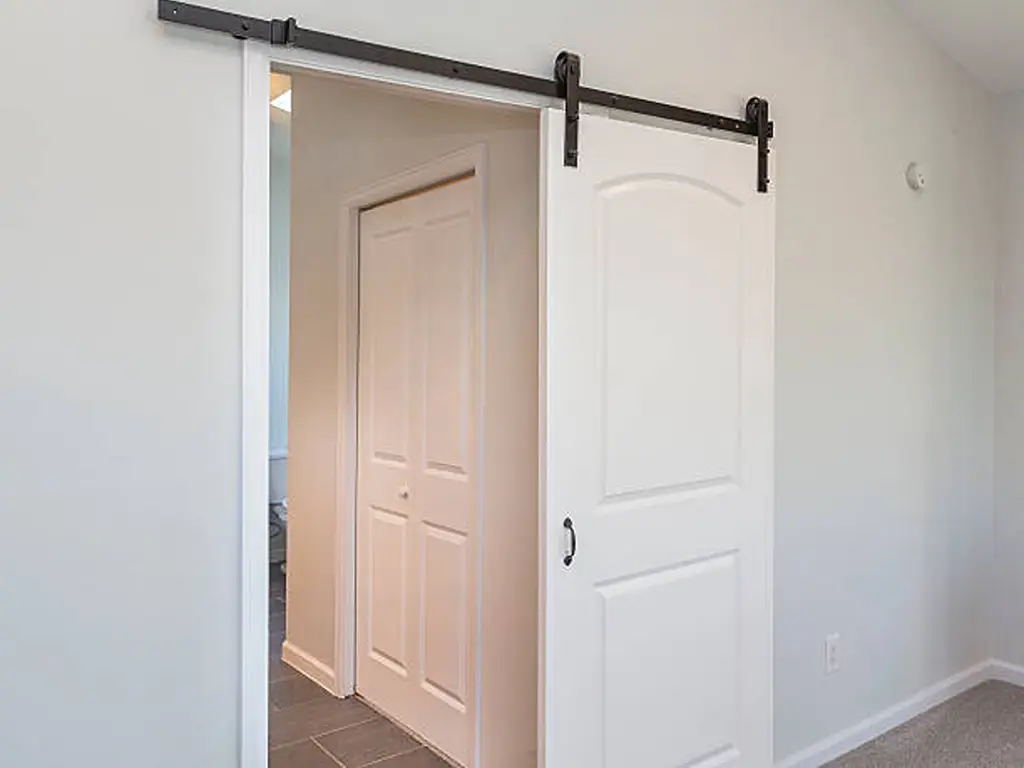
Top-hung systems rely entirely on the structural header and top track to carry the door’s weight. The floor only houses concealed guides to prevent swaying.
Pros & Cons:
- Vorteile: Creates a seamless, barrier-free floor transition (100% ADA-compliant); zero dirt accumulation on the floor; highly aesthetic and minimalist; allows robot vacuums to pass freely.
- Nachteile: Demands expensive structural reinforcement in the ceiling (header); lower maximum weight limit; panels can sway or wobble if cheap floor guides are used; poor weather sealing and sound insulation compared to bottom tracks.
Load Capacity & Profiles: Light-to-medium duty supports 30–80kg (65–175 lbs) per panel. Heavy-duty architectural systems support 80–150kg (175–330 lbs).
- Enclosed Box Track: Superior dust protection with an enclosed design that prevents anti-jump/derailment issues.
- Track with Fascia (Pelmet): Conceals the hardware behind an aluminum or wood cover, eliminating light leaks and improving acoustic insulation.
- Exposed Flat Bar (Barn Door): Exposed hardware driven by rustic or industrial aesthetics.
- Concealed Ceiling Track: The track is built directly into the drywall ceiling, creating a floating, floor-to-ceiling visual masterpiece.
Bottom Track vs. Top Track: The Ultimate Specification & Scenario
| Engineering Specs & Scenarios | Bottom Track (Floor Rolling) | Top Track (Top Hung) |
| Max Weight per Panel | Up to 400+ kg (880+ lbs) | Typically max 150 kg (330 lbs) |
| Load Bearing Point | Floor / Sill | Structural Header / Ceiling |
| Primary Advantage | Ultimate stability & weatherproofing | Seamless floors & dirt-free operation |
| Primary Drawback | Dirt accumulation & floor disruption | Strict header requirements & weight limits |
| Wetterfestigkeit | Excellent (Water/Wind-tight) | Poor (Indoor use only) |
| Best For (Door Types) | Lift & Slide, Heavy Patios, Multi-slide | Slim-frame interiors, Pocket doors |
| Ideal Scenarios (The Verdict) | Exteriors, Patios, Balconies | Kitchens, Closets, Interior Partitions |
The Verdict: Room-by-Room Selection Guide
When it comes to making the final decision, the architectural environment and daily usage dictate the winner. Here is our definitive verdict based on specific home scenarios:
- Patios, Balconies & Exterior Walls: Bottom Track is Mandatory. When facing extreme wind loads, water penetration risks, and the massive weight of double or triple-glazed glass, bottom-rolling systems (like V-groove or recessed sills) are the only secure and weather-tight option. A top track will simply fail under these exterior structural demands.
- Kitchen & Dining Partitions: Top Track is Highly Recommended. Kitchen floors inevitably accumulate grease, crumbs, and liquid spills. Choosing a trackless top-hung system completely eliminates floor-level cleaning dead zones and allows robot vacuums to clean the space flawlessly without obstruction.
- Closets & Bedrooms: Top Track or Low-Profile Flat Track. In private spaces, acoustic privacy and seamless visual transitions across the flooring take priority. A top track ensures whisper-quiet operation and maintains the uninterrupted flow of your wood or tile flooring.
Pro Insights: Installation & Advanced Execution
- The Header Warning: Top-hung systems—especially concealed ceiling tracks—cannot be mounted directly onto drywall or light-gauge steel studs. Structural lumber or steel I-beams must be installed during framing.
- Executing Recessed Flush Sills: To achieve a massive load capacity with a minimalist aesthetic, professionals use recessed sills. This requires early intervention before flooring installation to allow for precise leveling and integrated concealed drainage systems.
- Executing Concealed Ceiling Tracks: Achieving the “floating” floor-to-ceiling look requires extreme precision. The track must be perfectly leveled with the drywall framework, demanding high tolerance limits and exceptional manufacturing accuracy.
- ADA-Konformität: For commercial projects, both top-hung setups and properly engineered recessed bottom sills meet the strict threshold requirements for wheelchair accessibility.
The Buyer’s Checklist: Evaluating Hardware
- Extrusion Thickness: Aesthetics aside, heavy-duty aluminum extrusions (2.0mm to 3.0mm+) are the baseline to prevent long-term warping and derailment.
- Roller Bearing Quality: Reject cheap nylon rollers. The secret to a decade of smooth operation lies in stainless steel ball-bearing rollers.
- Soft-Close-Mechanismen: Premium systems must include two-way soft-close dampers to prevent aggressive slamming and protect against finger-pinching.
- 3D Post-Installation Adjustability: Buildings settle and construction isn’t always perfect. Ensure the hardware supports 3-dimensional micro-adjustments so installers can fix alignment issues on-site.
Abschließende Gedanken
There is no single “perfect” track system—only the right engineering solution for your specific architectural structure. But knowing the theory is only half the battle; flawless execution requires a reliable manufacturing partner.
Bei Hotian, we turn these demanding standards into reality. As a 100% direct manufacturer operating a 135,000 sq. ft. modern facility, we engineer high-precision custom doors and windows for global architects, contractors, and builders. From NFRC-certified heavy-duty bottom-rolling doors to ultra-smooth top-hung interior partitions, our German-imported CNC centers ensure a strict ±0.5mm frame tolerance. Paired with premium stainless-steel hardware, we guarantee decades of smooth operation and eliminate common track failures.
Skip the middlemen and simplify your procurement. We support your projects with flexible MOQs, secure export packaging, and professional shop drawings delivered in 2-4 days.
Ready to specify reliable hardware for your next project? Explore our custom capabilities at Hotian, or contact our engineering team to submit your dimensions for free shop drawings and a transparent, factory-direct quote.
Contact Us for a Free QuoteHäufig gestellte Fragen (FAQ)
Q1: Can I replace my existing bottom track sliding door with a top-hung system?
Yes, but it is not a simple hardware swap. You must first verify that the structural header above the door can support the full weight of the new panels. In many retrofits, contractors need to open the drywall to install a reinforced wood or steel beam before hanging the new track.
Q2: Do top-hung doors swing or wobble at the bottom since there is no track?
A properly engineered and installed top-hung door will not wobble. While the top track carries 100% of the weight, a concealed floor guide (routing guide) is installed at the bottom edge. The door panel has a routed groove underneath that slides smoothly over this guide, keeping it perfectly plumb and aligned.
Q3: Which track system is more cost-effective?
Generally, standard bottom track systems are more affordable in terms of both hardware and installation. Top-hung systems have a higher initial hardware cost (due to advanced anti-jump and soft-close mechanisms) and incur higher labor costs because of the structural header reinforcement and precision leveling required.
Q4: How do I prevent dirt and pet hair from jamming a bottom track?
Routine vacuuming is the standard maintenance, but hardware selection makes the biggest difference. Upgrading to a “V-groove” track allows debris to fall away naturally (self-cleaning), or choosing a recessed flush sill minimizes the exposed deep channels where dirt typically collects.