Invoering
Of u nu een historisch pand renoveert, een woning op maat ontwerpt of materialen zoekt voor een commercieel project, de juiste ramen kiezen is een cruciale beslissing die van invloed is op de esthetiek, energie-efficiëntie, veiligheid en dagelijkse functionaliteit. Draai-kiepramen en kantelramen behoren tegenwoordig tot de beste opties op de markt voor hoogwaardige ramen, maar de keuze ertussen kan lastig zijn. Wat zijn de verschillen en welke biedt het beste rendement op uw investering? In deze gids bespreken we de werking, voor- en nadelen en kosten van draai-kiepramen versus kantelramen, zodat u de slimste keuze kunt maken.
Wat zijn draai-kiepramen?
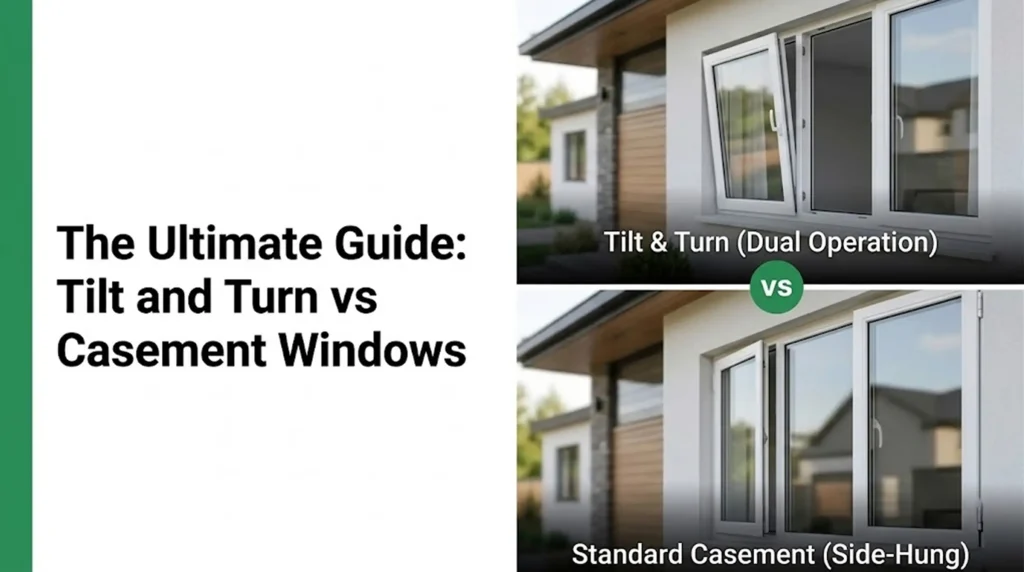
Draai-kiepramen zijn een klassieke en alom bekende raamstijl, vooral in Noord-Amerika. Ze zijn met een of meer scharnieren aan de zijkant aan het kozijn bevestigd en openen meestal naar buiten, net als een deur. De meeste moderne draai-kiepramen worden bediend met een mechanische draaihendel aan de onderkant van het kozijn.
De voordelen:
- 100% Ventilatie: Doordat het hele raamkozijn naar buiten opent, zorgen draai-kiepramen voor maximale luchtcirculatie, waardoor voorbijgaande wind wordt opgevangen en naar binnen wordt geleid.
- Uitzonderlijke energie-efficiëntie: Wanneer de wind tegen een naar buiten openend raam blaast, drukt hij het raamkozijn steviger tegen de tochtstrip, waardoor een ongelooflijk goede afdichting ontstaat.
- Onbelemmerd uitzicht: In tegenstelling tot schuiframen hebben draai-kiepramen over het algemeen geen middenstijl (roede), waardoor ze een onbelemmerd, panoramisch uitzicht naar buiten bieden.
De nadelen:
- Beperkingen voor buitenruimte: Doordat ze naar buiten openen, kunnen ze buitenpaden, terrassen of veranda's blokkeren.
- Moeilijk schoon te maken: Het schoonmaken van de buitenramen op de tweede verdieping of hoger kan een gevaarlijke en lastige klus zijn, waarvoor vaak een ladder of professionele hulp nodig is.
- Groottebeperkingen: Omdat het volledige gewicht van het glas door de scharnieren aan de zijkant wordt gedragen, kunnen draai-kiepramen niet extreem groot of zwaar worden gemaakt zonder het risico te lopen dat de scharnieren het begeven.
Uiteindelijk bieden draai-kiepramen huiseigenaren maximale frisse lucht en een onbelemmerd uitzicht zonder ook maar een centimeter aan leefruimte op te offeren. Ook in de bouw blijven ze een vertrouwde standaard. Dankzij hun bewezen prestaties in gestandaardiseerde luchtdichtheids- en waterdichtheidstests, worden draai-kiepramen universeel geprefereerd in Noord-Amerikaanse bouwvoorschriften, waardoor ze een betrouwbare keuze zijn voor aannemers en projectontwikkelaars.
Wat zijn draai-kiepramen?
Draai-kiepramen zijn oorspronkelijk afkomstig uit Europa en zijn technische hoogstandjes die wereldwijd snel aan populariteit winnen. Ze beschikken over een uniek, dubbelwerkend mechanisme dat wordt bediend met één enkele, robuuste handgreep.
- Draai de hendel 90 graden: Het raam zwaait naar binnen open, net als een gewone deur, voor maximale ventilatie en gemakkelijke toegang.
- Draai de hendel 180 graden: De bovenkant van het raam helt naar binnen, waardoor een kleine opening ontstaat voor veilige, tochtvrije ventilatie.
De voordelen:
- Veelzijdige ventilatie en beveiliging: De kantelfunctie zorgt ervoor dat warme lucht via de bovenkant kan ontsnappen, terwijl regen buiten wordt gehouden. Belangrijker nog, het biedt een veilige ventilatie: indringers kunnen niet door de gekantelde opening kruipen en kinderen of huisdieren kunnen er niet uit vallen.
- Moeiteloos schoonmaken: In de "draai"-stand opent het raam volledig naar binnen, waardoor u beide zijden van het glas gemakkelijk en veilig vanuit uw kamer kunt schoonmaken.
- Superieure geluidsisolatie en thermische prestaties: Deze ramen zijn vervaardigd met robuust Europees hang- en sluitwerk en beschikken over meerdere vergrendelingspunten rondom de omtrek, waardoor ze toonaangevende luchtdichtheid, isolatie en geluidsreductie bieden.
De nadelen:
- Inbreuk op de binnenruimte: Omdat ze naar binnen zwaaien, moet u de directe omgeving vrijhouden. Ze kunnen soms in de weg zitten voor jaloezieën of gordijnen.
- Hogere initiële kosten: Door het complexe, meerpuntsvergrendelingssysteem en de robuuste constructie zijn draai-kiepramen over het algemeen duurder dan standaard openslaande ramen.
Voor huiseigenaren bieden draai-kiepramen ultieme gemoedsrust. Ze zorgen 's nachts voor veilige, tochtvrije ventilatie en maken het beklimmen van gevaarlijke ladders voor het schoonmaken van de buitenkant volledig overbodig. Architecten en aannemers waarderen deze systemen zeer vanwege hun robuuste Europese constructie. Hun superieure thermische prestaties maken ze een ideale oplossing voor passiefhuizen, energieneutrale gebouwen en elk project dat een ultralaag energieverbruik vereist.
Draai-kiepramen versus openslaande ramen: een vergelijking naast elkaar
Om u in één oogopslag een vergelijking te geven, ziet u hier hoe deze twee premium raamtypen zich tot elkaar verhouden:
| Functie | Draairamen | Kantel- en draairamen |
| Bedieningsmechanisme | Naar buiten of naar binnen zwaaiend (enkelvoudige actie) | Naar binnen zwenken + Bovenste kanteling naar binnen (dubbele werking) |
| Ventilatie en luchtstroom | Uitstekend (100% volledig openen) | Uitstekend (Draaien) + Zacht briesje (Kantelen) |
| Energie- en thermisch rendement | Hoog (De wind drukt het raamkozijn steviger tegen de afdichtingen) | Uitzonderlijk (Meerpuntsvergrendeling zorgt voor een luchtdichte afsluiting) |
| Geluidsisolatie (akoestiek) | Goed tot geweldig | Uitstekend (De ideale keuze voor stedelijke/lawaaierige omgevingen) |
| Veilige ventilatie | Slecht (Een open raam is kwetsbaar voor inbrekers/regen) | Uitstekend (De kantelpositie is veilig, stabiel en regenbestendig) |
| Schoonmaak van hoogbouw | Moeilijk (Vereist toegang van buitenaf of een ladder) | Uiterst eenvoudig (Maak beide zijden schoon vanuit de binnenkant van de kamer) |
| Maximale afmeting en capaciteit | Beperkt (zwaar glas kan ervoor zorgen dat de scharnieren aan de zijkant doorzakken) | Hoog (Robuuste Europese hardware ondersteunt extra grote glaspanelen) |
| Benodigde ruimte | Buitenruimte (kan terrassen/looppaden belemmeren) | Binnenruimte (vereist vrije vensterbanken om naar binnen te kunnen draaien) |
| kosteninvestering | Standaard / gemiddelde kosten | Premium / Hogere kosten vanwege geavanceerde hardware |
Beste toepassingen: Draai-kiepramen versus kantelramen
Soms is de beste oplossing niet het kiezen van slechts één type raam, maar het plaatsen van het juiste raam in de juiste ruimte. Dit is wat experts aanbevelen:
- Woonkamers en eetkamers: Draairamen. Als u wilt genieten van een ruim, onbelemmerd uitzicht op uw tuin en maximale frisse lucht, dan zijn openslaande ramen perfect – vooral op de begane grond waar schoonmaken aan de buitenkant geen probleem is.
- Appartementen in hoogbouw en kinderslaapkamers: Kantel- en draairamen. De kantelfunctie is hier echt een uitkomst. Je kunt de kamer de hele nacht ventileren zonder je zorgen te maken over de veiligheid van een kind of dat harde wind het raam dichtslaat. Bovendien wordt het schoonmaken van hoogbouw een fluitje van een cent.
- Badkamers: Kantel- en draairamen. Badkamers hebben ventilatie nodig om stoom af te voeren, maar privacy is ook belangrijk. Door het raam naar binnen te kantelen, kan vochtige lucht ontsnappen, terwijl je privacy behouden blijft en regen buiten wordt gehouden.
- Boven de gootsteen in de keuken: Draairamen. Het kan onhandig zijn om over een breed aanrechtblad heen te reiken om aan een handgreep te draaien en een raam naar binnen te trekken. Een draairaam met een handgreep aan de onderkant is veel ergonomischer voor deze specifieke plek.
Draai-kiepramen versus kantelramen: kosten en waarde op lange termijn
Als u ramen koopt tegen winkelprijzen, zal een draai-kiepraam over het algemeen een hogere aanschafprijs hebben dan een standaard draairaam. Dit komt voornamelijk door het complexe, robuuste Europese hang- en sluitwerk (zoals meerpuntsvergrendelingen) dat nodig is om het dubbele mechanisme feilloos te laten werken.
Om u een realistisch beeld te geven van de marktprijzen (exclusief installatiekosten):
- Standaard draai-kiepramen: Het gemiddelde ligt tussen $300 tot $600 per eenheid in de detailhandel, afhankelijk van het materiaal van het montuur en het type glas.
- Kantel- en draairamen: Begin over het algemeen rond $600 en kan gemakkelijk $1200 per eenheid overschrijden voor hoogwaardige Europese importproducten.
Voor de gemiddelde huiseigenaar wordt deze meerprijs voor een 20%- of 40%-systeem vaak terugverdiend door aanzienlijk lagere energierekeningen, minder belasting van de verwarmings- en koelinstallatie en geen kosten voor het schoonmaken van de buitenkant van het huis.
Voor B2B-kopers verandert de kostendynamiek echter drastisch.
Voor aannemers, projectontwikkelaars en groothandelaars hoeft de aanschaf van hoogwaardige draai-kiepramen het projectbudget niet te overschrijden. Bij inkoop op project- of containerniveau kan rechtstreeks inkopen bij een bekwame fabrikant de kostprijs per stuk aanzienlijk verlagen.
Door lokale showrooms en distributeurs te omzeilen, kunnen B2B-kopers vaak hoogwaardige, op maat gemaakte draai-kiepsystemen verkrijgen voor ongeveer $200 tot $400 per vierkante meter (rechtstreeks van de fabriek). Deze enorme prijsverlaging maakt van een "hoogwaardige upgrade voor woningen" een zeer winstgevend aanbod voor uw commerciële portfolio of lokale distributiebedrijf.
Schakel de tussenpersonen uit en verkrijg hoogwaardige ramen tegen groothandelsprijzen. Neem contact op met Hotian Windows Commercieel Team Neem vandaag nog contact met ons op om uw blauwdrukken en specifieke productiewensen te bespreken en ontvang een gratis offerte rechtstreeks van de fabriek.
Neem contact met ons op voor een gratis offerte →Conclusie
Zowel draai-kiepramen als kantelramen zijn uitstekende, hoogwaardige opties die op bijna alle vlakken beter presteren dan traditionele schuiframen of ramen met dubbele beglazing.
Als u een beperkt budget hebt en onbelemmerd uitzicht met maximale ventilatie wilt, zijn traditionele draai-kiepramen een fantastische keuze.
Als u echter prioriteit geeft aan onderhoudsgemak, superieure beveiliging, een hoogwaardige Europese uitstraling en in een huis of appartement met meerdere verdiepingen woont, is investeren in draai-kiepramen absoluut de meerprijs waard. Hun veelzijdigheid en duurzaamheid bieden een ongeëvenaarde waarde op lange termijn.
Of u nu op zoek bent naar op maat gemaakte Europese draai-kiepramen of klassieke energiezuinige draai-kiepramen, wij hebben de expertise in huis om aan uw wensen te voldoen.
Vraag een gratis offerte en bulkprijzen aan →