Invoering
Of u nu een huiseigenaar bent die zijn huis verbouwt, een architect die een nieuwbouwproject ontwerpt, of een aannemer en ramenleverancier die oplossingen aan klanten adviseert, de keuze tussen draai-kiepramen en uitzetramen is een veelvoorkomend dilemma. Hoewel beide typen ramen er opvallend veel op elkaar lijken – met naar buiten draaiende mechanismen, een uitzonderlijke energie-efficiëntie en een goede afdichting tegen weersinvloeden – werken ze anders en dienen ze verschillende doelen. Hun unieke benadering van luchtstroom, bescherming tegen weersinvloeden en plaatsing in een ruimte kan een ruimte maken of breken. Deze gids zet de belangrijkste verschillen uiteen, zodat iedereen, van doe-het-zelvers tot professionals in de branche, de slimste en meest kosteneffectieve keuze kan maken voor elk project.
Draai-kiepramen versus uitzetramen: hoe ze werken
Voordat we de gedetailleerde vergelijking bespreken, laten we eerst duidelijk maken wat elk type raam inhoudt en hoe ze mechanisch functioneren.
Wat is een draai-kiepraam?
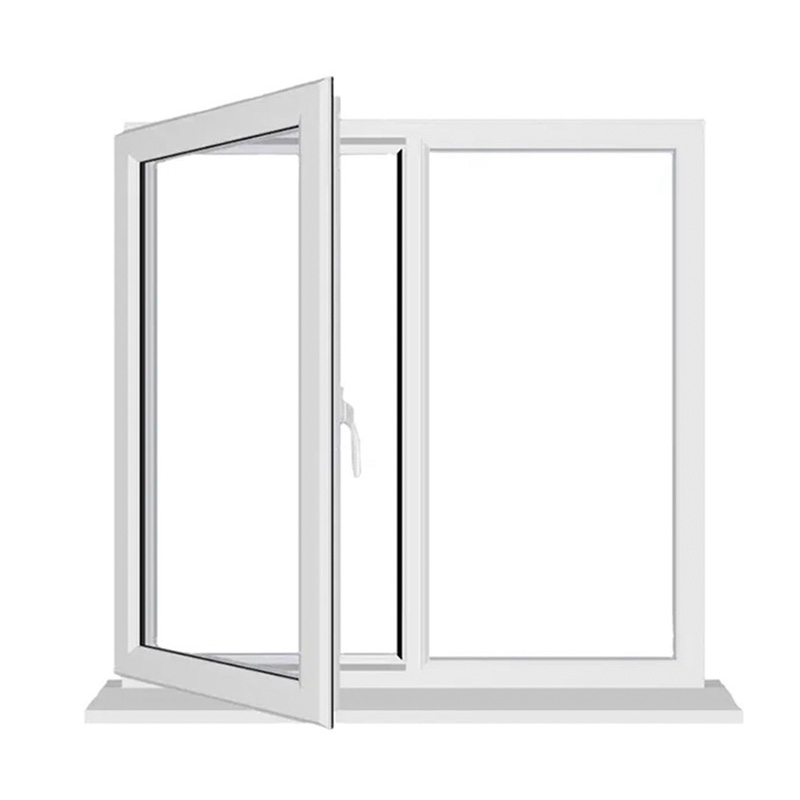
Definitie: Een draai-kiepraam Het is een verticaal georiënteerd, aan de zijkant scharnierend raam dat, net als een gewone deur, naar buiten zwaait, richting de buitenkant van het huis.
Hoe het werkt: Het raam wordt doorgaans bediend met een draaihendel aan de onderkant van de vensterbank. Wanneer u aan de hendel draait, duwt een intern tandwielmechanisme het raam soepel naar links of rechts. Wanneer het volledig geopend is, kan het raam bijna loodrecht (90 graden) op de muur staan. Om het raam te beveiligen, maken moderne draai-kiepramen gebruik van een meerpuntsvergrendelingssysteem: een enkele hendel aan de zijkant van het kozijn die het gehele raam stevig tegen de tochtstrip van het frame trekt, waardoor een zeer veilige en luchtdichte afsluiting wordt gegarandeerd.
Wat is een uitzetraam?
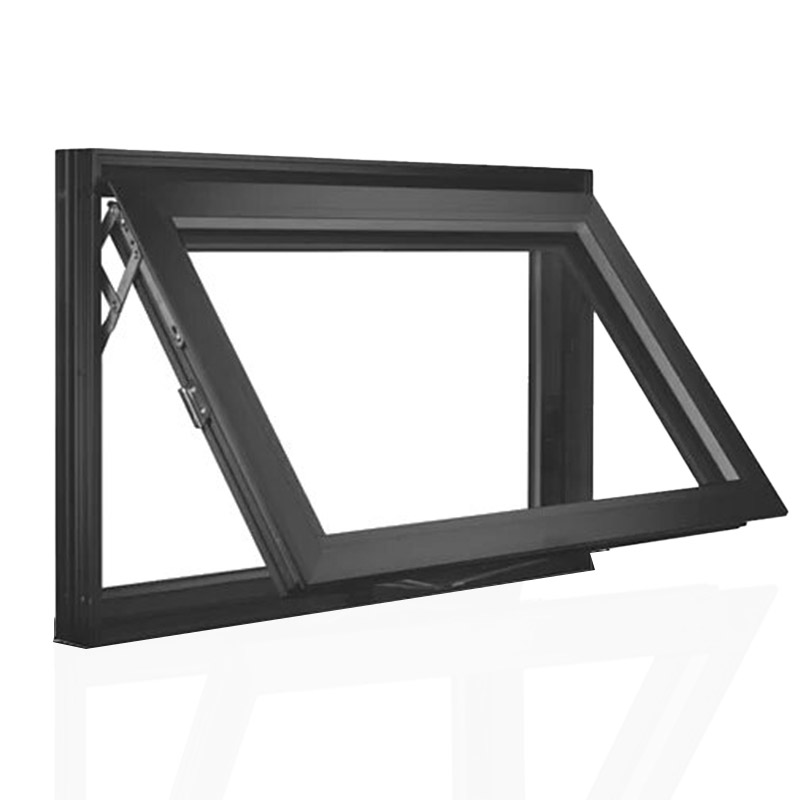
Definitie: Een uitzetraam is een horizontaal georiënteerd raam met scharnieren aan de bovenkant. Zoals de naam al doet vermoeden, opent het raam naar buiten vanaf de onderkant, waardoor een soort dak of luifel boven de raamopening ontstaat.
Hoe het werkt: Net als een draai-kiepraam, maakt een uitzetraam gebruik van een draaihendel aan de onderkant. Wanneer je aan de hendel draait, duwt een schaarachtig mechanisme met twee armen de onderkant van het raamkozijn voorzichtig naar buiten. Omdat het volledige gewicht van het glas wordt gedragen door de bovenste scharnieren en de bedieningsarmen, is de openingshoek opzettelijk beperkt (meestal tot ongeveer 30 tot 45 graden) om de duurzaamheid van het beslag te garanderen en doorzakken op de lange termijn te voorkomen.
Vergelijking tussen draai-kiepramen en uitzetramen
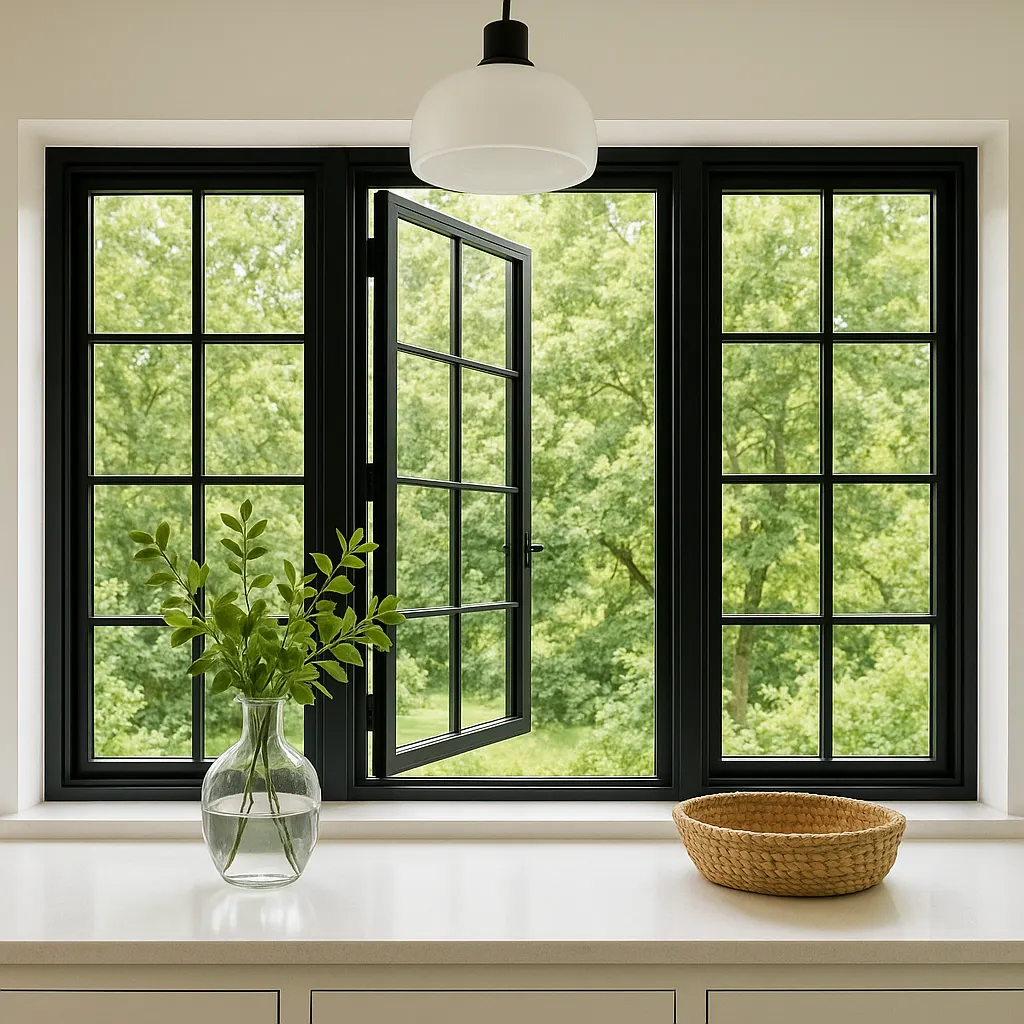
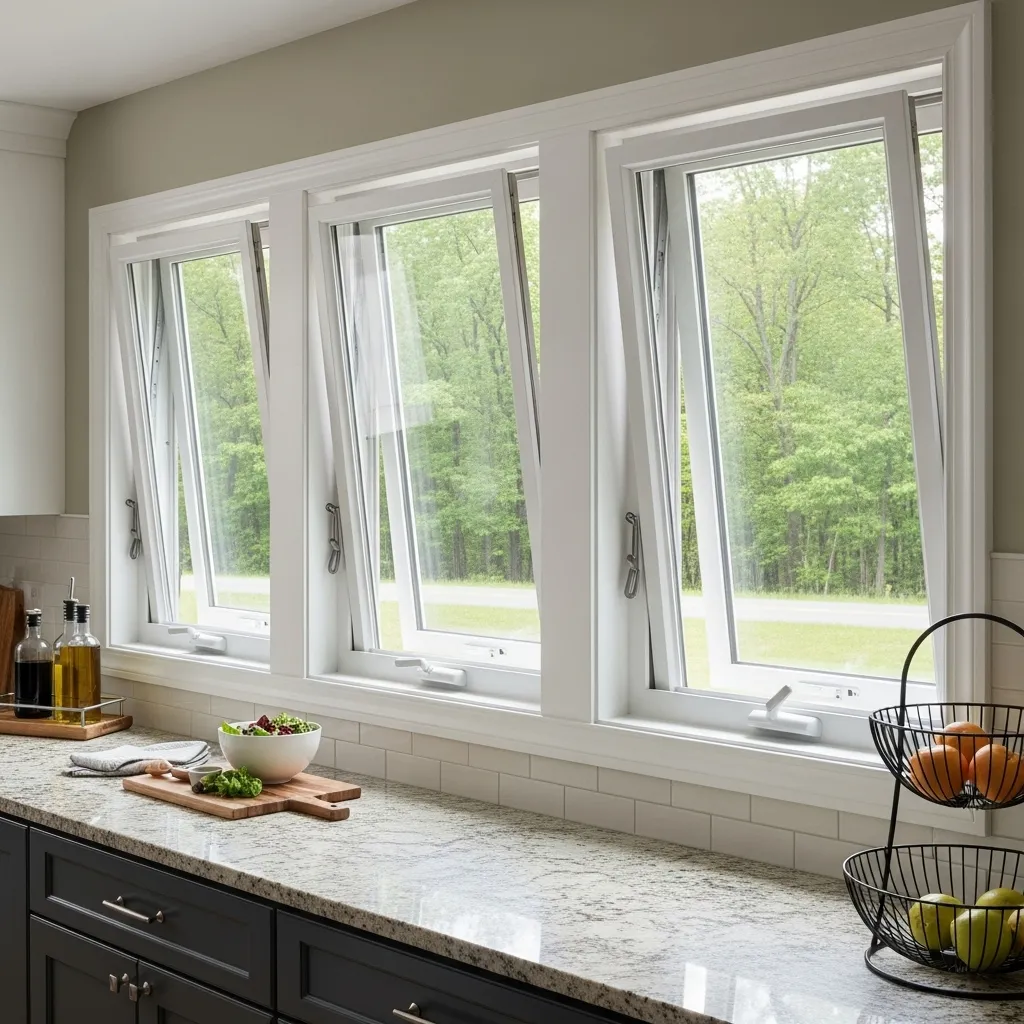
Om u te helpen bij het kiezen van de juiste raamstijl voor uw project, kunt u de onderstaande vergelijkingstabel raadplegen voor een beknopt overzicht van belangrijke prestatie-indicatoren, constructiekenmerken en ideale toepassingen. Direct na de tabel gaan we dieper in op de specifieke architectonische en praktische overwegingen die aan deze verschillen ten grondslag liggen.
Snelle vergelijkingstabel
| Functie | Draairamen | Luifelramen |
| Scharnierlocatie | Zijdelings scharnierend | Bovenaan scharnierend |
| Ventilatie | Maximum (100% open; vangt actief de wind op) | Gematigd (Beperkte openingshoek) |
| Regenbescherming | Arm (Moet gesloten worden bij regen) | Uitstekend (Kan open blijven bij regen) |
| Uitzichten en licht | Onbelemmerd (Hoog/smal profiel) | Goed (Het meest geschikt voor korte/brede openingen) |
| Energie-efficiëntie | Uitstekend (Luchtdichte compressieafdichting) | Uitstekend (Luchtdichte compressieafdichting) |
| Nooduitgang | Ja (Voldoet aan de bouwvoorschriften voor slaapkamers) | Nee (Komt niet in aanmerking als uitgang) |
| Gemakkelijk schoon te maken | Eenvoudig (Maak de buitenruit van binnenuit schoon) | Gematigd (Toegang vanaf de buitenkant is vereist) |
| Hardware en beperkingen | Het meest geschikt voor hoge openingen; vermijd extreem brede openingen. | Ideaal voor brede openingen; kan goed tegen gewicht. |
| Kosten en prijsbereik | Matig tot hoog (Hogere eenheidskosten vanwege grotere afmetingen) | Gematigd (Lagere eenheidskosten voor standaard compacte formaten) |
| Beste locaties | Woonkamers, slaapkamers, vluchtroutes | Boven gootstenen in de keuken, badkamers en kelders. |
Grondige prestatie- en architectuuranalyse
Hieronder een nadere blik op waarom elk venster presteert zoals het doet, aan de hand van deze negen cruciale dagelijkse overwegingen:
1. Ventilatie: Draai-kiepramen winnen
Wanneer een draai-kiepraam volledig open staat, biedt het een openingsoppervlakte van 100%. Bovendien fungeert het naar buiten draaiende raam als een zeil, dat de wind die langs de buitenmuur waait opvangt en naar binnen leidt. Dit maakt draai-kiepramen de meest efficiënte optie voor maximale ventilatie. Uitzetramen hebben een beperkte openingshoek (meestal 30 tot 45 graden), waardoor de hoeveelheid luchtstroom beperkt is.
2. Weerbestendigheid (regenbescherming): Luifel wint
Dit is het grootste voordeel van een uitzetraam. Doordat het raam aan de onderkant naar buiten opent, kun je een uitzetraam open laten staan tijdens lichte tot matige regenbuien. Het water loopt dan gewoon langs het schuine glas naar beneden, waardoor het interieur droog blijft en er frisse lucht binnenkomt. Draai-kiepramen daarentegen moeten meestal gesloten worden als het regent.
3. Uitzicht en natuurlijk licht: Draai-kiepramen zijn beter.
Draai-kiepramen hebben doorgaans een "hoog en smal" profiel. Doordat er geen horizontale stijlen of dwarsbalken in het midden van het glas zitten, bieden ze een onbelemmerd, weids uitzicht en uitstekende natuurlijke lichtinval. Uitzetramen zijn meestal "kort en breed", waardoor ze beter geschikt zijn voor hogere plaatsingen waar een panoramisch uitzicht niet het belangrijkste doel is.
4. Energie-efficiëntie en afdichting: gelijkspel
Als het gaat om energiebesparing, presteren beide uitstekend. Beide typen ramen maken gebruik van compressieafdichtingstechnologie: wanneer het raam vergrendeld is, wordt het raamkozijn strak tegen de tochtstrip getrokken, waardoor een luchtdichte afsluiting ontstaat die schuiframen simpelweg niet kunnen evenaren.
5. Veiligheid en nooduitgang: Casement wint.
Bij het ontwerpen van een slaapkamer vereisen de bouwvoorschriften in de meeste regio's een 'vluchtvenster' – een opening die groot genoeg is voor noodevacuatie en redding. Omdat draai-kiepramen volledig naar de zijkant openzwaaien, voldoen ze gemakkelijk aan de wettelijke eisen voor vluchtvensters. Uitzetramen, vanwege hun scharnieren aan de bovenkant, bedieningsarmen en beperkte openingshoek, komen niet in aanmerking voor een vluchtvenster. Hun plaatsing hoog in de muur, bijvoorbeeld in een kelder of badkamer, biedt echter uitstekende beveiliging tegen onbevoegde toegang.
6. Reiniging en onderhoud: Draai-kiepraam is gemakkelijker
Moderne, hoogwaardige draai-kiepramen zijn vaak voorzien van 'wasbare scharnieren' (of nooduitgangscharnieren). Dit slimme ontwerp creëert een opening tussen het raamkozijn en het frame wanneer het volledig open staat, waardoor huiseigenaren gemakkelijk door de opening kunnen reiken en het glas aan de buitenkant van binnenuit kunnen schoonmaken. Uitzetramen zijn lastiger van binnenuit schoon te maken en vereisen vaak dat men naar buiten stapt of een raamwisser met lange steel gebruikt.
7. Duurzaamheid en structurele beperkingen van de hardware: afhankelijk van de toepassing
Omdat een draairaam zijn volledige gewicht aan één kant draagt, kan een te breed raamkozijn na verloop van tijd overmatige spanning op de scharnieren veroorzaken, wat tot doorhangen kan leiden als er goedkoop beslag wordt gebruikt. Uitzetramen verdelen hun gewicht gelijkmatig over het bovenste kozijn, waardoor ze ideaal zijn voor brede, horizontale openingen. Het openen van een zwaar uitzetraam vereist echter dat er tegen de zwaartekracht in gewerkt wordt, wat betekent dat robuuste krukmechanismen essentieel zijn.
8. Ruimte buiten: iets om voor beide rekening te houden.
Omdat zowel draai-kiepramen als uitzetramen naar buiten openslaan, moet u rekening houden met wat zich buiten het raam bevindt. Vermijd het installeren van grote draai-kiepramen op plaatsen waar ze naar buiten kunnen openslaan in smalle buitenpaden, terrassen of drukbezochte patio's. In deze krappe buitenruimtes is een hoger geplaatst uitzetraam vaak de veiligere en minder hinderlijke keuze.
9. Prijs en algemene waarde: Vergelijkbaar (afhankelijk van de grootte)
Op basis van de vierkante meter hebben draai-kiepramen en uitzetramen vergelijkbare productiekosten, omdat beide gebruikmaken van geëxtrudeerde aluminium profielen, isolerend glas en nauwkeurige draaimechanismen. Draai-kiepramen zijn echter doorgaans duurder per stuk, simpelweg omdat ze ontworpen zijn voor grotere openingen over de volledige breedte van een muur. Uitzetramen worden vaak in kleinere, compactere formaten gemaakt (voor kelders, badkamers of hoge bovenlichten), wat resulteert in een lagere aanschafprijs per raam. Upgrades naar speciaal glas, op maat gemaakte thermische kozijnen of architectonische afwerkingen hebben een veel grotere invloed op de uiteindelijke kosten dan het type raamopening zelf.
Gids per kamer: Waar zet je wat neer?
- Boven de gootsteen in de keuken: Wij bevelen aan Uitzetramen of Draai-kiepramen met een zwengel. Spoelbakken hebben vaak aanrechtbladen en kastjes waardoor het lastig is om bij het raam te komen. Een draaihendel aan de onderkant maakt bediening moeiteloos mogelijk, zonder dat u zich ongemakkelijk hoeft te buigen.
- Badkamers en kelders: Uitzetramen worden hier ten zeerste aanbevolen. Ze kunnen hoger op de muur worden gemonteerd, waardoor essentiële ventilatie wordt geboden en tegelijkertijd uw privacy perfect wordt beschermd en regen buiten wordt gehouden.
- Woonkamers en hoofdslaapkamers: Draairamen zijn ideaal. Ze maximaliseren de natuurlijke lichtinval, bieden een onbelemmerd uitzicht en voldoen aan de noodzakelijke veiligheidseisen voor nooduitgangen (vluchtramen).
- Venstercombinaties: Bij grote raamontwerpen met een panoramisch uitzicht is het heel gebruikelijk om beide te combineren. Je ziet bijvoorbeeld vaak een rij uitzetramen onderaan voor ventilatie bij elk weertype, gecombineerd met grote vaste ramen of hoge draai-kiepramen erboven voor een esthetische uitstraling en een weids uitzicht.
Voor aannemers en raamleveranciers: wat u moet weten
Als u een aannemer, bouwbedrijf of ramenleverancier bent, gaan uw zorgen verder dan alleen esthetiek. U geeft om... installatie-efficiëntie En het aantal terugbelverzoeken minimaliseren.
- Draagvermogen van de hardware (zeg nee tegen doorzakken): Omdat draai-kiepramen hun volledige gewicht aan één kant dragen, zullen goedkope scharnieren onvermijdelijk leiden tot doorhangende raamvleugels en problemen met het sluiten na verloop van tijd – een van de meest frustrerende klachten voor installateurs. Bij de aanschaf van producten is compromisloze kwaliteit van het hang- en sluitwerk dan ook een absolute vereiste.
- Gestandaardiseerd installatieontwerp: Hoogwaardige ramen moeten vanuit de fabriek worden geleverd met nauwkeurige maattoleranties en voorgeboorde gaten voor de installatie. Goed ontworpen raamkozijnen kunnen uw installatieteam meer dan 30% aan arbeidstijd besparen op de bouwplaats.
- Levertijden en maatwerk: Tijd is geld in de bouw. Door samen te werken met een fabrikant die een stabiele toeleveringsketen heeft en snel kan inspelen op specifieke wensen (zoals aangepaste kleuren of speciaal glas), zorgt u ervoor dat uw projecten op schema blijven en uw klanten tevreden zijn.
Door te kiezen voor een betrouwbare leverancier zoals Hotian, U krijgt een strategische partner die u van begin tot eind ondersteunt en uw problemen op de bouwplaats uit handen neemt. Wij bieden een complete raamoplossing – van snelle, volledig op maat gemaakte aanpassingen voor elke projectomvang tot toonaangevende thermische prestaties met uitzonderlijke U-waarden van 0,2 tot 1,2. Gecombineerd met robuust, op vermoeiing getest beslag dat is ontworpen om doorhangen van de raamvleugels te voorkomen en de levensduur van de constructie te verlengen, beschermen onze directe groothandelsprijzen uw marges, terwijl onze betrouwbare levertijden en toegewijde technische ondersteuning ervoor zorgen dat uw projecten op schema en probleemloos verlopen.
Conclusie
Uiteindelijk is er geen eenduidige "winnaar" tussen draai-kiepramen en uitzetramen; de juiste keuze hangt af van de architectonische verhoudingen, de indeling van uw huis en uw prioriteitstelling ten opzichte van ventilatie versus bescherming tegen weersinvloeden.
- Kies draai-kiepramen Als u op zoek bent naar maximale luchtcirculatie, een weids uitzicht van vloer tot plafond, eenvoudige reiniging van het interieur en een veilige vluchtroute in de slaapkamers en woonkamers.
- Kies voor uitzetramen Als ventilatie het hele jaar door uw prioriteit is – zelfs tijdens regenbuien – of als u hoge wandmontage nodig heeft voor privacy en veiligheid in badkamers, kelders en boven keukenspoelbakken.
Door de juiste openingsstijl te combineren met specifieke ruimtefuncties, kunt u zowel het comfort als de efficiëntie van elk bouwproject verhogen. Of u nu een eengezinswoning inricht of een grootschalig commercieel gebouw beheert, samenwerken met een betrouwbare toeleverancier zoals Hotian-vensters Laat uw project vandaag nog van start gaan!Neem nu contact met ons op om uw behoeften te bespreken.
Veelgestelde vragen (FAQ's)
Technische details en inkoopgids voor draai-kiepramen en uitzetramen.
Over het algemeen vallen draai-kiepramen en uitzetramen van vergelijkbare afmetingen en glaskwaliteit in dezelfde prijsklasse, omdat ze vergelijkbare beslagmechanismen en afdichtingstechnologieën gebruiken. Omdat draai-kiepramen echter doorgaans ontworpen zijn voor grotere en hogere openingen, kunnen de totale kosten per stuk iets hoger liggen, simpelweg vanwege het grotere oppervlak en glasvolume.
Ja, absoluut. Sterker nog, de combinatie ervan is een zeer populaire architectonische strategie. Een veelvoorkomend ontwerpkenmerk is het plaatsen van een horizontaal uitzetraam onder een groot vast raam of een hoog draai-kiepraam. Hierdoor kunt u genieten van een onbelemmerd uitzicht naar boven, terwijl u tegelijkertijd zorgt voor veilige, regenbestendige ventilatie op vloerniveau.
Beide typen ramen zijn uitermate geschikt voor gebieden met veel wind, omdat ze gebruikmaken van compressieafdichtingen. Wanneer een sterke wind tegen de buitenkant van een draai- of uitzetraam blaast, drukt de winddruk het raamkozijn juist strakker tegen de tochtstrip van het frame, waardoor de luchtdichte afsluiting verbetert. Dit in tegenstelling tot schuiframen, die bij harde tocht kunnen rammelen of lucht kunnen lekken.
Ja. Omdat zowel draai-kiepramen als uitzetramen naar buiten openen, worden insectenhorren altijd aan de binnenzijde van het raamkozijn gemonteerd. Moderne horren zijn zo ontworpen dat ze gemakkelijk van binnenuit te verwijderen zijn voor reiniging en de werking van de onderste handgreep niet belemmeren.
Ons engineeringteam staat klaar om u te helpen met de specificaties van uw project.