Walk into any window showroom, and sales representatives will quickly pitch “7-chamber profiles” as the pinnacle of luxury and performance. But are more chambers always better?
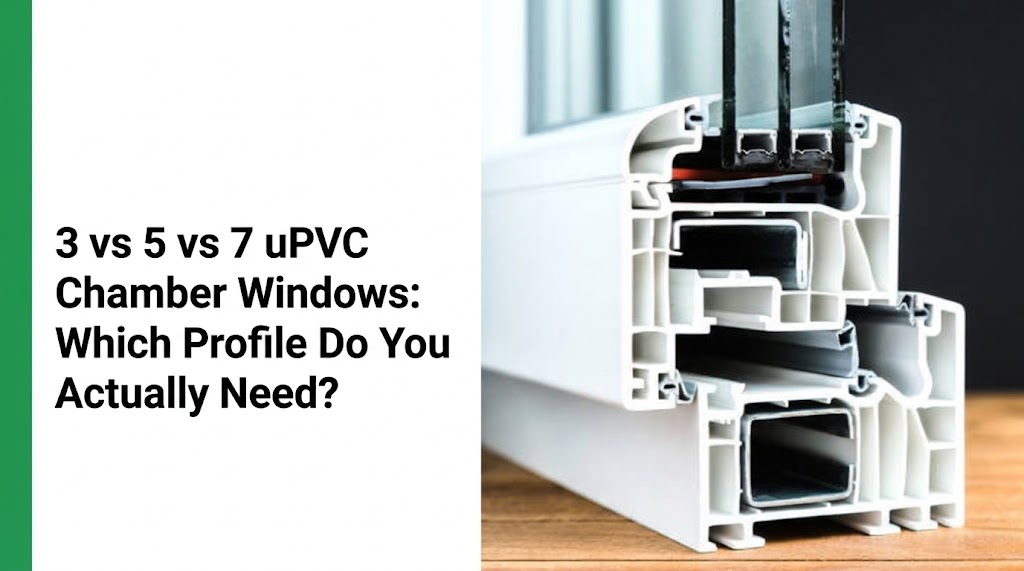
में uPVC (unplasticized polyvinyl chloride) windows, a “chamber” is simply a closed, hollow cavity created during the extrusion process. These cavities serve three critical purposes: blocking heat transfer, dampening sound waves, and providing structural space for internal steel reinforcements. Stripping away the marketing jargon, evaluating whole-window system data (U-values, decibels, and real dollar costs) is the only way to avoid overpaying for performance you might not actually need.
Functions of uPVC Chambers
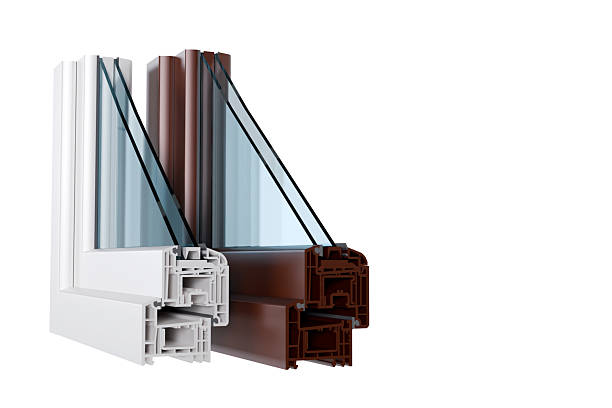
- थर्मल इन्सुलेशन: Air is a highly effective thermal insulator. Multiple independent chambers thoroughly break the thermal bridge between the indoors and outdoors.
- Acoustic Barrier: Sound waves lose energy when forced to pass through alternating layers of plastic walls and static air. More chambers equate to superior acoustic dampening.
- Structural Strength and Profile Depth: Accommodating more chambers requires a wider plastic profile (increasing from 60mm to 90mm or more) and more internal reinforcing ribs. This directly dictates how heavy and thick the glass panes can be without causing the frame to warp under wind loads.
Thermal Insulation (U-Value) Differences
The U-Value measures thermal transmittance. A lower U-Value means better insulation and less energy loss.
- 3-Chamber Profiles: U-Values typically range from 1.6 to 2.0 W/m²K. This only meets decade-old building standards. During harsh winters, you will feel distinct cold radiation when standing near the glass.
- 5-Chamber Profiles: U-Values drop to 1.2 – 1.4 W/m²K. This is the widely accepted “sweet spot,” meeting current energy regulations in most countries and delivering excellent thermal comfort.
- 7-Chamber Profiles: U-Values can drop to 0.8 – 1.0 W/m²K or lower. Hitting sub-0.8 levels qualifies the window for stringent Passive House standards, drastically reducing reliance on active heating and cooling systems.
Acoustic Insulation (dB) Capabilities
Acoustic insulation is measured in decibels (dB). A difference of just 3 to 5 dB results in a highly noticeable change in human hearing perception.
- 3-Chamber Systems (Standard Double Glazing): Achieves noise reduction of about 30 – 32 dB. Adequate for blocking distant background street noise but ineffective against close proximity engine revving.
- 5-Chamber Systems (High-Quality Glazing): Achieves 34 – 38 dB reduction. Effectively muffles busy urban traffic, dropping indoor noise to a sleep-friendly level.
- 7-Chamber Systems (Acoustic Laminated Glass): Reaches 40 – 45+ dB reduction. This is a formidable physical barrier against heavy, low-frequency transportation noise from airports, railways, or major highways.
System Comparison & Pricing Matrices
Purchasing windows is a system-level investment. The data and budgets below are based on a Whole-Window System (per square foot)—which includes the uPVC frame, the appropriately matched glass, and standard hardware—not just the bare plastic profile.
1. Performance & Scenario Matching
| uPVC Spec | Est. U-Value (W/m²K) | Est. Acoustic Rating | Default Bundled Glazing | Ideal Problem-Solving Scenario |
| 3-Chamber | 1.6 – 2.0 (Basic) | 30 – 32 dB | Standard Double Glazing (Clear) | Extremely tight budget, mild climates, zero noise issues |
| 5-Chamber | 1.2 – 1.4 (Great) | 34 – 38 dB | Double Glazing + Low-E + Argon | Seeking high ROI, standard urban residential environments |
| 7-Chamber | 0.8 – 1.0 (अधिमूल्य) | 40 – 45+ dB | Triple Glazing or Heavy Laminated | Freezing climates, Passive Houses, heavy traffic noise |
2. Whole-Window Pricing & Budget Reference
| Window Spec | Est. System Price (USD / sq ft) | Bundled System Configuration | Total Budget Guide (Based on 200 sq ft project) |
| 3-Chamber | $15 – $25 | 3-Chamber Frame + Clear Double Glass + Basic Hardware | $3,000 – $5,000 |
| 5-Chamber | $30 – $50 | 5-Chamber Frame + Low-E Argon Glass + Standard Hardware | $6,000 – $10,000 |
| 7-Chamber | $60 – $100+ | 7-Chamber Frame + Triple/Laminated Glass + Heavy-Duty Hardware | $12,000 – $20,000+ |
Hidden Variables Affecting Your Final Bill
Beyond the base quotes, both homeowners and procurement managers must factor in these easily overlooked costs:
- Brand and Material Premium: A 5-chamber window made from cheap, recycled uPVC might cost $30/sq ft. However, internationally recognized brands using UV-resistant virgin uPVC—which won’t yellow or crack for decades—can easily push prices to $50/sq ft.
- Hidden Installation and Logistics Costs: Quotes typically cover standard ground-level installation. A 7-chamber frame loaded with triple glazing increases the unit’s weight exponentially. For high-rise apartments or difficult access sites, contractors will add crane rental fees and heavy manual labor surcharges, which can consume upwards of 20% of your total project budget.
The Bucket Effect: How to Match Chambers with Glass
Glass makes up over 80% of a window’s surface area. Buying an expensive 7-chamber frame but installing cheap, standard double glazing is a complete waste of money; all the heat will simply escape through the glass.
Matching is not just about budget; it is dictated by physical space and weight limits. A profile’s depth determines its glazing bead width (how thick the glass can be) and its hardware load capacity. Attempting to squeeze heavy acoustic glass into a narrow 3-chamber frame will cause it to warp and sag. Conversely, a wide 7-chamber profile requires thick, multi-pane glass to sit securely.
Here is the standard matching formula to ensure your glass and profile work perfectly together:
| uPVC Profile (Depth) | Max Glass Thickness | Recommended Glass Configuration | सर्वोत्तम उपयोग का मामला |
| 3-Chamber (~60mm) | ~20mm – 24mm | मानक डबल ग्लेज़िंग (Clear or Basic Low-E) | Mild climates, tight budgets, basic renovations. |
| 5-Chamber (70-76mm) | ~24mm – 32mm | Premium Double Glazing (Low-E + Argon) or Basic Triple | Standard residential homes, best overall ROI. |
| 7-Chamber (80-90mm+) | ~36mm – 44mm+ | Heavy Triple Glazing (Low-E + Argon) or Acoustic Laminated | Passive Houses, sub-zero climates, heavy traffic noise. |
The Golden Budget Rule: If you are working with a strict budget, always choose a 5-chamber profile paired with premium Low-E glass rather than stretching for a 7-chamber frame fitted with inferior clear glass.
Strategic Considerations for Builders and Procurement
For commercial projects, the 5-chamber system serves as the reliable baseline for meeting modern building code compliance across North America and Europe. Upgrading to a 7-chamber system is specifically reserved for securing high-premium green building certifications like LEED or Passive House.
When specifying heavy 7-chamber systems, procurement teams must verify that suppliers have inherently bundled heavy-duty hinges and friction stays. Failing to upgrade the hardware to match the immense weight of the triple-glazed sashes will lead to massive maintenance costs due to dropped sashes within the first few years of occupancy.
Whether you need a highly cost-effective 5-chamber system or a Passive House-grade 7-chamber solution, choosing the right manufacturer is as crucial as choosing the right profile. As a 100% direct manufacturing facility serving over 2,000 global clients since 2015, हॉटियन दरवाजे और खिड़कियाँ delivers high-performance American uPVC and Aluminum systems directly to your job site.
We make international procurement seamless:
- फैक्ट्री से सीधे प्राप्त होने वाली कीमतें: Eliminate trading company markups and work directly with our 135,000 sq ft facility.
- Low MOQ: Start your customized uPVC project with as few as 10 units.
- Fast Turnaround: Receive professional shop drawings from our 20-year engineering team in just 2-4 working days.
- Risk-Free Delivery: Enjoy a 2-year warranty and a sub-1% damage rate thanks to our export-grade, fumigation-free packaging.
Ready to upgrade your project without breaking the budget? Get a free, customized quote and let Hotian bring your blueprints to life with ±0.5mm precision.
हमसे संपर्क करेंअक्सर पूछे जाने वाले प्रश्न (एफएक्यू)
Q1: Can I install triple glazing in a 3-chamber uPVC window frame?
No, it is neither practical nor structurally safe. A standard 3-chamber profile typically has a frame depth of only around 60mm. Its glazing bead rebate cannot physically accommodate the width of high-performance triple glazing (usually 36mm or thicker). Attempting to force heavy glass units into a narrow 3-chamber frame risks structural sagging, air leakage, and premature hardware failure. For triple glazing, a 5-chamber (70mm+) or 7-chamber profile is required.
Q2: What is the lifespan of 5-chamber and 7-chamber uPVC windows?
When extruded from 100% virgin uPVC with UV-stabilizing additives, quality 5-chamber and 7-chamber windows typically last 25 to 35+ years with minimal maintenance. In contrast, cheaper profiles manufactured with heavy ratios of post-consumer recycled plastics often turn yellow, become brittle, and show micro-cracking within 5 to 8 years under harsh sun exposure.
Q3: How do European U-values convert to North American NFRC U-factors?
In Europe and international projects, insulation is measured as metric U-Value (W/(m2·K)), whereas North American building codes (NFRC/Energy Star) use imperial U-Factor (BTU/(h·ft2·°F)). To convert metric U-value to imperial U-factor, multiply by 0.176:
- 3-Chamber (~1.8 W/(m2·K)): Approx. U-factor 0.32 (Basic code)
- 5-Chamber (~1.3 W/(m2·K)): Approx. U-factor 0.23 (Meets most Energy Star northern zones)
- 7-Chamber (~0.8 W/(m2·K)): Approx. U-factor 0.14 (Passive House standard)
Q4: Does a 7-chamber window eliminate 100% of street and highway noise?
No window can deliver a 100% sound vacuum, but a 7-chamber system paired with acoustic laminated glass (PVB interlayer) can attenuate noise by 40 to 45+ dB. This cuts the subjective volume of heavy low-frequency traffic rumble by up to 80% to 90%, transforming intrusive exterior noise into a quiet, comfortable indoor environment.