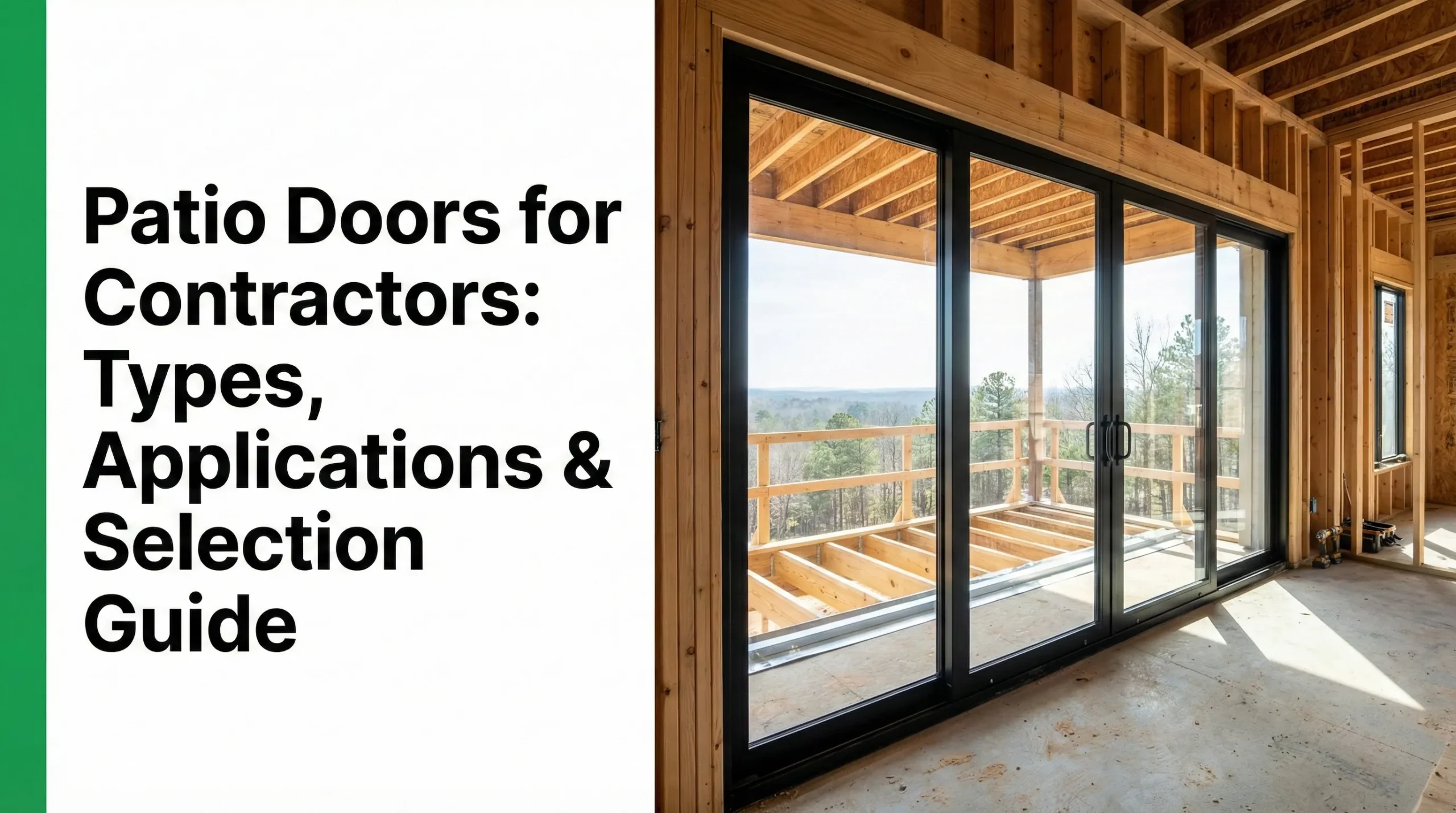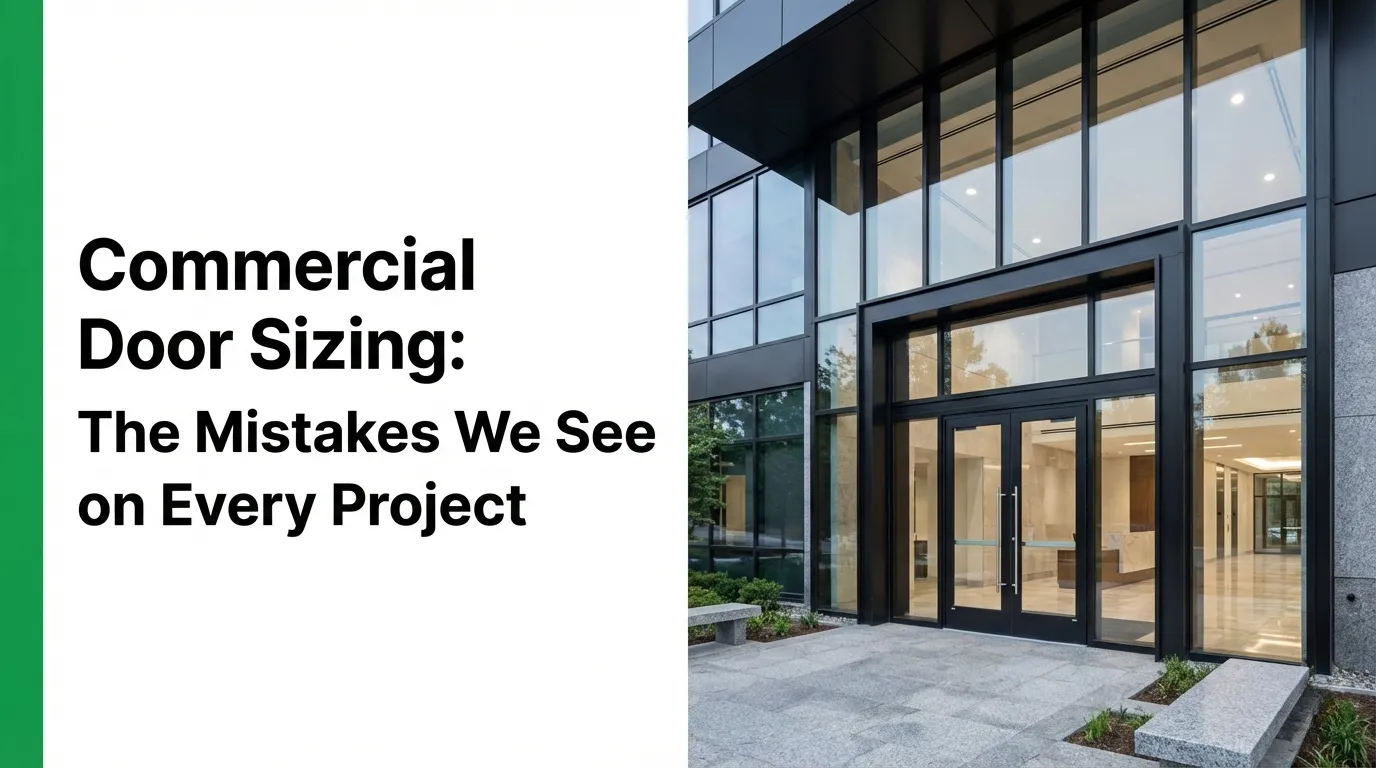
A Hotian já entregou mais de 200 projetos comerciais, incluindo expansões de redes de restaurantes e reformas de hotéis, ajudando empreiteiras a evitar essas armadilhas comuns nas especificações.
A maioria das falhas que vemos em portas de correr comerciais não se deve a defeitos de fabricação, mas sim a erros de especificação cometidos meses antes. Produtos de uso residencial especificados para o tráfego de restaurantes. Aberturas subdimensionadas que dificultam o fluxo de clientes. Problemas de conformidade com a ADA (Lei de Acessibilidade para Americanos com Deficiências) descobertos na inspeção final. Classificações de ciclo incorretas que causam falhas no hardware em 18 meses.
Esses problemas são caros de consertar e totalmente evitáveis. A diferença entre um sistema de porta de correr para varanda que funciona por mais de 15 anos e um que falha em 2 anos geralmente se resume a acertar algumas especificações críticas durante a fase de projeto.
Este guia orienta você nas decisões de especificação que realmente importam para projetos de portas de pátio comerciais — desde a escolha da classificação de ciclo e configuração corretas até como evitar os erros comuns que causam problemas mais tarde.
A especificação crítica que ninguém verifica: Classificação de ciclos
Eis a especificação que determina se o seu sistema de porta de correr para varanda durará 2 ou 20 anos: classificação do cicloMede quantas operações de abertura e fechamento a porta suporta antes de apresentar uma falha mecânica.
As portas de pátio residenciais padrão são testadas para 10.000 a 25.000 ciclos. Isso é suficiente para um proprietário que abre a porta do pátio de 5 a 10 vezes por dia. Mas imagine essa mesma porta em um pátio de restaurante, onde é aberta de 200 a 500 vezes durante o funcionamento? Ela falha em 12 a 18 meses. Os roletes se desgastam, o trilho deforma e as ferragens quebram.
Aplicações comerciais exigem ciclos de vida útil dramaticamente mais elevados:
- pátio do restaurante: mínimo de 150.000 ciclos
- Área comum do hotel: 100.000 ciclos
- Terraço do escritório: 50.000 ciclos
O problema: Muitos fornecedores rotulam produtos como "de uso comercial" sem apresentar classificações reais de ciclos de uso comercial. É preciso verificar, e não confiar apenas no marketing.
Ao solicitar orçamentos, peça:
- Relatórios reais de testes de ciclo (documentação ASTM)
- Especificações do hardware (rolos de aço inoxidável, não de plástico)
- Termos de garantia específicos para uso comercial.
Se um fabricante não puder fornecer dados de testes de ciclo, desconfie. Isso é hardware residencial em embalagem comercial.
A Hotian fabrica sistemas de portas de pátio comerciais com ciclos de operação testados de 100.000 a 150.000 operações, utilizando conjuntos de roletes reforçados e ferragens de nível comercial projetadas para aplicações de alto tráfego.
Restaurante vs Hotel vs Escritório: O que realmente muda?
As portas de correr comerciais não são todas iguais. Veja o que realmente importa para cada aplicação:
| Aplicativo | Largura | Configuração | Especificações críticas | Erro comum |
|---|---|---|---|---|
| pátio do restaurante | 12-20 pés | Dobrável/deslizante | 150 mil ciclos, limite ADA | abertura subdimensionada |
| Varanda do hotel | 6-8 pés | Slider | STC 32+, DP 50+ | Ignorando a acústica |
| Terraço do hotel | 10-16 pés | Dobrável/deslizante | 100 mil ciclos, acesso por cartão | Hardware incorreto |
| Terraço do escritório | 8-12 pés | Slider | Fator U ≤ 0,35 | Sem coordenação de HVAC |
Portas de correr para pátios de restaurantes — escolha a largura ideal.
A maioria dos donos de restaurantes se arrepende de ter escolhido uma abertura muito estreita. Uma abertura de 3 metros parece adequada durante o projeto, mas, uma vez inaugurada, cria gargalos nos horários de pico.
Dimensionamento prático:
- Mínimo: 12 pés (permite tráfego em ambos os sentidos)
- Recomendado: 16-20 pés (elimina problemas de fluxo, maximiza a conexão entre ambientes internos e externos)
- ROI realA transição de 12 pés para 16 pés adiciona 8K-12K, mas 8-12 metros quadrados adicionais de área de pátio geram 8K−12K,bvocêt8-12umddeuteuon / Dlpumteuoseumtegenerumte500-800 por noite. Se paga em 2 a 3 meses de operação no verão.
Opção de configuração:
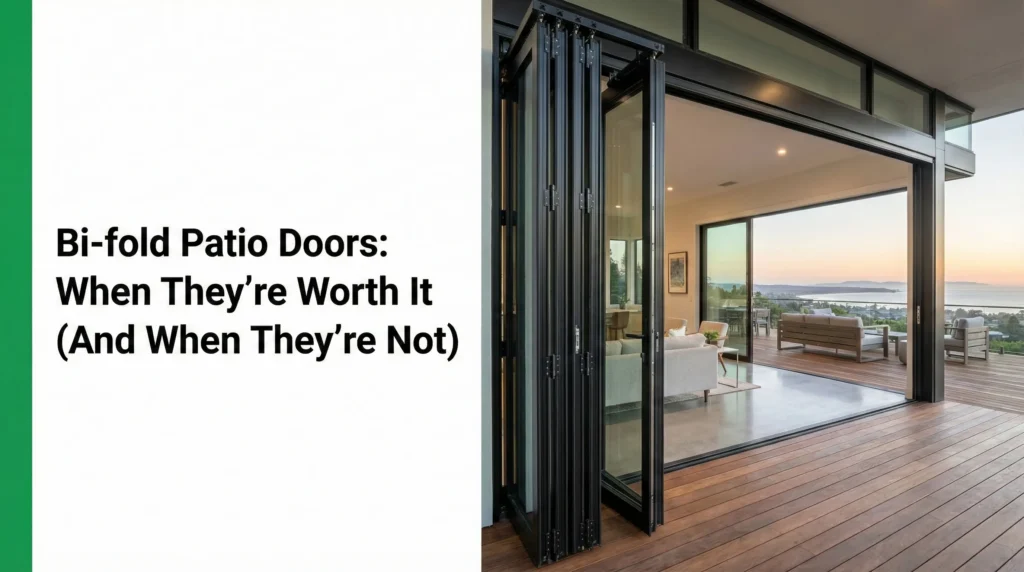
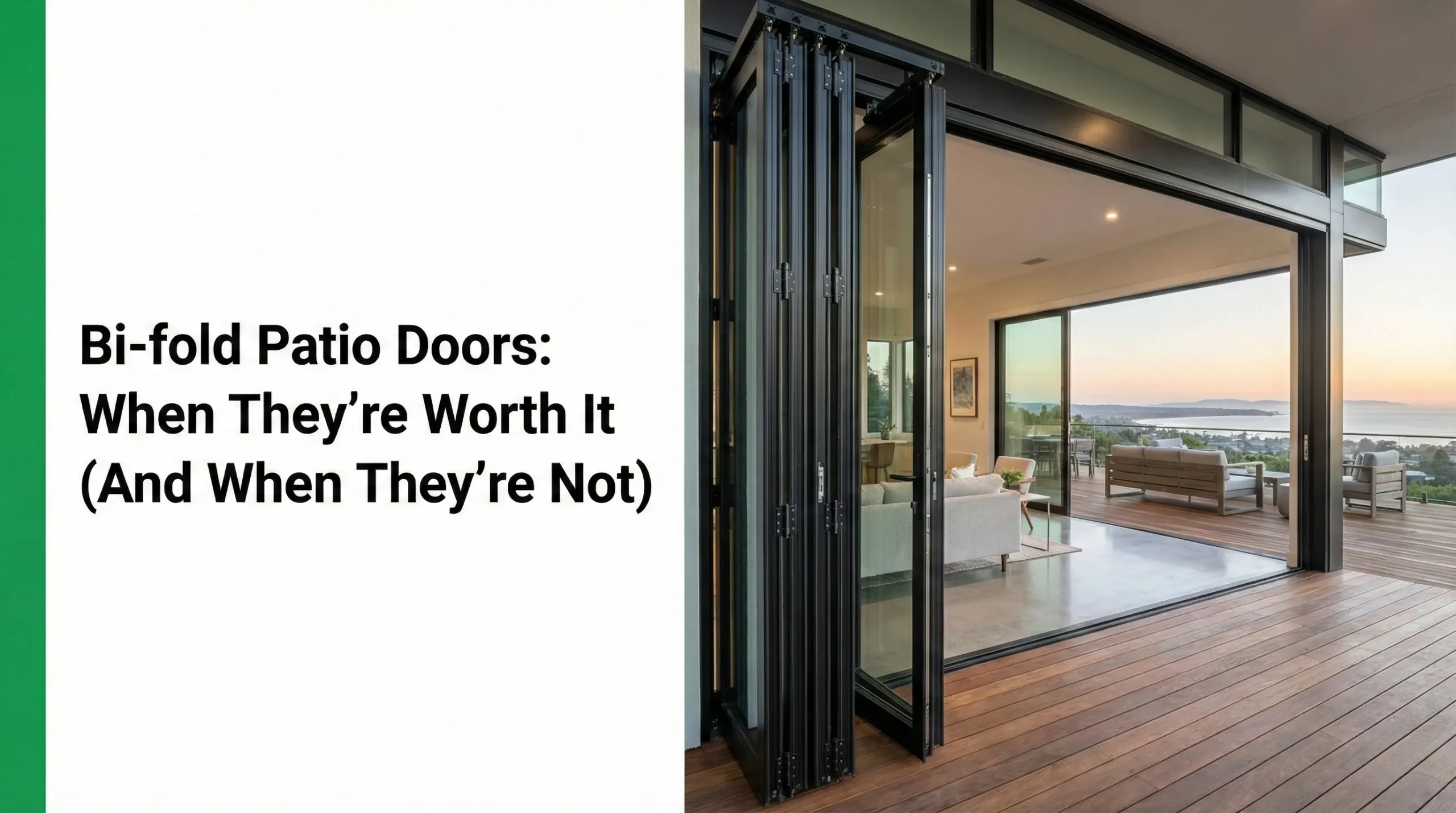
- Dobrável: 80-90% abertura livre quando totalmente desdobrado (necessita de espaço para empilhamento dos painéis)
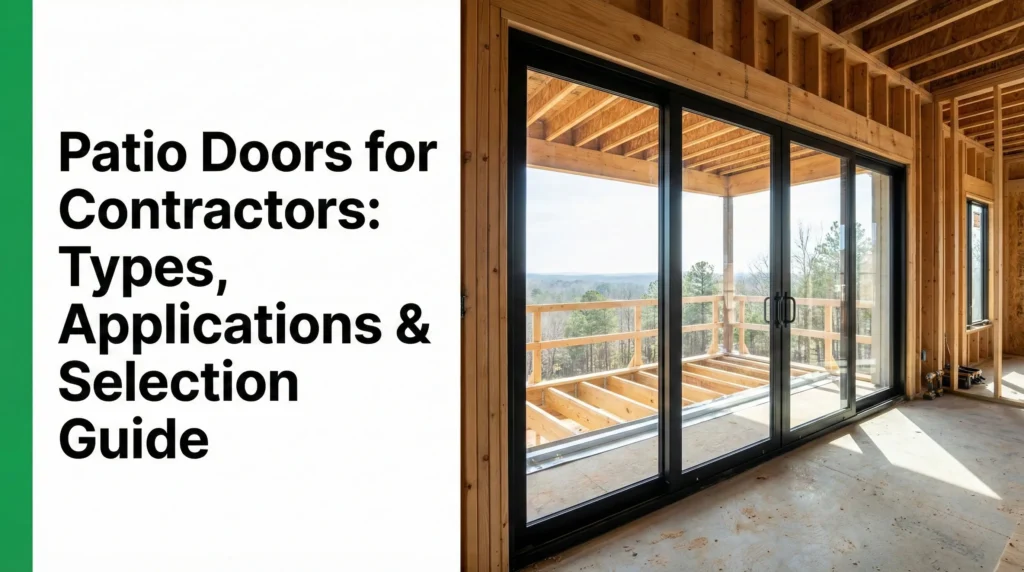
- empilhável deslizante: 60-70% abertura transparente (mais acessível, hardware mais simples)
Requisitos da ADA a serem verificados antes de fazer o pedido:
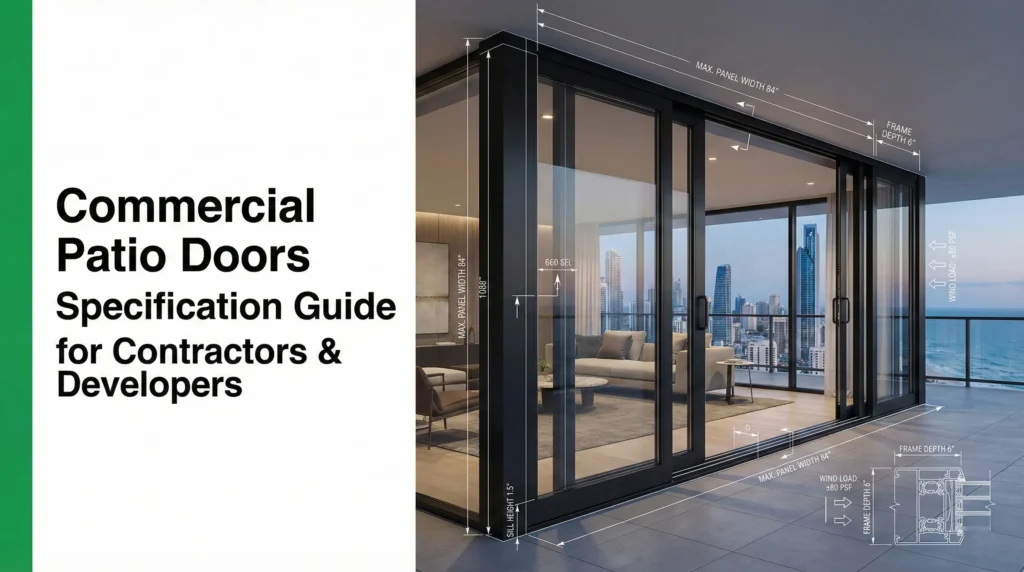
- Largura livre mínima de 32 polegadas por abertura (36 polegadas preferencialmente).
- Altura do limiar ≤0,5″ (design sem limiar para instalações premium)
- Força de operação ≤5 libras
Não descubra problemas de acessibilidade (ADA) apenas na inspeção final. Solicite a confirmação do fabricante antes de fazer o pedido.
A Hotian projeta configurações personalizadas de 1,8 m a 6 m de largura para aplicações em restaurantes, com opções de soleira em conformidade com a ADA (Lei de Acessibilidade para Americanos com Deficiências). Enviar especificações do projeto do restaurante →
Portas de correr para pátios de hotéis e escritórios — desempenho acústico e térmico
varandas dos quartos de hóspedes do hotelA especificação que a maioria dos empreiteiros ignora é o desempenho acústico. É necessário um STC mínimo de 32 para hotéis urbanos — alcançado com unidades de vidro laminado isolante (IGU). Para edifícios altos (mais de 10 andares), a resistência ao vento torna-se crítica: especifique um DP mínimo de 50 a 60, com ancoragem aparafusada.
áreas comuns do hotelTrate como especificações de restaurante — alto fluxo de clientes (mais de 100.000 ciclos), amplas aberturas, integração de acesso por cartão.
Portas do terraço do escritórioO maior problema: ninguém informou o engenheiro do edifício sobre o impacto térmico. Seis meses após a ocupação, as contas de energia estão mais altas do que o previsto. Recomenda-se especificar alumínio com ruptura térmica (fator U ≤ 0,35) para zonas climáticas 4+ e notificar o engenheiro de climatização com antecedência. A maioria das aplicações em escritórios utiliza fechaduras deslizantes com integração de controle de acesso por cartão (2K-4K para fechaduras elétricas e 10K-18K para operadores automáticos).
Alumínio versus Vinil: As Verdadeiras Vantagens e Desvantagens
Toda apresentação de vendas alega que seu material é "ideal para fins comerciais". Aqui está uma comparação honesta:
Quando o Vinil Funciona
- Portas de terraço de escritório com tráfego moderado
- Varandas individuais do hotel (não áreas comuns)
- Pequenos cafés, comércio leve
- Projetos econômicos em climas frios
Custo: $70-110/pé quadrado instalado
LimitaçõesLargura máxima de 2,44 m (8 pés), sem classificação de resistência ao fogo, vida útil reduzida (50.000 a 75.000 ciclos).
Quando você precisar de alumínio
- Acesso ao pátio do restaurante
- Vitrines de varejo
- áreas comuns do hotel
- Qualquer abertura com mais de 2,4 metros de largura.
Custo: $150-220/pé quadrado instalado (com ruptura térmica)
VantagensGrandes vãos (3,6 a 6 metros), alta capacidade de ciclos de descarga (mais de 100.000 a 150.000 ciclos), resistência ao fogo, vida útil de 20 a 30 anos ou mais.
Vale a pena usar uma pausa térmica?
Uma barreira térmica custa de 20 a 30% a mais. Vale a pena quando:
- Zona climática 5+ (climas frios)
- Programas de construção com eficiência energética (LEED)
- Investimento imobiliário de longo prazo (mais de 10 anos)
Ignore se: Climas quentes (zonas 1-3), projetos de curto prazo com orçamento limitado.
A Hotian fabrica sistemas comerciais em alumínio e vinil. Nossa equipe ajuda você a selecionar o material adequado com base na sua aplicação e orçamento, e não apenas a priorizar o produto com a maior margem de lucro. Explore as opções de materiais →
Decisões de dimensionamento: largura e configuração
Qual deve ser a largura da abertura?
Não escolha o tamanho com base em "o que serve". Escolha o tamanho com base no desempenho do tráfego.
Calcular o pico de tráfego simultâneo:
- Restaurante: Garçom com bandeja (90 cm) + dois clientes (150 cm) = 2,4 m de distância mínima absoluta
- Check-in no hotel: 3-4 hóspedes com bagagem = 3-3,6 metros
- Escritório: Tráfego reduzido, 2,4 a 3 metros de largura são suficientes.
Orçamento versus desempenho:
- 12 pés → 16 pés: +$8K-12K, dobra a capacidade de fluxo
- Tamanho padrão → personalizado: custo adicional de +10 a +15%, prazo de entrega de +2 a +3 semanas
- Porta deslizante → dobrável: +30-50% de custo, aumenta a abertura livre 60% → 85%
Árvore de Decisão de Configuração
Escolha o modelo dobrável se: Você quer a abertura máxima, o orçamento permite (30-50% premium), e você tem espaço para empilhamento.
Selecione o controle deslizante se: Econômico, de manutenção simplificada, para escritórios/comércios de médio porte, com espaço de armazenamento limitado.
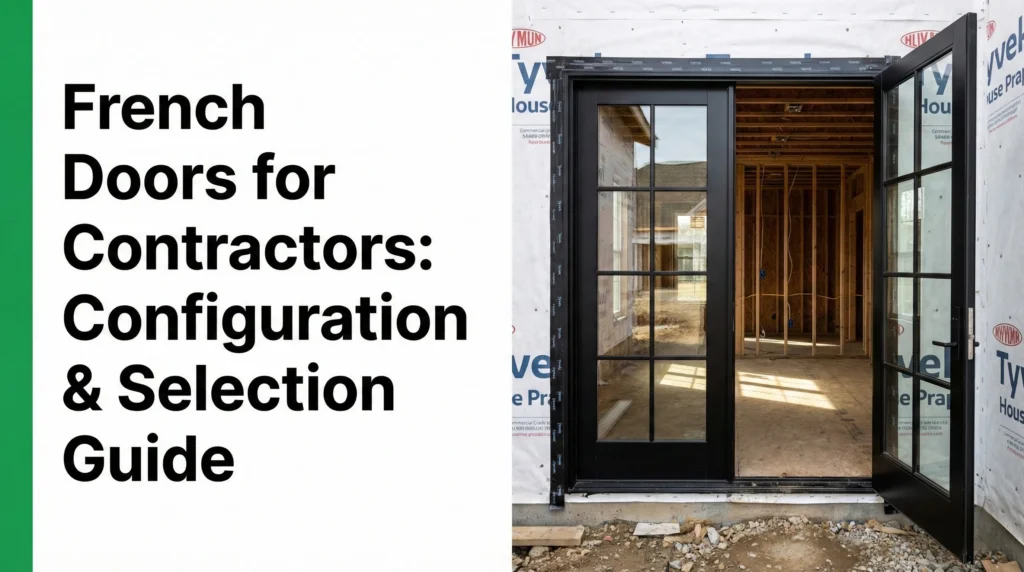
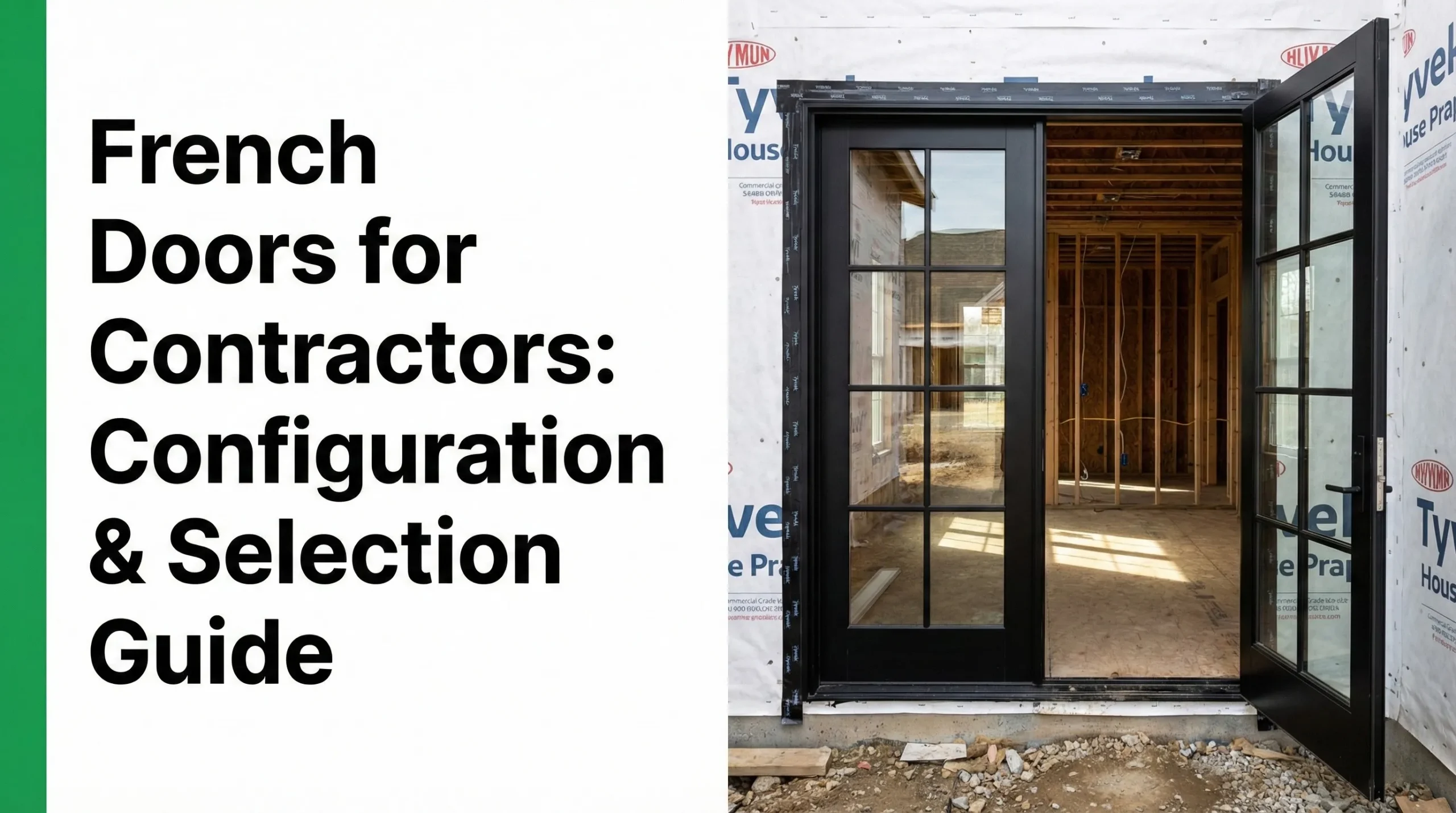
Escolha portas francesas se: Abertura menor (1,8 a 2,4 m), estética tradicional, menor tráfego.
Consideração duplaMais painéis = mais ferragens = mais manutenção. Uma porta dobrável de 6 painéis tem 12 dobradiças, 6 pivôs e um trilho complexo. Impressionante quando funciona, mas requer instalação adequada e ajustes periódicos.
Erros comuns de especificação que vemos repetidamente
Erro #1: “Qualidade Comercial” que Não É
O problemaOs fornecedores chamam os produtos de "comerciais" sem que estes possuam as devidas certificações para uso comercial. Você pede "portas de correr comerciais" e eles enviam produtos residenciais.
Verificar:
- Solicitar relatórios de testes de ciclo (testes ASTM com mais de 100 mil ciclos)
- Verifique as especificações do hardware (rolos de aço inoxidável, não de plástico).
- Verifique se a garantia cobre "uso comercial".
Bandeira vermelha"É de nível comercial, mas não temos relatórios de testes."
Erro #2: Conformidade com a ADA como uma reflexão tardia
Falhas comuns:
- Soleira >0,5″ (muitas portas padrão têm soleiras de 0,75 a 1″)
- Largura livre <32″ quando medida a 90° de abertura
- Força de operação >5 libras (ferragens residenciais rígidas)
EvitarSolicite as dimensões específicas antes de fazer o pedido: "Qual é a altura do batente?" "Qual é a largura livre a 90°?" Não presuma, verifique.
Erro #3: Coordenação incorreta da abertura do esboço
Sequência que funciona:
- Obtenha as dimensões do osmose reversa e os requisitos de carga do cabeçalho do fabricante.
- Forneça os dados de carga do cabeçalho ao engenheiro estrutural.
- Engenheiro estrutural projeta cabeçalho
- Quadro RO com cabeçalho projetado
- Então portas de ordem
Sequência que falha: Moldura RO → Encomendar portas → Descobrir que o cabeçalho é pequeno demais ou que a RO não encaixa
Para vãos maiores que 3,65 metros (12 pés): Sempre consulte um engenheiro estrutural.
Erro #4: Ignorar o prazo de entrega
Cronograma realista:
- Fabricação: 10 a 12 semanas (comercial sob encomenda)
- Envio: 2 a 4 semanas (nacional), 6 a 8 semanas (internacional)
- Total: 15 a 20 semanas desde o pedido até a instalação.
Cronograma que funcionaFaça o pedido durante a fase de estruturação — antes que o projeto esteja pronto. Assim, quando você estiver pronto para a instalação, as portas chegarão dentro do prazo.
Opções de implementação rápidaEspecifique os tamanhos padrão (reduzindo o prazo para 6 a 8 semanas) ou pague a taxa adicional de urgência (10-20% para aceleração de 2 a 4 semanas).
A Hotian fornece cronogramas detalhados do projeto durante a elaboração do orçamento, coordenando a entrega com o seu cronograma de construção. Para projetos com prazos apertados, oferecemos fabricação acelerada. Enviar especificações e cronograma →
O que fornecer aos fabricantes para obter orçamentos precisos
O mínimo indispensável
- Dimensões aproximadas da abertura (largura × altura)
- Tipo de construção e aplicação (“acesso ao pátio do restaurante, alto tráfego”)
- Quantidade e locais
- Cronograma (data de entrega necessária)
Informações melhores = Recomendações melhores
- Volume de tráfego esperado (“restaurante com 150 lugares e pátio aberto de março a outubro”)
- Prioridades de desempenho (“acústica crítica” ou “respeito ao orçamento”)
- Requisitos de integração (“sistema de controle de acesso por cartão” ou “combinar com o acabamento da fachada existente”)
- Restrições do local (“espaço de armazenamento limitado” ou “revisão de distrito histórico”)
Sinais de alerta ao fazer orçamentos
- O fabricante fornece um orçamento sem perguntar sobre a aplicação.
- Não é possível fornecer dados de testes de ciclo ou relatórios estruturais.
- Os prazos de entrega parecem irreais (6 semanas para um produto personalizado? Improvável).
- Impõe uma configuração específica sem compreender as necessidades.
O que os bons fabricantes pedem
- Qual é o volume de tráfego previsto?
- “Quais são os requisitos específicos de desempenho — acústicos, térmicos e de carga de vento?”
- “Integração com sistemas existentes — controle de acesso, fachada cortina?”
- Cronograma: fase de projeto, pronto para encomenda ou processo acelerado?
A equipe de projetos da Hotian faz perguntas detalhadas sobre sua aplicação, garantindo a especificação adequada para seu tráfego, necessidades de desempenho e requisitos de integração. Solicitar consultoria sobre o projeto →
Trabalhando com a Hotian: Engenharia de Portas de Correr Comerciais
A Hotian fabrica sistemas de portas de pátio de nível comercial para restaurantes, hotéis, escritórios e lojas. Com mais de 200 projetos comerciais entregues, desenvolvemos soluções para ambientes exigentes de alto tráfego.
O que oferecemos
Funcionalidades do produto:
- Classificação de ciclos comerciais (testado entre 100.000 e 150.000 ciclos)
- Projetos personalizados para vãos de 1,8 m a 6 m de largura.
- Configurações de portas de correr, dobráveis e francesas.
- Alumínio com ruptura térmica atingindo fator U ≤0,35
Suporte de engenharia:
- Recomendações de configuração com base nos requisitos de tráfego
- Pacotes de documentação completos (desenhos de oficina, relatórios de ensaio, dados de desempenho)
- Coordenação RO e cálculos de carga do cabeçalho
- Detalhes da integração (iluminação, controle de acesso, coordenação da fachada cortina)
Fabricação e entrega:
- Tamanhos padrão: 8 a 10 semanas
- Configurações personalizadas: 12 a 14 semanas
- Fabricação expressa disponível
- Preços direto do fabricante
Exemplo de projetoRecentemente, projetamos sistemas de portas de correr para varanda para a expansão de uma rede de restaurantes com 12 unidades, fornecendo configurações padronizadas de alumínio com 4,88 m de largura e portas dobráveis, com soleiras em conformidade com a ADA (Lei de Acessibilidade para Americanos com Deficiências) e ferragens com vida útil de 150.000 ciclos. A engenharia centralizada e a fabricação em massa reduziram o custo por unidade em 22% em comparação com a aquisição individual, com especificações consistentes em todas as unidades, garantindo requisitos de manutenção uniformes.
Sem quantidade mínima de pedido
Projetamos desde projetos com uma única porta até grandes empreendimentos com vários edifícios. Oferecemos suporte completo de engenharia, independentemente do tamanho do projeto — dimensionamento personalizado disponível para qualquer quantidade.
Portas de pátio comerciais (Perguntas frequentes)
Qual a classificação de ciclos que devo especificar para portas de pátio comerciais?
Especifique a classificação do ciclo com base no tráfego. Um bom ponto de partida:
- Portas de pátio do restaurante: Mínimo de 150.000 ciclos
- Áreas comuns do hotel: 100.000 ciclos
- Terraço do escritório: 50.000 ciclos
Portas de qualidade residencial (frequentemente) 10.000 a 25.000 ciclos) pode falhar dentro de ~18 meses sob uso comercial.
Dica de compras: exigir que os fabricantes forneçam relatórios reais de testes de ciclo—Não aceite alegações de "qualidade comercial" sem documentação.
As portas de correr de vinil podem ser usadas em aplicações comerciais?
Sim, para uso comercial leve. O vinil pode ser uma boa opção para:
- Terraços de escritórios
- Varandas individuais do hotel
- Pequenos cafés com movimento moderado
Limites típicos: O vinil deve ser mantido em aberturas. ≤8 pés largo.
Use alumínio em vez disso. para pátios de restaurantes com grande fluxo de pessoas, aberturas adjacentes a lojas/fachadas de estabelecimentos comerciais ou larguras >8 pésO vinil geralmente tem menor capacidade de ciclo de vida (frequentemente) 50.000–75.000) versus alumínio (comumente 100.000–150.000+) e normalmente não conseguem atender aos requisitos de resistência ao fogo, quando aplicáveis.
Como posso garantir a conformidade com a ADA?
Verifique a conformidade antes de fazer o pedido.—não na inspeção final. Solicite ao fabricante que confirme (por escrito) e forneça desenhos para:
- Altura limite: ≤0,5" (confirmar através de detalhes dimensionados)
- Largura livre: ≥32" medido com a porta aberta em 90° (tamanho não nominal da porta)
- Força operacional: ≤5 lb
Observação: As interpretações da ADA/IBC podem variar de acordo com a jurisdição e o tipo de porta — coordene com o arquiteto e a autoridade competente para obter os requisitos específicos do projeto.
Qual o prazo de antecedência que devo considerar para portas de correr comerciais para varanda?
Planeje o prazo de entrega com base no nível de personalização:
- Sistemas comerciais personalizados: 12 a 14 semanas fabricação + 2 a 4 semanas frete = Aproximadamente 16 a 20 semanas no total
- Tamanhos padrão: muitas vezes ~8–10 semanas
Dica de agendamento: a ordem durante o fase de enquadramento Assim, as portas chegam antes que as aberturas brutas sejam fechadas.
Via rápida: A fabricação acelerada às vezes está disponível (frequentemente). +10–20%) para um ~2–4 semanas A aceleração está sujeita ao tamanho, acabamento e disponibilidade do vidro.
Devo especificar alumínio com ruptura térmica ou alumínio padrão?
Escolha alumínio com ruptura térmica. Quando o controle da condensação e o desempenho energético são importantes:
- Climas frios (frequentemente) Zona climática 5+)
- Projetos focados em energia (por exemplo, LEED alvos)
- Investimentos de longo prazo (Mais de 10 anos)
Alumínio padrão pode ser aceitável para climas quentes (frequentemente Zonas 1–3) ou projetos orientados pelo orçamento com horizontes de investimento curtos.
Relação custo/desempenho: Os sistemas de ruptura térmica geralmente custam ~20–30% mais, mas reduzem o risco de condensação e podem diminuir a necessidade de aquecimento em climas frios.
Próximos passos: Comece seu projeto de porta de pátio comercial
Se você estiver na fase de projeto
- Determine o tamanho da RO com base nos requisitos de fluxo de tráfego.
- Baixe gratuitamente nossa lista de verificação de coordenação de RO + cabeçalho.
- Entre em contato com a Hotian para obter recomendações de configuração e orçamentos.
- Obtenha as dimensões do RO e as cargas do cabeçalho para o engenheiro estrutural.
Se você estiver pronto para fazer o pedido
- Verificar se as dimensões do RO foram confirmadas e se o cabeçalho estrutural foi projetado.
- Envie as especificações detalhadas para a Hotian.
- Revisar desenhos de oficina e pacote de documentação (revisão em 2 semanas)
- Faça seu pedido (prazo de entrega de 12 a 14 semanas)
Comece agora: Envie as especificações do projeto para obter uma resposta em 24 horas →
Tem alguma dúvida?
Entre em contato com a equipe de engenharia de portas de pátio comerciais da Hotian. Respondemos a solicitações de projetos em até 1 dia útil e oferecemos:
- Recomendações de configuração com base na sua aplicação
- Orçamentos detalhados com especificações completas
- Consultoria técnica para projetos complexos
- Coordenação RO e cálculos de carga do cabeçalho
Tome uma atitude:
- Enviar especificações do projeto (Forneça as dimensões, a aplicação e o cronograma da osmose reversa)
- Agende uma consulta técnica de 15 minutos. (Discutir os requisitos com a equipe de engenharia)
- Baixe o catálogo de portas de correr para varanda. (requisitos detalhados para submissão)