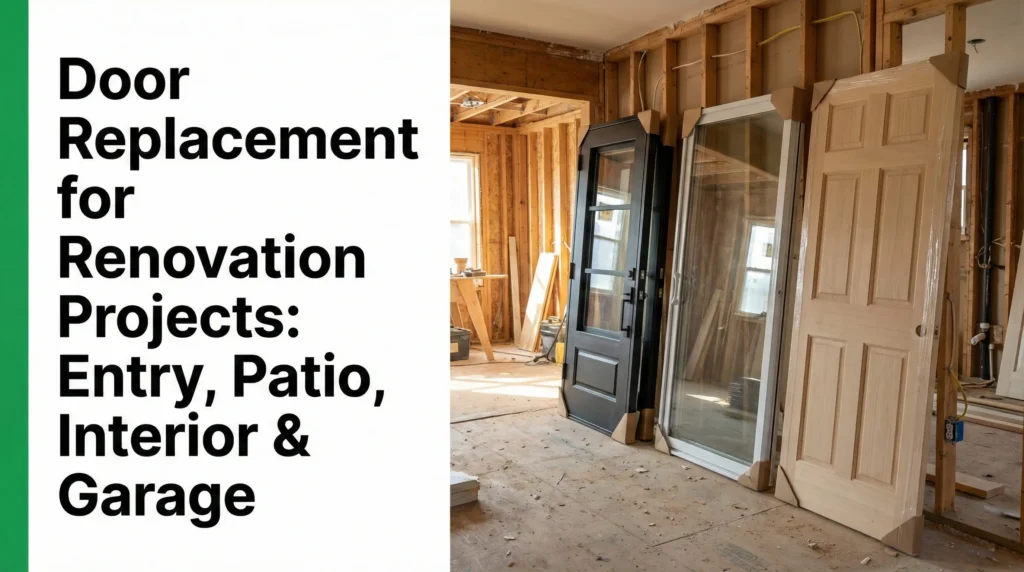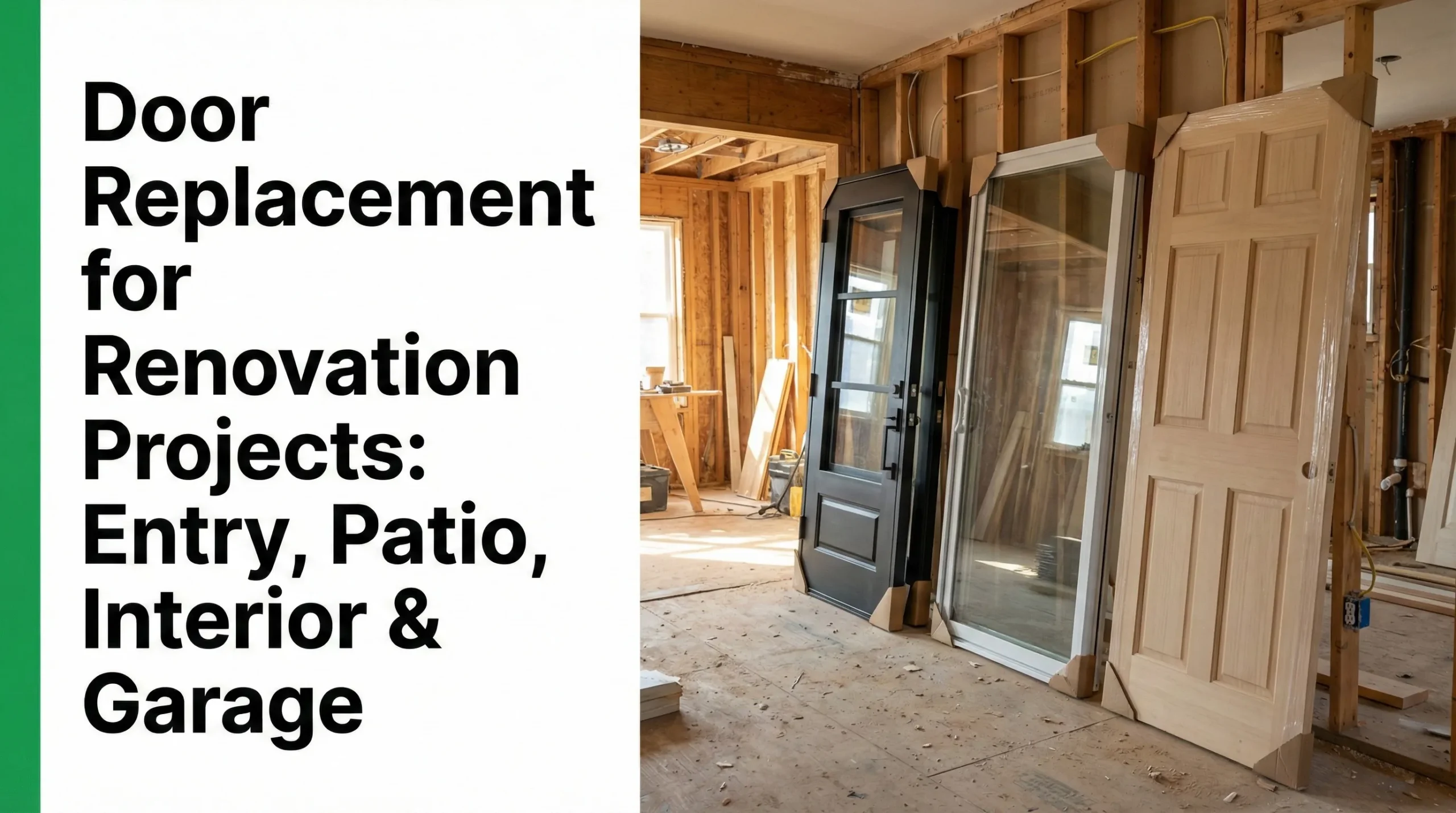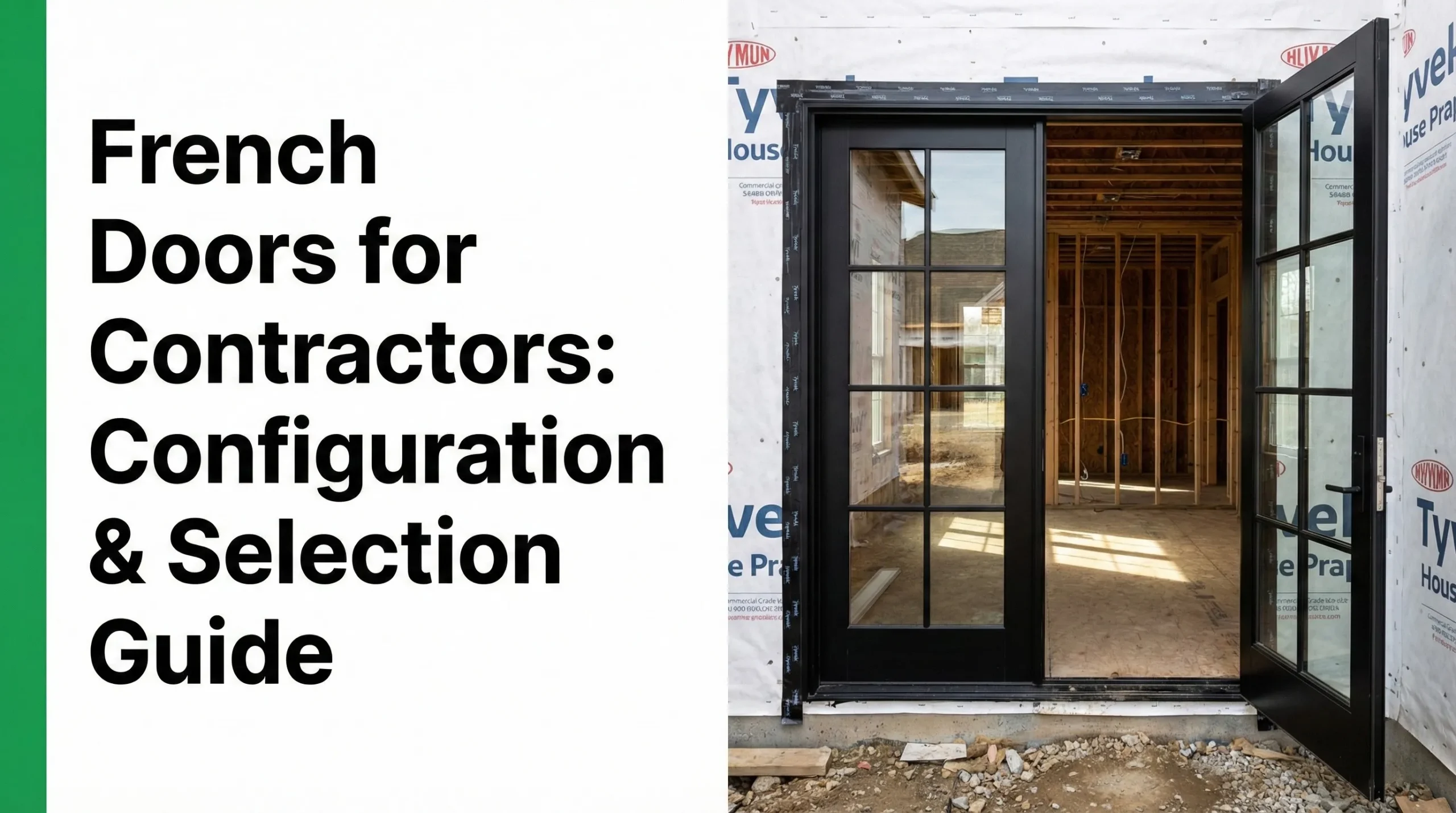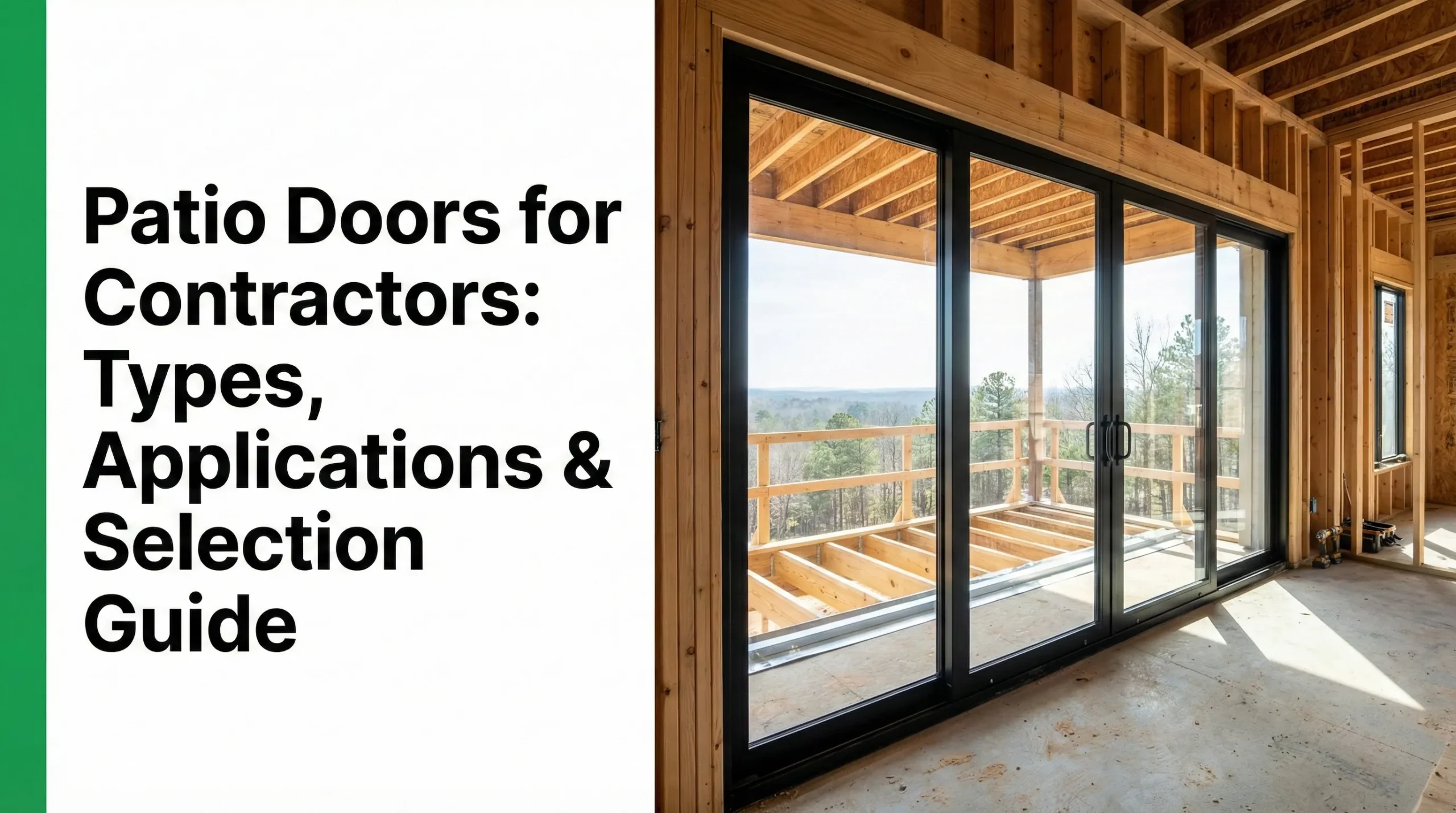
El reemplazo de puertas es uno de los proyectos de renovación más comunes, y uno de los que se malinterpreta con más frecuencia. El Informe Costo vs. Valor de 2025 clasifica el reemplazo de puertas de garaje con un ROI de 268% y el reemplazo de puertas de entrada de acero con un ROI de 188%, lo que convierte a las puertas en los dos proyectos de renovación con mayor rentabilidad. Sin embargo, la mayoría de los proyectos de reemplazo presentan problemas evitables: selección de un enfoque incorrecto (renovación vs. marco completo), aberturas existentes que se asumen como reutilizables cuando no lo son, o cambios de configuración que se intentan sin tener en cuenta los requisitos estructurales.
Esta guía cubre las cuatro categorías principales de reemplazo de puertas (entrada, patio, interior y garaje) con un enfoque en las decisiones que enfrentan los contratistas y remodeladores en proyectos de renovación: cuándo modernizar, cuándo optar por un marco completo y cómo evitar los errores que generan devoluciones de llamadas.
Retrofit vs. Full-Frame: La decisión universal
Cada reemplazo de puerta comienza con la misma pregunta: ¿Podemos conservar el marco existente o es necesario retirar todo el conjunto?
¿Qué es el reemplazo por reequipamiento (inserción)?
Una nueva unidad de puerta encaja en la abertura del marco existente. El marco original, la moldura exterior y el revestimiento permanecen en su lugar. La nueva unidad se instala generalmente desde el interior.
Ventajas:
- 30–50% menor costo total del proyecto (menos mano de obra, sin parches exteriores)
- Instalación más rápida (a menudo la mitad del tiempo)
- Mínima alteración de los acabados exteriores, fundamental para fachadas de estuco, ladrillo o piedra.
- Ideal para edificios ocupados donde la velocidad importa.
Limitaciones:
- Área de vidrio/abertura ligeramente más pequeña (el nuevo marco encaja dentro del antiguo)
- Umbral más alto en algunas puertas de patio modernizadas (riesgo potencial de tropiezo)
- No se puede reparar el daño subyacente del marco, solo lo oculta
- Posibilidad de realizar cambios de configuración limitados
¿Qué es el reemplazo de fotograma completo (nueva construcción)?
Se retiran por completo la puerta, el marco y la moldura antiguos. Se instala una nueva unidad directamente en la abertura sin terminar, con tapajuntas y sellador nuevos.
Ventajas:
- Máxima mejora del rendimiento energético (nuevo marco, nuevas juntas)
- Puede cambiar el tamaño, el tipo o la configuración de la puerta.
- Soluciona daños ocultos en el marco, podredumbre o intrusión de agua.
- Perfiles de umbral más bajos disponibles (importante para el cumplimiento de la ADA)
- Nueva fijación estructural directamente al marco
Limitaciones:
- Mayor costo (material + mano de obra + acabado exterior)
- Mayor tiempo de instalación
- Requiere parches exteriores (revestimiento, molduras, pintura)
- Más perturbaciones para los ocupantes
El marco de decisión
Elija modernización cuando:
- El marco existente está estructuralmente sólido, sin podredumbre, óxido ni daños por agua.
- Mismo tipo y tamaño de puerta (reemplazo similar)
- El presupuesto o el cronograma son ajustados
- El acabado exterior es costoso de alterar (ladrillo, piedra, estuco).
- Edificio ocupado: minimice las interrupciones
Elija fotograma completo cuando:
- El marco está dañado, podrido o tiene antecedentes de intrusión de agua.
- Cambiar el tipo o configuración de la puerta (de corredera a francesa, por ejemplo)
- Cambiar el tamaño de la apertura
- La mejora máxima del rendimiento energético es el objetivo
- Se requiere un umbral que cumpla con la ADA (los umbrales de modernización suelen ser demasiado altos)
- La renovación exterior ya está en curso (el revestimiento, la pintura y los trabajos de acabado se están realizando de todos modos)
En caso de duda: Examine e inspeccione minuciosamente el marco existente antes de comprometerse. Encontrar daños ocultos después de encargar la puerta nueva implica demoras costosas y cambios en el alcance.
Reemplazo de puerta de entrada
Las puertas de entrada son el reemplazo exterior más simple y ofrecen el mayor retorno de la inversión (ROI): el Informe de costo versus valor de 2025 muestra que el reemplazo de puertas de entrada de acero genera un retorno de 188% del costo del proyecto en la reventa.
Selección de materiales para proyectos de reemplazo
| Material | Costo de instalación típico | Mejor para | Consideración clave |
|---|---|---|---|
| Acero | $450–$1,400 | Seguridad, presupuesto, ROI | Puede abollarse; evite los colores oscuros expuestos al sol directo. |
| Fibra de vidrio | $800–$3,300 | Durabilidad, apariencia de madera, bajo mantenimiento. | El mejor valor a largo plazo para la mayoría de los proyectos |
| Aluminio | $2,000–$7,500+ | Estética moderna, climas costeros/húmedos | Requiere rotura de puente térmico para climas fríos. |
| Madera | $2,800–$10,000+ | Casas históricas, casas de alta gama personalizadas | Máximo mantenimiento; necesita protección contra voladizos. |
Modernización vs. marco completo para puertas de entrada
La modernización funciona bien cuando:
- Reemplazo de una puerta del mismo tamaño y del mismo batiente
- Marco y umbral existentes en buen estado.
- La unidad de modernización precolgada coincide con la abertura en bruto
Se recomienda el formato de fotograma completo cuando:
- Agregar luces laterales o travesaños (cambia el ancho/alto de la apertura)
- Cambio de dirección del swing (insideswing a outswing)
- El marco muestra algún signo de podredumbre o daño por agua en el umbral.
- Actualización del nivel de constructor al sistema premium
Error común al reemplazar la puerta de entrada: No revisar el estado del umbral y el subumbral. Los umbrales de las puertas de entrada son los más expuestos al agua. Lo que a simple vista parece estar bien, a menudo esconde podredumbre. Inspeccione siempre antes de realizar su pedido.
Para comparaciones detalladas de materiales y orientación sobre estilos, consulte nuestra Guía de compra de puertas de entrada.
Reemplazo de puerta de patio
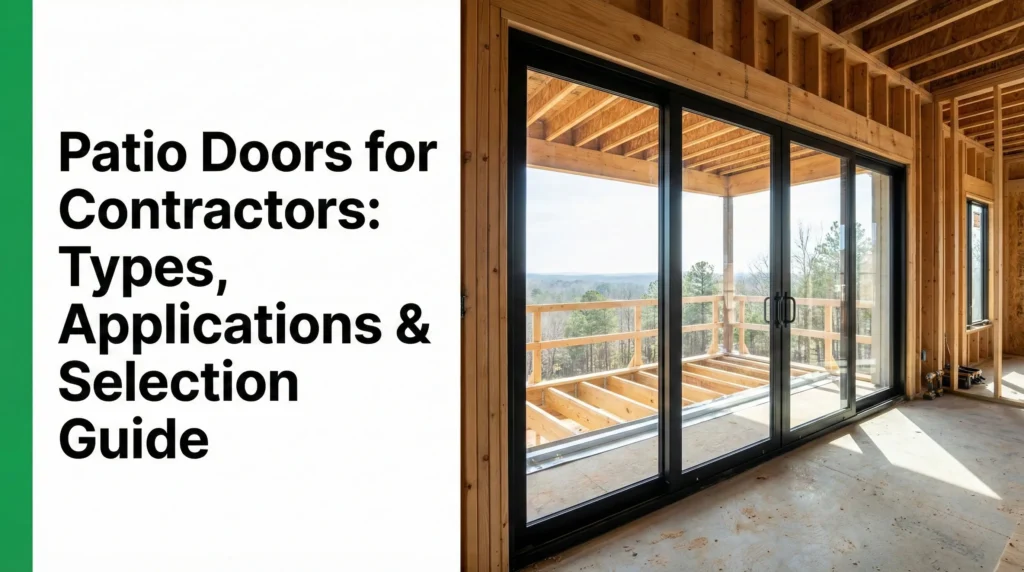
Las puertas de patio son la categoría de reemplazo más compleja. Son más pesadas (entre 180 y 360 kg para sistemas multipanel), tienen mayores requisitos estructurales y ofrecen la mayor variedad de opciones de cambio de configuración. Aquí es donde la decisión de modernizarlas o instalarlas en un marco completo es crucial.
Viabilidad del cambio de configuración
La pregunta más común de los contratistas: "¿Puedo reemplazar X con Y?"
| Desde → Hasta | Factibilidad | Enfoque típico | ¿Modificación de RO? | Costo vs. Línea base |
|---|---|---|---|---|
| Deslizante → Deslizante | ✅ Fácil | Modernización o fotograma completo | Generalmente no | Base |
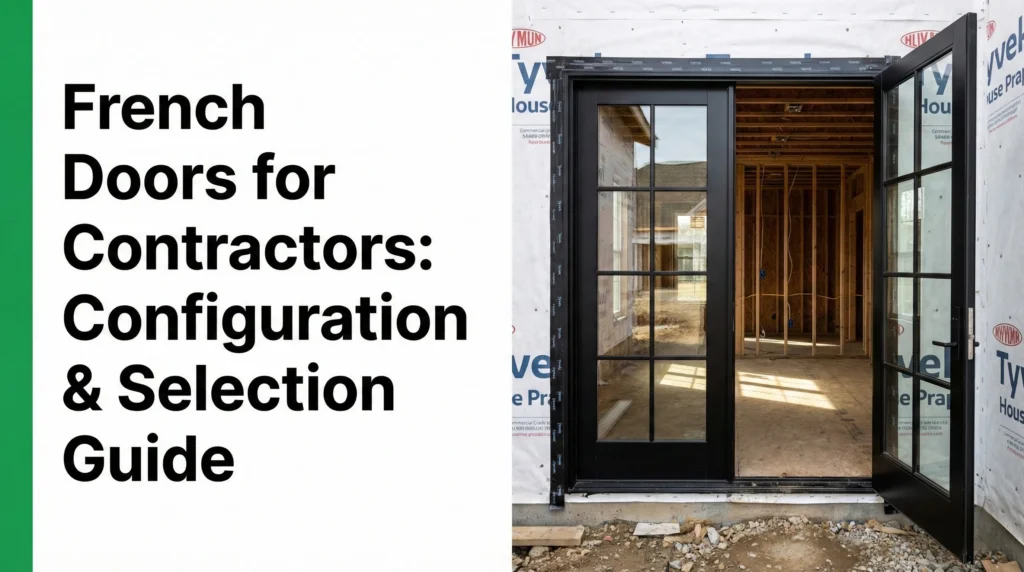
| Francés → Francés | ✅ Fácil | Modernización o fotograma completo | Generalmente no | Base |
| Francés → Deslizante | ✅ Fácil | Posibilidad de modernización | Generalmente no | +10–20% |
| Deslizante → Francés | ⚠️ Medio | A menudo, fotograma completo | A veces (el francés puede ser más específico) | +15–30% |
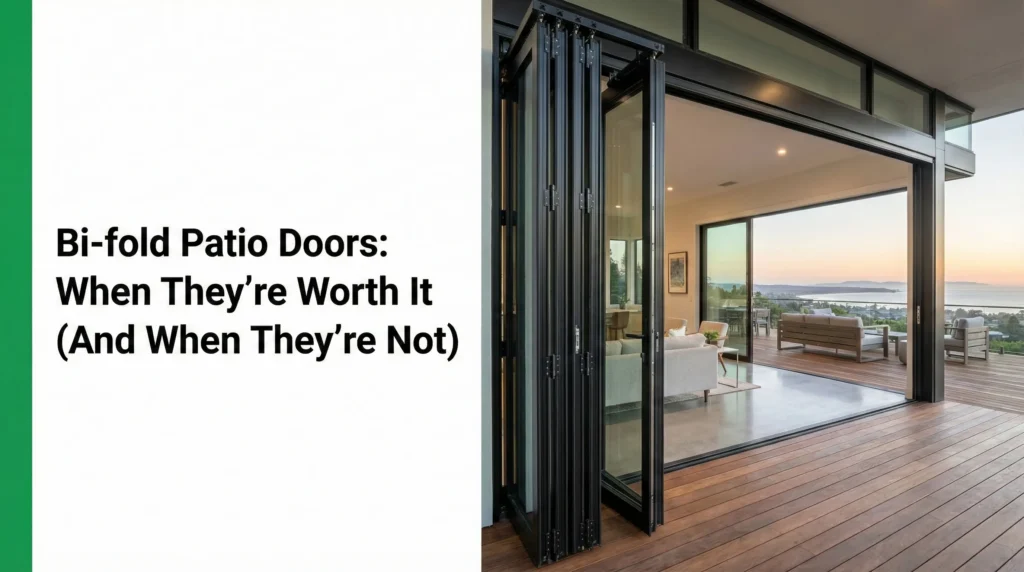
| Deslizante → Plegable | ⚠️ Difícil | Se requiere fotograma completo | Sí (probable refuerzo del encabezado) | +50–100% |
| Cualquiera → Apertura más grande | ❌ Difícil | Marco completo + estructural | Sí (se requieren permisos) | +100%+ |
Conclusión clave: Los reemplazos similares y las reducciones de complejidad (francés → correderas) son sencillos. Las mejoras de complejidad (corredizas → plegables) casi siempre requieren trabajo completo del marco y posiblemente de la estructura, lo que anula la mayoría de los ahorros en costos de modernización.
Datos de campo del contratista: Realidades del cambio de configuración
Basado en la base de datos de proyectos de Hotian de más de 500 reemplazos de puertas de patio (2023-2025):
Escenarios de modernización más comunes:
- Deslizante → Deslizante (mismo tamaño): 68% de proyectos—96% tasa de éxito con modernización
- Francés → Deslizante: 14% de proyectos—85% utilizan modernización (la preocupación por el umbral inferior impulsa a 15% a fotograma completo)
- Deslizante → Francés: 12% de proyectos: solo 38% fueron modernizados exitosamente; 62% necesitaron un marco completo debido a:
- Cabezal inadecuado para la distribución del peso de una puerta francesa (cargas concentradas en las bisagras frente a cargas distribuidas en los rodillos)
- Ancho de RO insuficiente (las puertas francesas requieren espacio libre adicional para el radio de giro)
- El cliente rechazó el umbral de 2,5″ tras ver la maqueta
Tarifas de devolución de llamadas por enfoque:
- Modernización del marco de sonido: tasa de devolución de llamada 3% (principalmente ajustes de burletes)
- Modernización de un marco cuestionable: tasa de devolución de llamadas 28% (intrusión de agua, problemas de funcionamiento)
- Fotograma completo: tasa de devolución de llamada 5% (principalmente problemas de acabado cosmético)
Estos datos fundamentan nuestra recomendación: Cuando los contratistas preguntan "¿Puedo realizar una modernización?", la respuesta no solo tiene que ver con el estado del marco, sino con la compatibilidad de la configuración y las expectativas del cliente en cuanto a la altura del umbral.
Cuándo se puede reutilizar la abertura existente
✅ Es probable que el RO sea reutilizable cuando:
- El marco está estructuralmente sólido: sin podredumbre, óxido ni puntos blandos.
- El tamaño de la apertura coincide con la puerta nueva (o la puerta nueva disponible en ese tamaño exacto)
- El marco está nivelado y a plomo dentro de ¼” sobre 6 pies
- No hay antecedentes de intrusión de agua en el umbral ni en las jambas.
- Configuración de puerta igual o similar
- El propietario/ocupante acepta la altura del umbral de adaptación (normalmente de 2 a 3″ frente a ½ a 1″ para marco completo)
❌ El RO necesita modificación o reemplazo cuando:
- Marco podrido, oxidado o estructuralmente comprometido
- Cambiar a un tipo de puerta más pesada (de corrediza a plegable = aumento de peso significativo, a menudo es necesario actualizar el cabezal)
- Apertura fuera de escuadra de más de ½” en 8 pies
- Daños por agua a los elementos estructurales circundantes
- Cambiar el tamaño de la apertura en cualquier dimensión
- Se requiere actualización de código (umbral ADA de ½” de altura máxima)
Implicaciones de costos del trabajo de ósmosis inversa:
- Reutilización de sistemas de ósmosis inversa existentes (modernización): Costo base: ahorre entre 30 y 501 TP3T en el proyecto total
- Modificación menor de RO (calce, refuerzo menor): agregue 20–30%
- Actualización del encabezado (para tipos de puertas más pesadas): agregue $1,000–$3,000+ según el tramo
- Reemplazo completo de RO: Agregue 50–100% (esencialmente, precios de construcción nueva)
Consejo de campo para contratistas: Mida siempre las diagonales de la puerta de enlace para verificar la escuadra antes de realizar el pedido. Mida el ancho en la parte superior, central e inferior (use la medida más pequeña). Mida la altura en ambos lados (use la medida más pequeña). Una puerta con dimensiones de "cierre suficiente" implica costosas modificaciones en el lugar de instalación.
Desafíos específicos de las puertas de patio (a diferencia de las ventanas)
La mayoría de las guías de modernización en línea están diseñadas para ventanas. Las puertas de patio presentan problemas específicos:
Carga estructural: Las puertas de patio pesan entre 180 y 360 kg, mientras que las ventanas pesan entre 18 y 36 kg. Los marcos de modernización deben transferir ese peso a través de la estructura existente. Si el marco existente presenta alguna flexión o deterioro, la modernización fallará.
Altura del umbral: Las puertas de patio modernizadas suelen estar entre 5 y 7,5 cm por encima del nivel del suelo interior (en comparación con 1,27 y 2,54 cm para las puertas de marco completo). Esto crea un riesgo de tropiezo y podría no cumplir con los requisitos de accesibilidad para viviendas comerciales o residenciales accesibles en planta baja.
Compatibilidad del sistema de seguimiento: Los distintos fabricantes utilizan distintos perfiles de riel, profundidades y diseños de drenaje. La modernización no significa que "cualquier puerta se adapte a cualquier marco".
Acceso a la impermeabilización: La instalación de la modernización se realiza desde el interior. Acceder y colocar correctamente el tapajuntas en el exterior es más difícil, pero sigue siendo esencial. Omitir este paso es la causa principal de las quejas por intrusión de agua después de la sustitución.
Para comparaciones detalladas entre los tipos de puertas de patio, consulte nuestras guías en puertas plegables vs. puertas corredizas, tipos de puertas de patio, y nuestro Guía de compra de puertas de patio.
Reemplazo de puerta interior
Las puertas interiores son la categoría de reemplazo más sencilla y económica, pero en proyectos de renovación, el volumen influye. Reemplazar entre 15 y 25 puertas en una remodelación unifamiliar, o entre 50 y 200 o más en un proyecto multifamiliar, requiere una estrategia diferente a la de un cambio puntual.
Precolgado vs. Losa: La decisión clave
| Factor | Losa de puerta (solo panel) | Precolgado (Puerta + Marco) |
|---|---|---|
| Costo unitario | $50–$500 (interior) | $100–$800 (interior) |
| Costo de mano de obra | $150–$400/puerta (se requiere más habilidad) | $100–$300/puerta (más rápida) |
| Mejor cuando | Marco existente perfecto; combina con estilo único | Muros nuevos, marcos dañados, prioridad de velocidad. |
| Habilidad requerida | Alto (mortaja de bisagras, taladrado de herrajes) | Moderado (calce, nivelación) |
Para la mayoría de los proyectos de renovación, Precolgado es la mejor opciónEl mayor costo unitario se compensa con un menor costo de mano de obra y resultados más predecibles, especialmente en múltiples puertas.
La losa tiene sentido cuando:
- Los marcos existentes están en excelentes condiciones y son perfectamente cuadrados.
- Coincidencia de perfiles históricos o personalizados que no están disponibles preconfigurados
- El presupuesto es extremadamente ajustado Y el instalador tiene experiencia en losas.
- Reemplazo de una o dos puertas únicamente
Estrategia de reemplazo masivo (unidades múltiples)
Para renovaciones de unidades múltiples (apartamentos, condominios, hoteles):
- Estandarizar tamaños en todas las unidades: reduce el costo por puerta y simplifica los pedidos
- Precolgado para mayor velocidad—Los instaladores pueden instalar de 6 a 8 puertas precolgadas por día, en comparación con 3 o 4 losas.
- Pedido 5–10% extras por daños durante el envío o la instalación
- Núcleo hueco para dormitorios/armarios ($150–$350 instalado): adecuado para uso residencial estándar
- Núcleo sólido para baños, pasillos y habitaciones sensibles al ruido. ($250–$650 instalado): mejor aislamiento acústico
- Resistente al fuego donde lo requiera el código—puertas que dan al pasillo, conexiones del garaje a la casa
Opciones de materiales
Compuesto de núcleo hueco/MDF: $150–$350 instalado. Económico y ligero. Ideal para alquileres, armarios y dormitorios donde la privacidad acústica no es crucial.
Ingeniería de núcleo sólido: $250–$650 instalado. Aislamiento acústico notablemente mejorado y sensación de confort. El punto ideal para la mayoría de las renovaciones residenciales en 2025.
Madera maciza: $350–$1,200+ instalados. Aplicaciones premium: bibliotecas, estudios, salas de exposiciones. Requiere mayor mantenimiento.
Para conocer precios completos de puertas interiores, consulte nuestra Guía de costos de instalación de puertas interiores.
Reemplazo de puerta de garaje
Las puertas de garaje son el proyecto de renovación con mayor retorno de la inversión (ROI) por segundo año consecutivo. El Informe Costo vs. Valor de 2025 muestra un costo promedio de 4672 T, con un retorno de 12507 T en valor de reventa, un... 268% ROINingún otro proyecto de renovación se acerca.
Por qué las puertas de garaje ofrecen un retorno de la inversión extraordinario
Impacto en el atractivo exterior: Las puertas de garaje representan hasta el 30% de la fachada frontal de una vivienda. Una puerta de garaje anticuada deteriora todo el exterior.
Visible desde la calle: A diferencia de las renovaciones de cocinas o baños, los compradores ven mejoras en las puertas del garaje de inmediato.
Costo relativamente bajo: $1,000–$5,500 para la mayoría de los reemplazos residenciales, una fracción de los costos de renovación de la cocina o el baño.
Mejora funcional: Las puertas aisladas modernas con abridores confiables mejoran directamente la vida diaria.
Consideraciones de reemplazo
Sistema completo vs. reemplazo de componentes:
Sistema completo (puerta + rieles + resortes): Se recomienda cuando el sistema existente tiene más de 15 años. Los resortes y rieles tienen una vida útil limitada; reemplazar solo los paneles de la puerta con herrajes desgastados causa problemas.
Reemplazo de solo panel: Es posible si los rieles, resortes y abridor están en buen estado y el fabricante aún fabrica paneles compatibles. Verifique la compatibilidad antes de realizar el pedido.
Actualización solo para abridor: Los abridores inteligentes con control por wifi o smartphone son cada vez más populares. Se pueden instalar independientemente del reemplazo de la puerta para los modelos $250–$600 instalados.
Opciones de materiales
Acero (el más común): $800–$2,500 instalados. Duraderos, de bajo mantenimiento, con amplia gama de estilos y opciones de aislamiento.
Aluminio/vidrio: $1,500–$5,000+ instalados. Estética moderna, ligero, excelente para hogares contemporáneos. Hotian ofrece puertas de garaje de doble acristalamiento personalizadas para aplicaciones premium.
Madera/compuesto de madera: $2,000–$6,000+ instalados. Aspecto premium de cochera. Mayor mantenimiento.
El aislamiento es importante para los garajes adjuntos: Una puerta de garaje aislada (R-12 a R-18) reduce la pérdida de energía a través de la abertura más grande de la envolvente del edificio. En los garajes anexos, esto repercute directamente en el rendimiento energético de toda la casa.
Nota de seguridad: Los resortes de las puertas de garaje están sometidos a una tensión extrema. Reemplazarlos no es un proyecto que pueda hacer usted mismo; requiere servicio profesional. Consulte nuestra Guía de costos de reemplazo de resortes de puertas de garaje Para detalles de precios.
Para comparaciones de estilos y orientación sobre diseño, explore nuestra Guía de estilos de puertas de garaje.
Errores comunes de reemplazo por tipo de proyecto
Error #1: No evaluar el estado del chasis antes de realizar el pedido
Se aplica a: Puertas de entrada, puertas de patio
Suponiendo que la modernización sea posible sin una inspección exhaustiva. Solicitar una puerta modernizada y luego descubrir daños en el marco durante la instalación implica una demora costosa, posible reordenamiento y un impacto en el cronograma.
Prevención: Inspeccione el marco a fondo, incluyendo las zonas ocultas por la moldura. Busque puntos blandos, decoloración, óxido o indicios de filtraciones de agua. En caso de duda, retire una sección de la moldura interior para exponer la abertura sin terminar antes de proceder con la instalación.
Error #2: Medir la puerta vieja en lugar de la abertura en bruto
Se aplica a: Todo tipo de puertas
El tamaño estándar varía según el fabricante y la época. Las dimensiones de la puerta actual no indican el tamaño que admite la abertura.
Prevención: Mida la abertura sin terminar (distancia entre los elementos del marco), no la puerta ni el marco existentes. Verifique el ancho a tres alturas y la altura a ambos lados. Use las medidas más pequeñas. Verifique la escuadra midiendo las diagonales.
Error #3: Intentar cambios de configuración con Retrofit
Se aplica a: Puertas de patio
Intentando convertir una puerta corredera a una francesa o una francesa a una plegable mediante una reforma. Los cambios de configuración casi siempre requieren modificaciones en la abertura, lo que anula el ahorro de tiempo y dinero que justificaría la reforma.
Prevención: Si el proyecto implica un cambio de configuración, planifique la configuración de fotograma completo desde el principio. Elabore un presupuesto acorde y defina las expectativas del cliente con antelación.
Error #4: Omisión de flasheo en instalaciones de modernización
Se aplica a: Puertas de entrada, puertas de patio
La lógica: “Es una reforma, no vamos a tocar el exterior, así que no importa el tapajuntas”. El resultado: intrusión de agua en un plazo de 1 a 2 años.
Prevención: Incluso las instalaciones de renovación requieren una gestión adecuada del agua. Si el tapajuntas existente es inaccesible o sospechoso, planifique un acceso exterior limitado para verificarlo y actualizarlo. Este simple paso previene la mayoría de las quejas por agua después de la sustitución.
Error #5: Ignorar los cambios de altura del umbral
Se aplica a: Puertas de patio (modernización)
Instalar una puerta de patio modernizada con un umbral interior de 5 a 7,5 cm sin avisar al propietario. El resultado: riesgo de tropiezo, quejas y, en entornos comerciales, posible incumplimiento de la ADA.
Prevención: Consulte con el cliente la diferencia de altura del umbral antes de realizar el pedido. Para unidades accesibles o espacios comerciales, generalmente se requiere una puerta de marco completo con un umbral de perfil bajo.
Error #6: Reemplazo de paneles de puertas de garaje con herrajes desgastados
Se aplica a: puertas de garaje
Los paneles nuevos lucen de maravilla durante seis meses; luego, un resorte de 20 años se rompe o los rieles desgastados hacen que la puerta nueva se atasque. La segunda visita de servicio cuesta casi lo mismo que un reemplazo completo del sistema.
Prevención: Si el sistema actual tiene más de 15 años, se recomienda reemplazarlo por completo (puerta, resortes y rieles). Combine la actualización del abridor para obtener el mejor precio.
Error #7: Realizar pedidos antes de comprender las expectativas del cliente
Se aplica a: Puertas de patio (modernización)
Escenario de proyecto real (cliente de Hotian, anonimizado):
Un contratista encargó la modernización de puertas corredizas para la renovación de un condominio de 10 unidades. Todos los marcos estaban estructuralmente sólidos; la modernización parecía ideal. Tras la instalación de las unidades 1 a 3, los residentes se quejaron del riesgo de tropiezo causado por el umbral de 6,35 cm, especialmente para los residentes mayores.
Resultado: Tuve que volver a pedir unidades de fotograma completo para las 7 unidades restantes (costo adicional de $18,000) y ofrecí modernizar las primeras 3 a expensas del contratista.
Prevención: Muestre a los clientes maquetas de umbrales ANTES de realizar el pedido, especialmente para:
- Unidades en planta baja con residentes mayores o discapacitados
- Entradas comerciales de alto tráfico
- Cualquier aplicación accesible o compatible con ADA
Los umbrales de modernización cumplen con el código para uso residencial, pero "cumplimiento" no significa "aceptable para el cliente".
Para obtener una guía completa sobre errores de instalación en todos los tipos de puertas y ventanas, consulte nuestra Guía de errores de instalación comunes.
Resumen de costo-beneficio por tipo de puerta
| Tipo de puerta | Rango de costos de modernización | Rango de costos de fotograma completo | ROI 2025 | Estrategia de mejor valor |
|---|---|---|---|---|
| Entrada (acero) | $450–$1,400 | $900–$3,000 | 188% | Marco de acero completo para un atractivo exterior máximo ROI |
| Entrada (Fibra de vidrio) | $800–$2,500 | $1,500–$5,000+ | ~75% | Máxima durabilidad a largo plazo y rendimiento energético. |
| Patio (corredizo) | $1,000–$3,000 | $2,500–$6,000 | 50–70% | Modernización del sonido del marco; marco completo para cambios de configuración |
| Patio (Francés) | $1,400–$4,000 | $2,500–$8,000+ | 50–70% | Fotograma completo si se convierte de otro tipo |
| Interior (estándar) | $150–$350/puerta | $250–$650/puerta | Bajo | Reemplazo masivo precolgado para renovaciones |
| Cochera | $600–$1,200 (paneles) | $1,000–$5,500 (sistema) | 268% | Reemplazo completo del sistema para obtener el máximo retorno de la inversión |
Gasto en renovación con mayor retorno de la inversión: Si un proyecto tiene un presupuesto limitado, la sustitución de puertas de garaje y de entrada ofrece la mayor rentabilidad medible. Las puertas de patio ofrecen un ROI moderado, pero una mejora significativa en el estilo de vida y la funcionalidad. Las puertas interiores rara vez recuperan su inversión en la reventa, pero son necesarias para la funcionalidad y la estética en renovaciones completas.
Planificación de proyectos y plazos de entrega
| Tipo de puerta | Tamaños estándar | Configuraciones personalizadas | Notas |
|---|---|---|---|
| Puertas de entrada | 3–4 semanas | 6–8 semanas | Los vidrios, las luces laterales y los travesaños personalizados aumentan el tiempo de entrega. |
| Puertas de patio | 4–6 semanas | 8–10 semanas | Cambios de configuración = plazos de entrega personalizados |
| Puertas interiores (precolgadas) | 2–3 semanas | 4–6 semanas | Los pedidos al por mayor pueden requerir más tiempo por cantidad. |
| puertas de garaje | 1–2 semanas | 3–4 semanas | La mayoría de los estilos en existencia se envían rápidamente. |
Consejos para proyectos de varias unidades
- Solicite 5–10% unidades adicionales por daños, defectos o cambios de campo
- Secuenciar las instalaciones desde la menos disruptiva hasta la más disruptiva
- Coordinar los horarios de acceso de los inquilinos a los edificios ocupados
- Verifique que todas las unidades dentro de un edificio usen las mismas dimensiones de aberturas en bruto antes de asumir que una talla sirve para todos: los edificios se asientan a lo largo de décadas.
Conclusión: Cómo adaptar el enfoque adecuado al proyecto
Las decisiones de reemplazo de puertas se reducen a tres factores: el estado del marco existente, el alcance del cambio deseado y las limitaciones de presupuesto y cronograma.
Las reglas generales:
- Reemplazo similar con un marco sólido → La modernización ahorra entre un 30 y un 50% y causa menos interrupciones
- Cambio de configuración, cambio de tamaño o marco dañado → El marco completo es el enfoque correcto a pesar del mayor costo
- En caso de duda sobre el estado del cuadro → Investigue antes de realizar el pedido, no durante la instalación
- Para obtener el máximo retorno de la inversión en la renovación, priorice primero el reemplazo de las puertas de entrada y del garaje.
El error más costoso al reemplazar una puerta no es elegir la puerta equivocada, sino elegir el método de instalación incorrecto y descubrir el problema a mitad del proyecto.
¿Necesita ayuda para especificar los sistemas de puertas adecuados para un proyecto de renovación? Trabajamos con contratistas y remodeladores para adaptar los sistemas de puertas a las necesidades del proyecto, desde la sustitución de una sola puerta de entrada hasta la renovación completa de edificios de varias unidades. Para configuraciones personalizadas, precios al por mayor o asesoramiento técnico sobre la viabilidad de la modernización, Contacte con nuestro equipo de proyecto Al principio de la fase de planificación. Los sistemas de puertas a medida requieren un plazo de entrega de 4 a 10 semanas, según el tipo y la complejidad. La coordinación temprana permite mantener los plazos de renovación según lo previsto.
Recursos relacionados
- Guía de costos de puertas: precios y tabla de instalación
- Guía de compra de puertas de entrada
- Guía de compra de puertas de patio
- Puertas plegables vs. puertas corredizas
- Guía de puertas precolgadas vs. puertas de losa
- Guía de estilos de puertas de garaje
- Guía de costos de instalación de puertas interiores